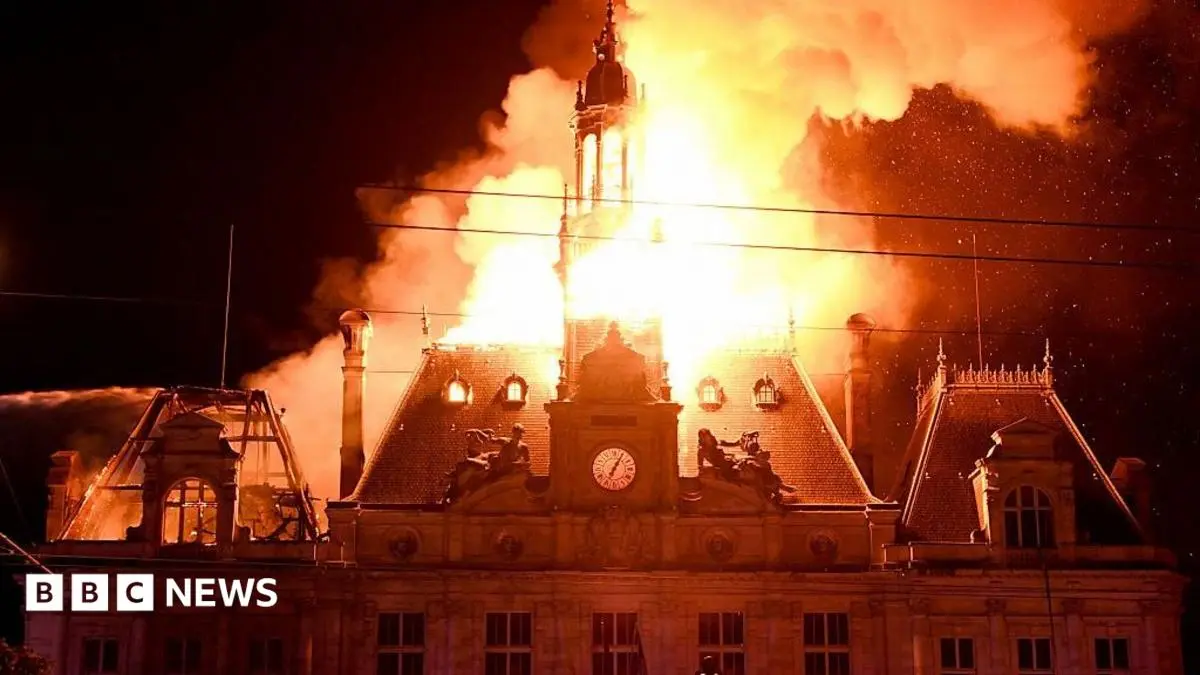
While organizers had called for peaceful marches, splinter groups engaged in
On Saturday, more than half a million people took to the streets across France in a nationwide day of protest against government policies affecting education and household finances. The demonstrations, which began peacefully in many cities, quickly turned violent in several urban centers, particularly in Paris, Lyon, and Marseille. Authorities reported over 1,200 arrests as clashes erupted between protesters and police, with buildings set ablaze, shops looted, and public property damaged. The government labeled the unrest an „escalation in violence,”marking one of the most intense days of dissent in recent months. The protests were fueled by growing anger over proposed changes to school curricula and teacher working conditions, which unions and student groups argue undermine public education. Simultaneously, rising inflation and stagnant wages have intensified pressure on households, particularly among low- and middle-income families.
Breaking news
 Montenegro, Albania Seek NATO Help to Counter Russian Disinformation
 Ronna McDaniel Weighs In on GOP's Path Forward
 Market Sentiment Shifts as S&P 500 Snaps Three-Day Losing Streak
 Voters Demand Stronger Congressional Oversight of Presidential Power
While organizers had called for peaceful marches, splinter groups engaged in confrontations with law enforcement, prompting police to deploy tear gas and water cannons. Interior Ministry officials confirmed that surveillance footage is being reviewed to identify those responsible for arson and vandalism. What Triggered the Shift from Peaceful Protest to Urban Violence? Eyewitnesses and union representatives said that peaceful demonstrators were often separated from more radical elements who sought to provoke clashes. In Paris, a march that began at Place de la République deteriorated after objects were thrown at police lines, prompting a forceful response. Similar patterns emerged in other cities, where isolated incidents of property damage escalated into broader confrontations. Government officials maintain that the vast majority of protesters acted lawfully, but insist that violent actors must be held accountable.
Critics, however, accuse authorities of using excessive force, which they say
Critics, however, accuse authorities of using excessive force, which they say exacerbates tensions. How Are Schools and Families Coping with the Ongoing Strain? Teachers’ unions report widespread fatigue among educators, citing overcrowded classrooms, inadequate resources, and declining morale as key drivers of the education-related protests. Parents, meanwhile, express frustration over the lack of tangible relief from rising food, energy, and housing costs. Although the government has introduced targeted subsidies and tax breaks, many say these measures fall short of addressing systemic issues. School administrators in affected regions have reported disruptions to classes, with some institutions temporarily closing due to safety concerns or staff participation in strikes. Frequently Asked Questions What were the main demands of the protesters? Protesters called for the withdrawal of controversial school reforms, increased funding for public education, and urgent government action to alleviate the cost-of-living crisis through wage increases and price controls on essential goods.
Did the protests lead to any policy changes? As of now, the government has not retracted the disputed education reforms, though officials say they remain open to dialogue. No new economic measures were announced in direct response to the demonstrations. Are further protests expected in the coming days? Union leaders have indicated that additional actions may be planned if negotiations fail, though they emphasize a preference for peaceful, lawful demonstrations moving forward.


