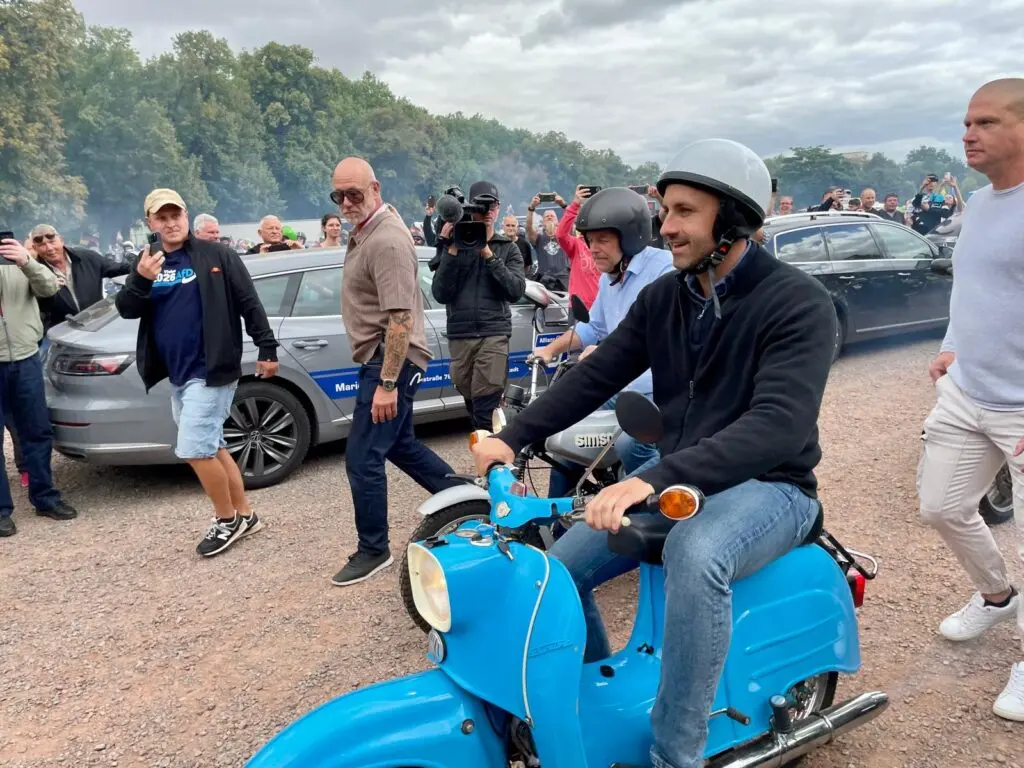
Mopeds and Memory as Political Tools
In the historic town of Quedlinburg, Germany’s far-right Alternative for Germany party is actively courting voters in the former East. They are doing so by celebrating symbols of the communist era. This strategy aims to harness deep-seated nostalgia among residents who lived behind the Iron Curtain. The movement seeks to convert this emotional connection into political momentum ahead of upcoming elections.
Breaking news
 Deadly Glacier and Rock Collapse in Nepal Linked to Climate Warming
 US Congress Passes Sweeping Sanctions Against Russia
 Speaker Johnson Ends House Session Early to Halt Impeachment Effort
 The High-Stakes Fight for Senate Majority Control
The party has adopted specific cultural icons from the former German Democratic Republic as rallying points. Chief among these is the moped, a vehicle that served as a primary mode of transport for many citizens during the socialist period. By embracing this symbol, the AfD signals a distinct identity separate from the western half of the country. They argue that the unique experiences of eastern Germans deserve recognition rather than assimilation into western norms. This approach resonates with those who feel their history has been overlooked or dismissed by federal politics.
Can Nostalgia Sustain Long-Term Growth?
Ulrich Siegmund, a charismatic local figure associated with the movement, recently addressed crowds in the medieval streets of Quedlinburg. The town’s timber-framed houses provide a backdrop that contrasts sharply with the modern political messaging. Siegmund and other leaders use the moped not just as a vehicle, but as a badge of honor. It represents resilience, community, and a simpler time before rapid economic change. For many in the region, the GDR era was not just a historical footnote but a formative chapter in their personal lives. The far right positions itself as the guardian of this memory, promising to validate the sacrifices and achievements of the past. Critics argue this romanticizes a system that also involved surveillance and restricted freedoms. However, supporters counter that the nostalgia is about the social fabric, not necessarily the political structure.
The strategy targets a demographic that feels disconnected from the political mainstream. In eastern Germany, voter turnout and party loyalty often differ significantly from western trends. The AfD capitalizes on this by framing their platform around local pride and regional identity. They suggest that national parties have neglected the specific needs and sentiments of the east. By holding rallies and events in towns like Quedlinburg, they create a sense of grassroots support. The visual imagery of mopeds moving through historic streets serves as a powerful metaphor for their political journey. It suggests a return to roots and a rejection of perceived western dominance in cultural and economic policy.
The effectiveness of this nostalgic appeal remains a subject of intense debate among political analysts. While it generates enthusiasm and media attention, it may struggle to address concrete policy issues like housing shortages and infrastructure deficits. Voters need tangible solutions alongside emotional resonance. If the party fails to translate sentiment into legislative action, the initial surge in support could plateau. The challenge lies in balancing the celebration of the past with the practical demands of the present. As election day approaches, the AfD must prove that their cultural campaign translates into electoral votes. The stakes are high for both the party and the future political landscape of unified Germany.
Frequently Asked Questions
Why do eastern Germans feel nostalgic for the communist era? Many residents associate the GDR period with strong community bonds and social security. They view the moped and other symbols as markers of a distinct regional identity that differs from the west.
How does the AfD use these symbols politically? The party incorporates these items into rallies and public appearances to signal solidarity with eastern voters. This helps them differentiate themselves from traditional center-right and center-left parties.