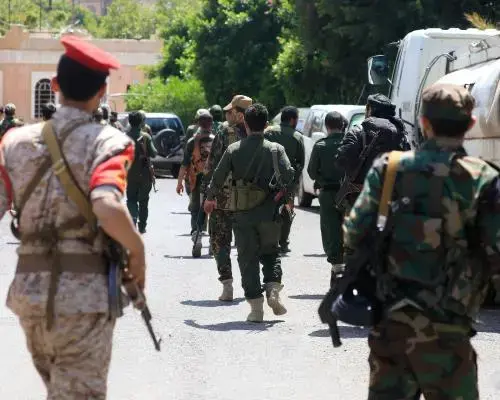
The Strategic Shift in Yemen’s Proxy Landscape
The Houthi movement in Yemen has launched a series of aggressive strikes, marking a significant shift in the ongoing regional turmoil. These actions follow broader hostilities involving Iran and its proxies that erupted in late February. While other groups engaged immediately, the Yemeni militants have now joined the widening conflict.
Breaking news
 Montenegro, Albania Seek NATO Help to Counter Russian Disinformation
 Ronna McDaniel Weighs In on GOP's Path Forward
 Market Sentiment Shifts as S&P 500 Snaps Three-Day Losing Streak
 Voters Demand Stronger Congressional Oversight of Presidential Power
This surge in violence stems from long-standing regional tensions that have simmered for years. Observers point to the breakdown of previous diplomatic efforts as a catalyst for the current instability. The Houthis, who hold significant territory in Yemen, are now actively challenging international interests and regional security frameworks.
The Houthis previously maintained a cautious distance from the direct confrontations involving Lebanon’s Hezbollah and various militias in Iraq. Their recent decision to escalate suggests a change in tactical alignment. This shift complicates the already precarious security situation across the Middle East.
Could This Conflict Redefine Maritime Security?
Analysts argue that the current unrest is a direct spillover from the collapse of prior containment policies. The conflict between the Houthis and Saudi Arabia, which has persisted for years, has now merged with broader anti-Western sentiments. This convergence threatens to draw more actors into a volatile and unpredictable theater of war.
The intensification of Houthi activity poses a direct threat to global shipping lanes and regional stability. As these militants expand their operational scope, international powers are forced to reassess their defensive postures in the Red Sea. The situation risks spiraling into a protracted struggle that defies simple diplomatic solutions.
Frequently Asked Questions
Moving forward, the primary concern remains the potential for further escalation. If the Houthis continue to strike at international targets, the risk of a wider regional war increases significantly. The path toward de-escalation appears narrow as the geopolitical landscape remains fractured and deeply polarized.
What prompted the recent change in Houthi behavior? The group shifted its strategy following the broader outbreak of hostilities involving Iran and its allies in late February. This move marks their transition from the sidelines into active participation in the regional conflict.
Why is the Houthi involvement considered a major security risk? Their control over significant parts of Yemen allows them to threaten vital maritime corridors. Their active engagement complicates existing military efforts to stabilize the region and protect international trade routes.
