Analyzing the Diplomatic Tone
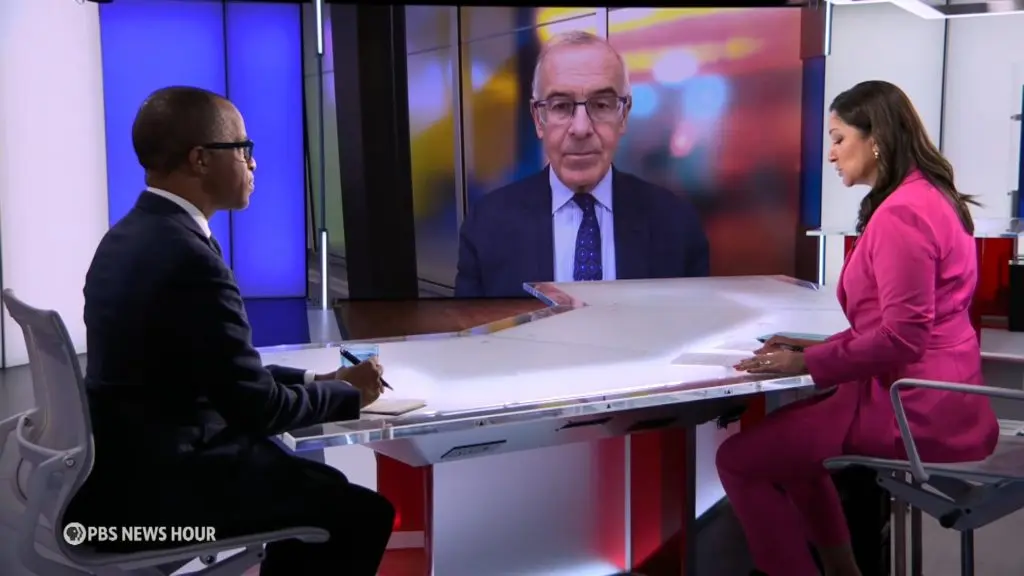
David Brooks and Jonathan Capehart joined Amna Nawaz to discuss President Donald Trump’s enthusiastic reception of Chinese leader Xi Jinping. The conversation took place on September 25, 2026. Both commentators analyzed the diplomatic signals sent by this high-profile meeting. They examined the implications for U. S.-China relations. The discussion focused on the tone of the interaction. Viewers sought clarity on the strategic intent behind the warmth. The panelists offered distinct perspectives on the geopolitical landscape. Their insights provided context for the ongoing diplomatic engagement.
Breaking news
 Ronna McDaniel Weighs In on GOP's Path Forward
 Market Sentiment Shifts as S&P 500 Snaps Three-Day Losing Streak
 Voters Demand Stronger Congressional Oversight of Presidential Power
 Pelosi Looks Back, Sees Democratic Triumph Ahead
The meeting marked a significant moment in recent diplomatic history. Trump’s approach differed from previous administrations’ more guarded interactions. The visible camaraderie raised questions about trade negotiations. It also touched on broader security concerns in the Pacific. Analysts noted the symbolic weight of the public display. The event occurred against a backdrop of complex bilateral tensions. Economic interests and strategic competition remain central to the relationship. The commentators highlighted the need for careful interpretation of these gestures. They warned against overestimating the immediate policy shifts.
What Does This Mean for Trade?
Brooks emphasized the personal nature of the exchange. He suggested that the warmth reflected a desire for direct communication. Capehart focused on the domestic political implications. He noted how the meeting would be framed in Washington. Both agreed that the tone set expectations for future talks. The visual imagery of the leaders together was powerful. It signaled a potential de-escalation of rhetoric. However, underlying structural issues remained unresolved. The panelists discussed the balance between diplomacy and firmness. They argued that actions would speak louder than words. The reception itself was a calculated diplomatic move. It aimed to create a conducive environment for negotiation.
The economic stakes of the U. S.-China relationship are immense. Trade imbalances and technology restrictions continue to dominate the agenda. The warm welcome does not automatically resolve these deep-seated issues. Negotiators will still face tough decisions on tariffs. Intellectual property protections remain a contentious topic. The media debate highlights the uncertainty surrounding the outcome. Markets may react cautiously to the diplomatic signals. Investors are watching for concrete policy announcements. The commentators suggested that patience is required. Substantive agreements take time to craft and implement. The initial warmth is a necessary first step. It does not guarantee a comprehensive deal.
Why did media commentators focus on the tone of the meeting? The tone indicated a shift in diplomatic posture. It suggested a willingness to engage constructively. This contrasts with previous periods of heightened tension.
Frequently Asked Questions
Did the meeting result in immediate policy changes? No immediate policy changes were announced during the discussion. The focus was on the symbolic nature of the welcome. Future negotiations will determine specific outcomes.
How might domestic politics influence this diplomatic engagement? Domestic political reactions will shape the administration’s approach. Lawmakers will scrutinize the terms of any agreement. Public sentiment plays a role in diplomatic strategy.