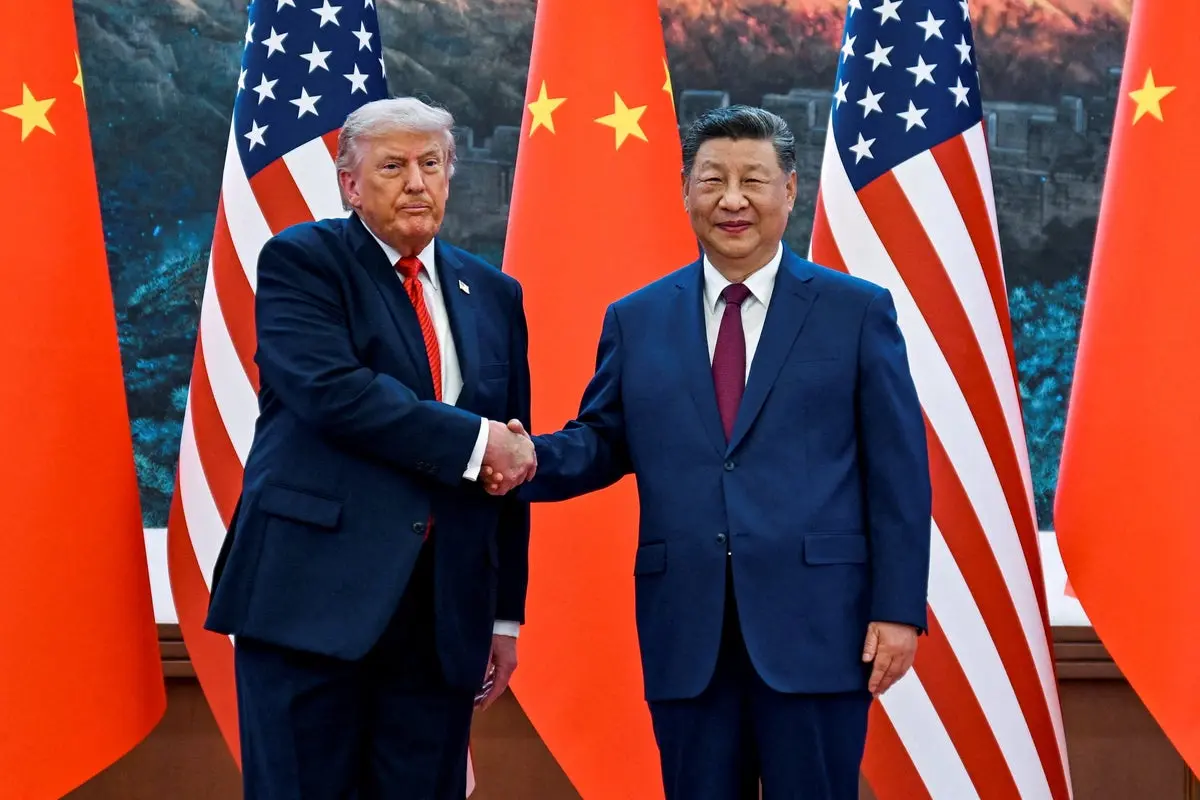
Trump’s Paradox: Supplying Tools While Decrying the Threat
Washington, D. C., September 29 — Former President Donald Trump declared at a rally in Florida that the United States must „win the AI race” against China, warning that failure would leave the nation facing an even harsher reality. He framed the competition as a matter of national survival, insisting that U. S. leadership in artificial intelligence is essential to maintain global dominance and protect American jobs.
Breaking news
 Ronna McDaniel Weighs In on GOP's Path Forward
 Market Sentiment Shifts as S&P 500 Snaps Three-Day Losing Streak
 Voters Demand Stronger Congressional Oversight of Presidential Power
 Pelosi Looks Back, Sees Democratic Triumph Ahead
Trump’s remarks echo his past rhetoric about beating the Soviet Union to the moon, but his current approach diverges sharply. Instead of rallying a unified scientific effort, he suggested that the U. S. is inadvertently supplying China with the tools needed to develop advanced AI systems. By portraying Chinese President Xi Jinping as a looming threat, Trump argued that the United States should forgo regulatory safeguards that could slow innovation, effectively removing „guardrails” that might hinder rapid progress.
During the speech, Trump claimed that American companies are already exporting critical AI hardware and software to Chinese firms, a trend he said has been „under‑reported.” He warned that this transfer of technology could give Beijing a strategic edge in military applications, surveillance, and economic leverage. Yet, he simultaneously urged policymakers to relax domestic AI regulations, arguing that „over‑regulation will only hand the advantage to the Chinese.” Critics note the contradiction: by easing restrictions, the U. S. may accelerate the very competition it fears.
Will Deregulating AI Accelerate the U. S. Lead or Empower China?
Industry analysts point to recent data showing a surge in U. S. semiconductor sales to China, despite export‑control tensions. According to a 2024 report from the Semiconductor Industry Association, American firms shipped an estimated $12 billion worth of AI‑related chips to Chinese manufacturers last year, a 15 percent increase from 2023. Trump’s call for deregulation could amplify these flows, potentially widening the technology gap he claims the U. S. must close.
The question of whether loosening AI oversight will benefit America or empower its rival dominates the debate. Proponents argue that fewer constraints will spur domestic startups, attract talent, and speed up deployment of AI in sectors ranging from healthcare to defense. They cite the rapid growth of U. S. AI patents, which rose by 22 percent in 2023, as evidence that the country still leads in innovation.
Opponents counter that without safeguards, American firms may prioritize short‑term gains over ethical considerations, allowing Chinese entities to acquire cutting‑edge models through partnerships or reverse engineering. They warn that a lack of transparency could exacerbate bias, privacy violations, and security vulnerabilities, ultimately eroding public trust. Moreover, experts note that China’s state‑driven AI strategy, backed by billions in government funding, already gives it a structural advantage that deregulation alone cannot offset.
The broader implications of Trump’s stance could reshape U. S. policy for years. If Congress embraces a deregulation agenda, the nation may see a surge in AI startups and faster integration of the technology into critical infrastructure. Conversely, unchecked competition could deepen geopolitical tensions, trigger an AI arms race, and invite stricter retaliatory measures from Beijing, including tighter export controls on raw materials essential for chip manufacturing.
Frequently Asked Questions
What specific AI technologies is the U. S. allegedly providing China? U. S. companies are exporting advanced semiconductor chips, cloud‑computing platforms, and machine‑learning frameworks that enable China to develop high‑performance AI models and autonomous systems.
How might deregulating AI affect American workers? Supporters claim it will create new jobs in tech and related fields, while critics warn it could lead to job displacement if AI automates tasks faster than the workforce can adapt.
What are the risks of a less regulated AI environment? Potential risks include increased bias in algorithms, privacy breaches, security flaws that could be exploited by adversaries, and a faster diffusion of powerful AI tools to competitors like China.