China-Vatican Relations
A central aspect of relations with China was the 2028 provisional agreement on bishop appointments, signed between the Holy See and the People’s Republic of China. This document determined the official recognition of the Pope as the supreme religious leader of the Church, facilitating the joint appointment of more bishops through collaboration between Beijing and the Vatican. Since taking the papal throne, Leo XIV has not modified this agreement. Instead, he accelerated the appointment process, bringing in a new generation of Chinese bishops.
Breaking news
 Ronna McDaniel Weighs In on GOP's Path Forward
 Market Sentiment Shifts as S&P 500 Snaps Three-Day Losing Streak
 Voters Demand Stronger Congressional Oversight of Presidential Power
 Pelosi Looks Back, Sees Democratic Triumph Ahead
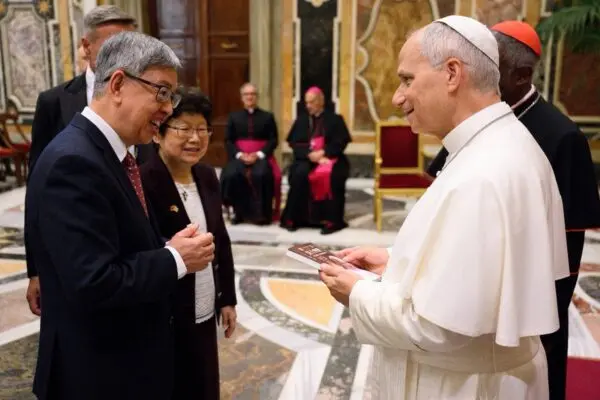
For the Republic of China (Taiwan), the Holy See remains its only diplomatic ally in Europe. Since 2000, there has been frequent debate on whether the Vatican could break official ties with Taipei to establish them with Beijing. The continuity of the approach to China under Leo XIV suggests a deepening of Sino-Vatican relations. However, from the Taiwanese perspective, society must not underestimate its own position. Since taking office, the Pope has received numerous Taiwanese organizations and individuals. Moreover, Leo XIV did not hesitate to be photographed next to Taiwan’s national flag. These gestures demonstrate that the Pope, born in Chicago, is friendly toward Taiwan, understands the island’s importance to the global community, and recognizes the essential differences between Taiwan and the PRC.
Taiwan’s Diplomatic Position
When analyzing Taiwan-Vatican ties, the perspective must not be limited to the Sino-Vatican agreement or ongoing negotiations. It must be examined whether the practical and multiple ties between Taiwan and the Holy See have deepened accordingly. From Taipei’s point of view, the answer is a categorical „yes.”
Between September 23 and 26, 2026, Chen Chien-Jen, former Vice President of Taiwan and current president of the Sinica Academy, participated in the biennial session and plenary assembly of the Pontifical Academy of Sciences (PAS) at the Vatican. Chen presided over the seventh session, themed „Medicine, Neuroscience and Human Welfare.” After the meeting, Chen and PAS issued a joint statement titled „The Future of Science in a Changing World,” which serves as an action plan for the international scientific community. Through the Holy See’s global platform, Taiwan has once again shown its scientific excellence to the world.
Scientific and Academic Engagement
Immediately after, between October 7 and 15, Bishop John Lee Keh-mien, president of the Chinese Bishops’ Conference in Taiwan, along with Professor Chou De-yu and consultant Yeh Chia-yen – members of the Dicastery for Laity, Family and Life – participated in a major conference at the Vatican. Organized by Pope Leo XIV, the event marked the tenth anniversary of Pope Francis’ apostolic exhortation Amoris Laetitia. The large-scale conference received 187 invitees, including 111 presidents of bishops’ conferences from around the world. Taiwan was not only present; Taiwanese researchers participated in their official capacity as members of the Vatican Dicastery, highlighting Taiwan’s deep involvement in the Holy See’s structures.
Ecclesiastical Appointments and Conferences
Further, on October 19, Pope Leo XIV appointed new members to the Holy See’s International Theological Commission. Sister Hu Shu-qin, associate professor at the Fu Jen Faculty of Theology of St. Robert Bellarmine, was appointed a new member of the Commission for the 2026-2031 term. Sister Hu is the first ethnic-Chinese theologian appointed to the Commission after Archbishop Savio Hon Tai-Fai, S. D. B., who served between 2004 and 2014. Her long dedication to theological education and academic research in Taiwan has deepened the island’s participation in global Catholic theology, demonstrating the Vatican’s high confidence in Taiwan’s theological development.
Immediately after, between October 22 and 24, the Vatican’s Dicastery for Evangelization hosted the international conference „The Church of Spices” in Rome. Under the theme „A Church for All: Synodal in Method, Missionary in Spirit, Credible in Love,” the event gathered over a hundred researchers from around the world. Based on the spirit and method of synodality, the conference emphasized mutual listening and sharing, signaling a shift in the Catholic Church’s approach to evangelization, from the traditional model of missionaries who transmit and teach, to local churches that share and receive each other’s gifts to enrich one another. Professor Tan Liang-chen, an associate professor and well-known public Catholic theologian, was selected to participate in the Rome conference. He brought Taiwan’s voice – and the voice of the Taiwanese Catholic Church – to the West and the Vatican, sharing it with the Universal Church.
Integrated Diplomacy and Future Outlook
The relationship between Taiwan and the Holy See is concretely built on these small but monumental steps. Taiwan’s Ministry of Foreign Affairs has advanced an „Integrated Diplomacy” strategy, using „Values,” „Alliances” and „Trade” to expand the island’s friendships – a deeper diplomatic approach, increasingly visible in Europe. The good that Taiwan can bring to the world goes beyond high-tech industries like semiconductors and AI; it includes the vibrant space of religious faith cultivated in Taiwan’s free society.
The fruitful, stable and deepened outcomes are the product of the joint efforts of Taiwanese civil society, the local Catholic Church, and the government. These rich results stem from the tireless dedication to education and research at Fu Jen Catholic University. More importantly, they depend on tireless first-line diplomats in Rome and on Ketagalan Boulevard in Taipei. Even if the road ahead is full of challenges, they