Moms Who Exposed a Pharmaceutical Giant: The Hidden History of Sodium Valproate
When an ordinary mother faces a giant corporation, the battle seems lost from the start. Documents disappear, witnesses hide, and legal complexity becomes a labyrinth. Yet, sometimes the truth is simple to understand, though its consequences are staggering. The sodium valproate case is exactly such an example.
Breaking news
 ECB's Kazāks Sees Rate-Hike Judgments Getting More Nuanced
 Qatar PM to brief G7 and Saudi Arabia on Iran war after Trump talks
 Trump pushes final imperial power grab before term ends
 Sheikh Hasina Plans Return to Bangladesh After Two Years in Exile
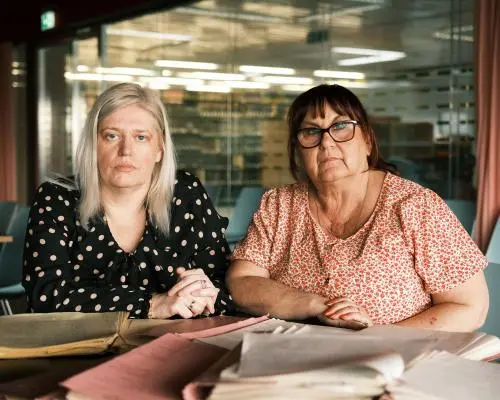
It all began 17 years ago. Two mothers started to suspect that their children’s disabilities had a specific cause linked to medications taken during pregnancy. Janet Williams, from Pilling in Lancashire, had two sons with developmental delays. For years, doctors assured her nothing was wrong. „I genuinely believed that if there was something wrong or something that needed explaining, they would have told us,” says Williams, recalling the innocence of a young mother who trusted the medical profession blindly.
Only in 2009 were the boys referred to a specialist. He casually informed them that their condition was likely the result of her anti-epilepsy drug, Epilim. This is the brand name for sodium valproate, discovered in 1962 as an effective anticonvulsant and used for bipolar disorder. When Williams gave birth in the 1990s, the drug was one of the most prescribed for epilepsy in the UK.
Williams began distributing flyers in her village, sharing her story and asking other potentially affected families to contact her. They responded. They had questions she could not answer, so she began researching everything she could at the Manchester Central Library. Then Emma Murphy from Bury appeared in the press. Murphy had five of her six children with similar difficulties after Epilim exposure. With her constant amusement – „I was reading women’s magazines and watching Coronation Street at home!” – the two began gathering evidence to reveal a scandal as big as the thalidomide case.
Parallel to the mothers’ story was that of Prof
Parallel to the mothers’ story was that of Prof. Jill Clayton-Smith, a clinical geneticist working in Manchester in the 1990s. She noticed a recurring pattern of traits in children born to women treated for epilepsy. She researched further and presented her findings, including a 1984 American article describing „fetal valproate syndrome,” at a conference. „It wasn’t received as well as I had hoped,” she says delicately. The predominantly male audience dismissed her data as „anecdotal” and ignored it. However, Prof. David Chadwick encouraged her to start a formal study that could not be refuted. The Williams boys were part of this study, which helped establish that sodium valproate carries a 10% risk of causing physical malformations and a 30-40% risk of causing severe neurodevelopmental disorders in those exposed. It is estimated that the drug affected 39,399 babies since the risk was first identified.
In 2011, Murphy, Williams, and 138 other families launched a group action against the manufacturer, Sanofi Aventis. Hopes rose, but their legal support was abruptly withdrawn after it was decided their chances of success were low, and lawyers officially stopped the case. By 2013, they regrouped and began investigating the obvious regulatory failure in authorizing the drug for women of childbearing age. They had several unproductive meetings at Westminster. „They called us ‘boring and hysterical aunts,’” says Murphy. Williams recalls an official turning to her to ask if she understood a specific term. She did. „The way they treated us was disgusting... But it pushed me further.”
They began secretly recording these meetings. We hear recordings where someone says: „Neurologists didn’t agree with this recognition of risk... Doctors don’t like being told what to do,” suggesting patient warnings on packaging weren’t necessary because people could find info online – „Your Facebook site is brilliant!” „Ignorance,” says Williams. „Arrogance.” „Pagane,” whispers Murphy.
The thalidomide campaign team advised them to go to the National Archives at Kew and seek notes from the Medicines Safety Committee (CSM) meetings when the drug entered the market. In 2015, they found the decisive evidence: the CSM’s response to Sanofi’s claim that the drug was harmful to fetuses. To warn about this, it said, would cause women „unnecessary anxiety.” So, no one was informed about anything.
This is where medical misogyny, a disease that corrupts everything it touches, inevitably leads. There was a government review, and promises of state compensation were made two years ago. Yet, payments have not yet been made to the 20,000 families affected by the drug. But the boring and hysterical aunts are never beaten. God bless them, and damn the rest. • The documentary „Moms vs Big Pharma” was broadcast on BBC Two and is available on i Player.