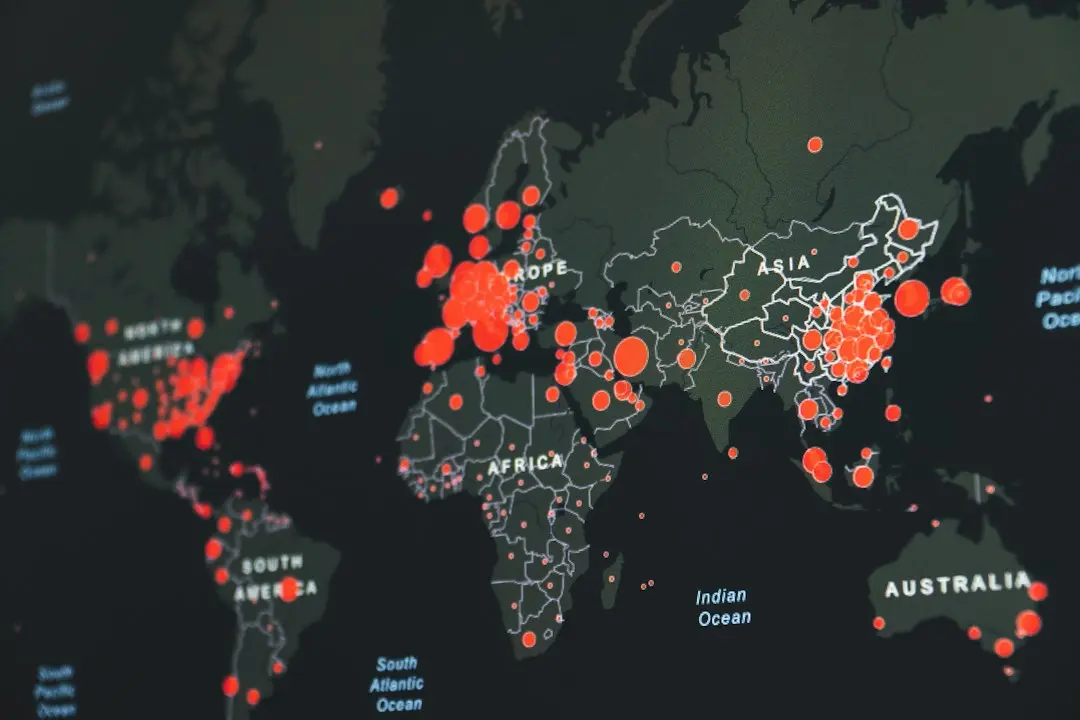
How Effective Is the EU’s Early Warning System?
Five years after the peak of the Covid-19 pandemic, the European Union faces renewed scrutiny over its preparedness for future health crises. With the virus having reshaped societies and economies across the continent, policymakers and health experts are assessing whether lessons learned have translated into stronger, more coordinated defenses. The question is no longer theoretical but urgent, as new variants and zoonotic threats continue to emerge globally.
Breaking news
 Montenegro, Albania Seek NATO Help to Counter Russian Disinformation
 Ronna McDaniel Weighs In on GOP's Path Forward
 Market Sentiment Shifts as S&P 500 Snaps Three-Day Losing Streak
 Voters Demand Stronger Congressional Oversight of Presidential Power
The EU has made notable strides since 2020, including the establishment of the Health Emergency Preparedness and Response Authority (HERA) and the joint procurement of vaccines and medical supplies. These mechanisms aim to reduce fragmentation and ensure faster, more equitable access to countermeasures across member states. However, challenges remain in aligning national health systems, sharing real-time data, and maintaining stockpiles of critical supplies. Experts warn that without sustained investment and political will, gaps in surveillance and response could undermine progress.
Can Member States Overcome Sovereignty Concerns to Act Jointly?
The EU’s early warning capabilities have improved through the integration of digital surveillance tools and the expansion of the European Centre for Disease Prevention and Control’s monitoring networks. Member states now report infectious disease data more rapidly, and genomic sequencing efforts have been scaled up to detect emerging threats. Yet, disparities in testing capacity and reporting timelines persist, particularly in Eastern and Southern Europe. A 2025 audit found that only 60% of member states met the benchmark for real-time data sharing during simulated outbreaks, raising concerns about blind spots in cross-border threat detection.
Despite institutional advances, national sovereignty continues to hinder swift collective action. During recent drills, several countries hesitated to cede control over border measures or vaccine distribution, echoing tensions seen during the Covid crisis. While HERA has the authority to coordinate responses, it lacks enforcement power, relying instead on voluntary cooperation. Health officials stress that trust-building and pre-negotiated agreements are essential to avoid delays when speed is critical. Without binding frameworks, the EU risks repeating past mistakes of fragmented and delayed responses.
What is HERA and what role does it play in pandemic preparedness? HERA, the Health Emergency Preparedness and Response Authority, was created to strengthen the EU’s ability to prevent, detect, and respond to health emergencies. It coordinates the development and distribution of medical countermeasures, supports research, and works with member states to ensure readiness.
Frequently Asked Questions
Why does data sharing remain a challenge across EU countries? Although reporting systems have been upgraded, differences in national healthcare infrastructure, legal frameworks, and digital capabilities lead to inconsistencies in how and when data is shared. These gaps can slow down the detection of cross-border outbreaks.
Is the EU stockpiling enough medical supplies for a future crisis? Stockpiles of vaccines, antivirals, and personal protective equipment have increased since 2020, but officials acknowledge that levels vary by country and product type. Continuous funding and regular rotation of supplies are needed to maintain effectiveness.