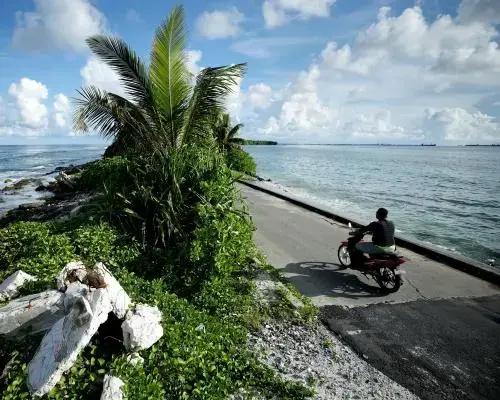
The Persistent Heat Gap
New scientific research reveals that the world's most vulnerable populations will remain trapped in climate distress long after global net-zero targets are achieved. While wealthier nations may see stabilization, tropical regions face a prolonged delay in recovery. This disparity highlights a deep, systemic inequality embedded within the current global climate trajectory.
Breaking news
 Montenegro, Albania Seek NATO Help to Counter Russian Disinformation
 Ronna McDaniel Weighs In on GOP's Path Forward
 Market Sentiment Shifts as S&P 500 Snaps Three-Day Losing Streak
 Voters Demand Stronger Congressional Oversight of Presidential Power
Tropical areas have already experienced temperature spikes far exceeding their historical averages. Because these regions are already suffering from severe environmental degradation, the path to cooling is significantly slower. Even if the world halts all new greenhouse gas emissions, the accumulated heat will persist in these latitudes for decades to come.
The study emphasizes that climate change does not impact the planet uniformly. Developing nations, which contributed the least to global industrial pollution, are now bearing the heaviest burden of rising temperatures. These communities lack the infrastructure and financial resources to buffer themselves against extreme heatwaves and shifting weather patterns.
Will Global Policy Ever Address This Inequity?
Researchers warn that the net-zerogoal is not a magic switch for immediate climate restoration. While cutting emissions is essential for long-term survival, it does not provide instant relief for the tropics. The thermal inertia of the oceans and atmosphere ensures that the damage already done will continue to affect these areas for generations.
The findings suggest that current international climate strategies may be insufficient for the most affected regions. Policymakers often focus on global averages, which masks the extreme suffering occurring in specific tropical zones. Without targeted support and adaptation funding, these nations will continue to face economic collapse and displacement.
The outlook remains grim for those living on the front lines of the crisis. As the world pushes toward carbon neutrality, the focus must shift from mere emission reduction to active support for vulnerable regions. Without a strategy that accounts for this geographic disparity, the global climate gap will only widen further.
Frequently Asked Questions
Why will tropical regions suffer longer than others? Tropical areas have experienced more intense temperature rises relative to their history. The thermal energy trapped in these regions takes much longer to dissipate even after global emissions stop.
Does net-zero mean an immediate end to climate change? No, net-zero only stops the addition of new emissions. The planet will still deal with the heat already trapped in the atmosphere and oceans for a long time.
What should be done to help these vulnerable nations? International policy must prioritize adaptation funding and infrastructure support for tropical countries. Global efforts need to move beyond simple emission targets to address the specific recovery needs of the most affected areas.