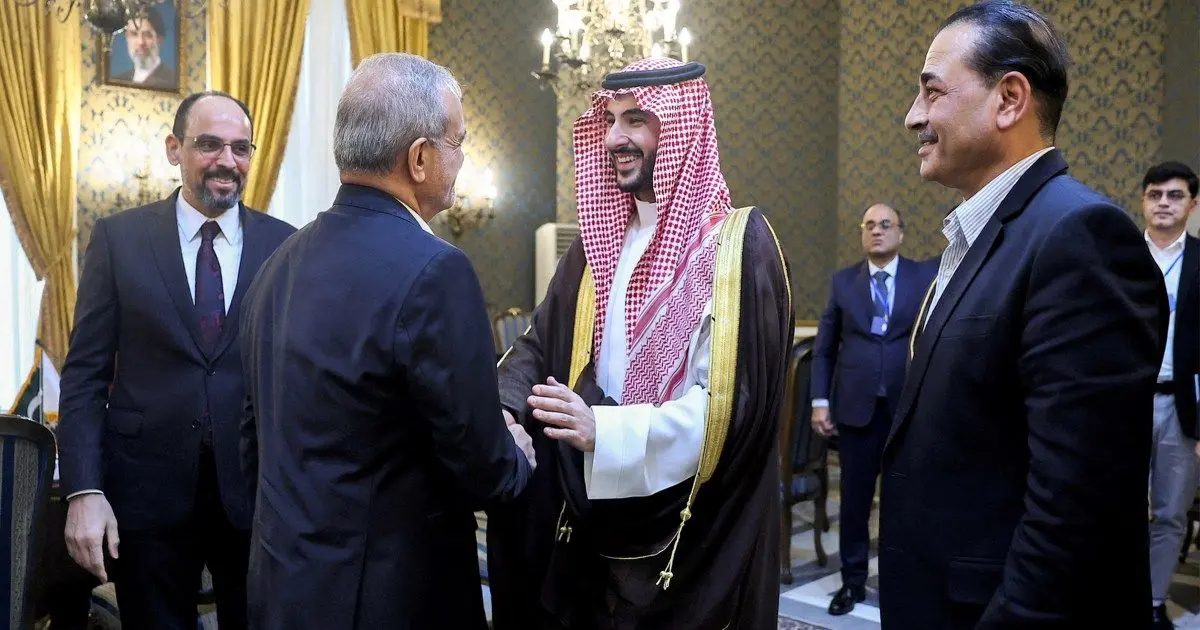
Can a Gulf-Iran Security Pact Hold?
Gulf countries are intensifying diplomatic outreach to Iran to calm rising tensions in the Middle East. The push comes as fears mount of fresh US strikes on Tehran and escalating clashes between Yemen’s Houthi rebels and Saudi Arabia. Three nations signed the Mecca Joint Defence Agreement in August.
Breaking news
 Montenegro, Albania Seek NATO Help to Counter Russian Disinformation
 Ronna McDaniel Weighs In on GOP's Path Forward
 Market Sentiment Shifts as S&P 500 Snaps Three-Day Losing Streak
 Voters Demand Stronger Congressional Oversight of Presidential Power
The agreement involves Pakistan, Saudi Arabia, and Turkey. These three countries are now exploring a broader security framework that includes Iran. The goal is to create a regional pact that binds key players together.
Diplomats say the initiative aims to prevent a full-blown war. The region has seen a sharp rise in hostilities. Houthi attacks on Saudi shipping and territory have increased. US military options against Iran remain on the table.
What Does the Pact Actually Cover?
Regional leaders want a structured dialogue to replace ad hoc negotiations. A formal security pact could lock in commitments. However, deep distrust remains. Years of conflict have left scars.
The proposed framework would address mutual defence obligations. It would also cover intelligence sharing and joint crisis response. The deal would need buy-in from all major regional powers. Smaller states would gain security guarantees.
Frequently Asked Questions
Pakistan’s inclusion is significant. As a nuclear-armed state, its role adds weight. Turkey’s participation brings a non-Arab strategic partner. The combination aims to balance power across the region.
Will Iran actually sign on? Iran has historically resisted multilateral security arrangements. Its willingness depends on the terms. The deal must address Iran’s core security concerns.
How does this affect the US role? The pact could reduce reliance on US protection. Gulf states may seek greater autonomy. Washington may view this as a shift in regional dynamics.