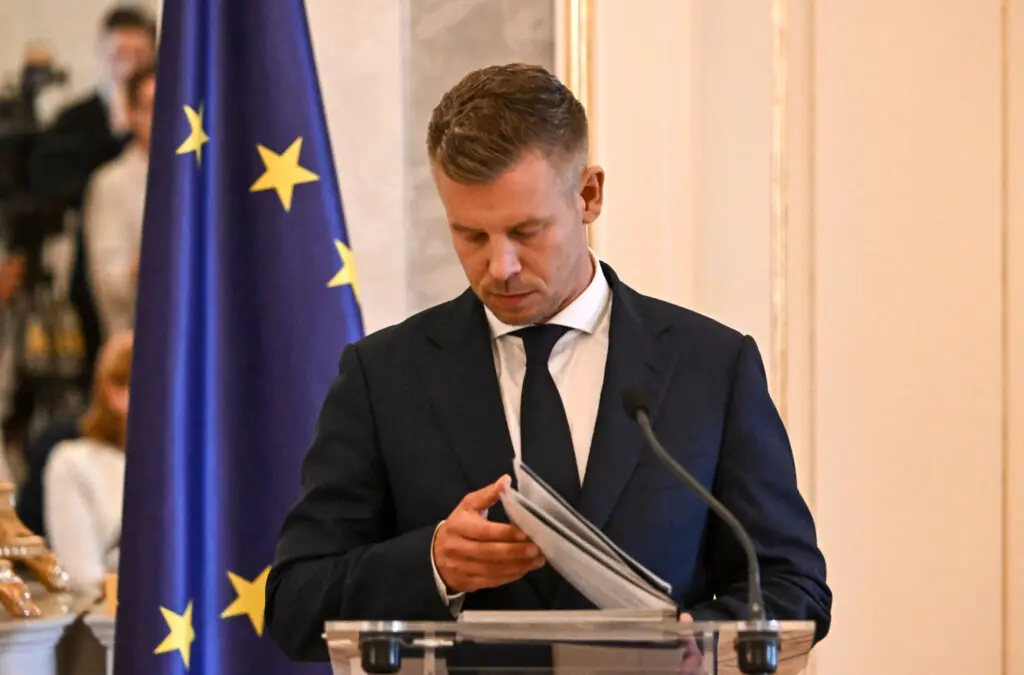
Acknowledging Past Criticisms as a Step Forward
Hungary’s ruling Fidesz party, led by János Bóka, says it is prepared to cooperate with the country’s new government on tackling corruption, acknowledging that some critiques of democratic backsliding contained valid points. The statement marks a notable shift in tone from the party, which has faced sustained criticism from EU institutions over rule of law concerns. Bóka made the remarks in an interview with POLITICO, emphasizing that while Fidesz remains committed to its core principles, it recognizes the need to address legitimate concerns about governance and transparency. The comments come amid ongoing negotiations between Fidesz and opposition-aligned forces over Hungary’s EU recovery funds, which remain partially frozen due to unresolved rule of law conditions.
Breaking news
 Deadly Glacier and Rock Collapse in Nepal Linked to Climate Warming
 US Congress Passes Sweeping Sanctions Against Russia
 Speaker Johnson Ends House Session Early to Halt Impeachment Effort
 The High-Stakes Fight for Senate Majority Control
János Bóka, a senior Fidesz figure and former minister, explicitly stated that „some of the criticism related to democratic backsliding had some merit,” signaling a rare admission from the party leadership. He argued that engaging with such feedback does not equate to abandoning national sovereignty but rather strengthens Hungary’s ability to defend its interests within European frameworks. Bóka stressed that any cooperation would be based on mutual respect and would not involve compromising on what Fidesz views as Hungary’s constitutional identity. The remarks suggest a tactical recalibration aimed at unlocking EU funding while maintaining domestic political stability.
How Might This Affect Hungary’s EU Relations?
The openness to dialogue could ease tensions with Brussels, which has linked the release of billions in cohesion and recovery funds to measurable progress on judicial independence, media pluralism, and anti-corruption safeguards. While Fidesz insists it will not accept external diktats, Bóka’s comments imply a willingness to implement reforms that satisfy both domestic audiences and EU conditionality mechanisms. Analysts note that the timing coincides with increasing pressure from Hungarian businesses and investors concerned about prolonged financial isolation. Still, skepticism remains among opposition groups, who view the statement as a potential prelude to superficial concessions rather than substantive change.
What specific anti-corruption measures is Fidesz considering? Bóka did not detail specific policies but indicated that discussions would focus on public procurement transparency and conflict-of-interest rules, areas frequently cited by the EU as needing improvement.
Frequently Asked Questions
Does this mean Fidesz is abandoning its conservative platform? No, Bóka emphasized that cooperation would occur within the bounds of Hungary’s national constitution and that Fidesz’s core values on family, sovereignty, and traditionalism remain unchanged.
Will the EU release frozen funds immediately? No, any disbursement depends on verified progress; the European Commission has stated that funds will be released only after milestones are met, not on political statements alone.