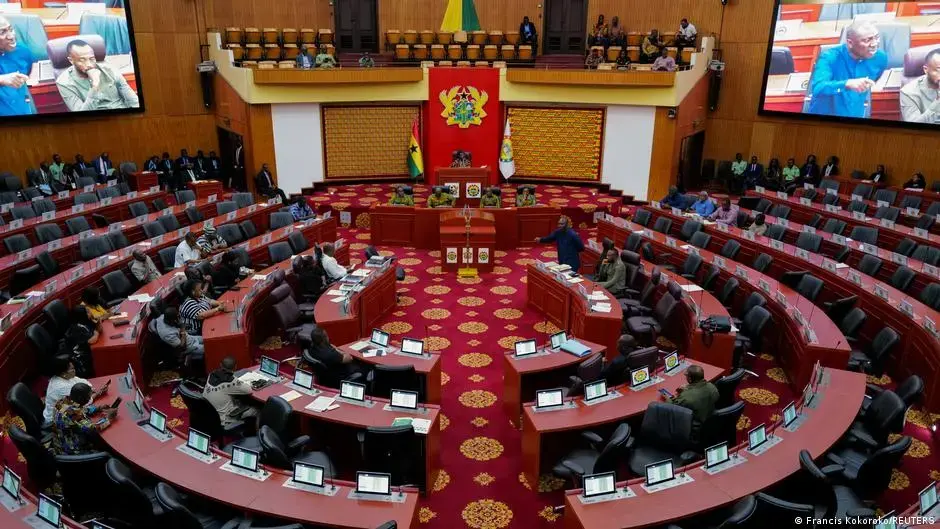
Can Existing Laws Stem Corruption?
Ghana's President John Dramani Mahama is strengthening public accountability to build trust. Governance experts say the success of the plan depends on consistent enforcement of existing laws. The new government is under scrutiny. This comes after years of corruption allegations.
Breaking news
 Deadly Glacier and Rock Collapse in Nepal Linked to Climate Warming
 US Congress Passes Sweeping Sanctions Against Russia
 Speaker Johnson Ends House Session Early to Halt Impeachment Effort
 The High-Stakes Fight for Senate Majority Control
Mahama's government aims to tackle corruption by improving transparency and accountability. Experts argue that existing laws are sufficient, but their enforcement is lacking. The government needs to demonstrate its commitment to change. This includes holding those in power accountable for their actions.
Ghana has laws in place to prevent corruption, but they are often not enforced. Experts say that the key to success lies in consistent application of these laws. A parliamentarian noted that the challenge is not the absence of laws, but the lack of political will to enforce them.
Will the Government Take Action?
The anti-corruption plan is a crucial test for Mahama's government. If successful, it could boost public trust and confidence in the government. However, if the plan fails, it could further erode trust.
The government's actions will be closely watched by the public and international partners. A governance expert said that the government must demonstrate its commitment to fighting corruption. This includes taking concrete steps to hold officials accountable.
The success of the anti-corruption plan will have significant consequences for Ghana's development. If the government is seen to be taking effective action, it could attract more investment and improve the business climate.
Frequently Asked Questions
What is the main goal of Ghana's anti-corruption plan? The main goal is to strengthen public accountability and build trust in the government. This is being achieved through improved transparency and enforcement of existing laws.
How will the government enforce anti-corruption laws? The government plans to consistently apply existing laws and hold those in power accountable. This includes taking concrete steps to prevent corruption.
What are the potential consequences of failure? If the anti-corruption plan fails, it could further erode public trust and confidence in the government, potentially deterring investment and hindering development.