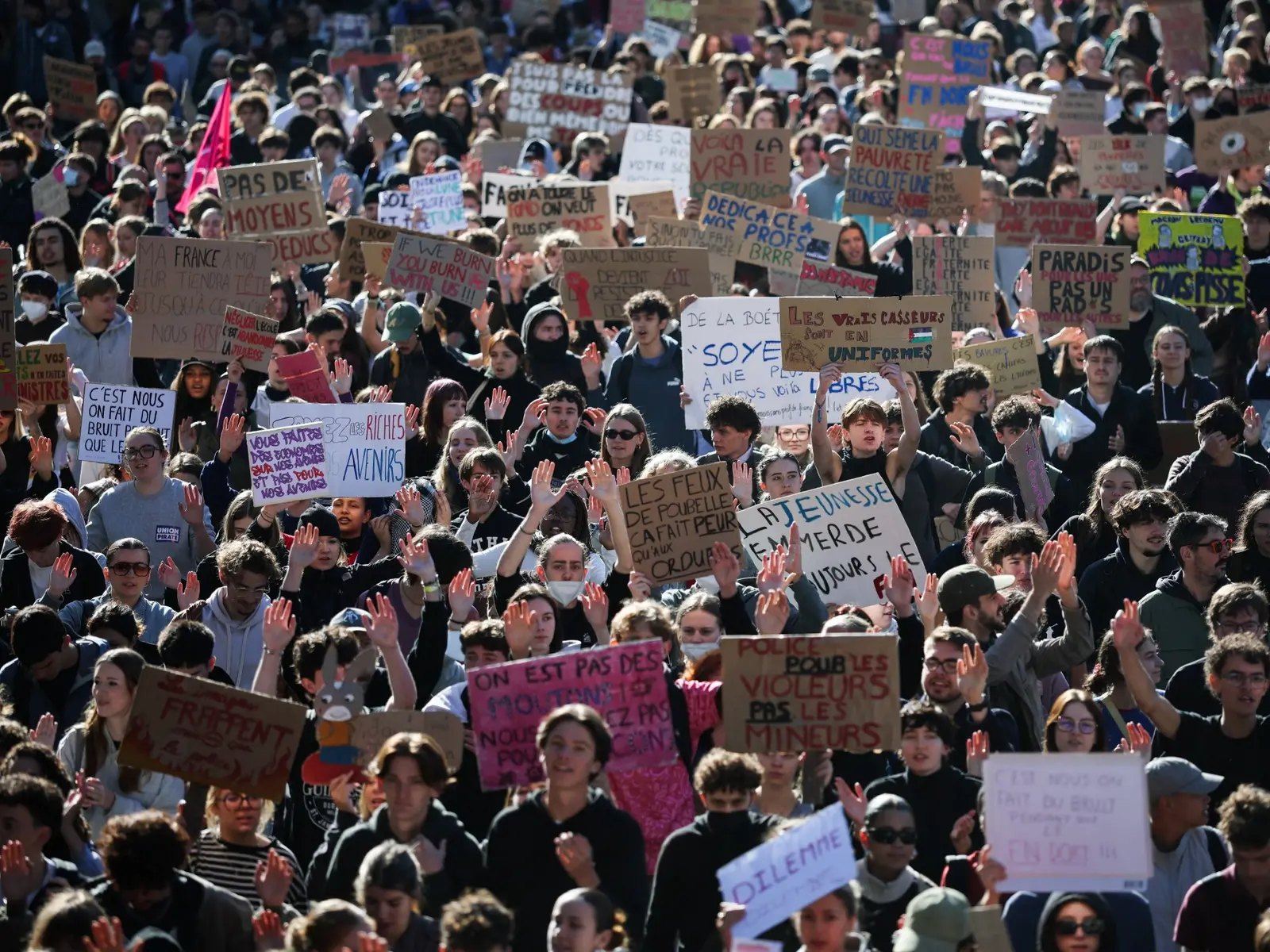
In Italy, demonstrators highlighted soaring energy bills and stagnant wages
Student protests in France began in September over overcrowded classrooms and teacher shortages, quickly spreading to cities across the country and inspiring similar demonstrations in Italy, Spain, and Portugal. What started as education-focused grievances has evolved into a broader movement reflecting widespread public frustration with rising living costs and government austerity measures. By late autumn, thousands of students, teachers, and concerned citizens had taken to the streets in major urban centers from Paris to Lisbon, demanding action on inflation, housing prices, and public service funding. The initial trigger in France was the government’s plan to reduce education budgets amid rising operational costs, which students argued would worsen already strained school conditions. As inflation continued to erode household purchasing power across Southern Europe, the protests gained momentum, linking education cuts to broader economic pressures.
Breaking news
 Montenegro, Albania Seek NATO Help to Counter Russian Disinformation
 Ronna McDaniel Weighs In on GOP's Path Forward
 Market Sentiment Shifts as S&P 500 Snaps Three-Day Losing Streak
 Voters Demand Stronger Congressional Oversight of Presidential Power
In Italy, demonstrators highlighted soaring energy bills and stagnant wages, while in Spain and Portugal, activists pointed to unaffordable rents and precarious work contracts. The movement has drawn support from labor unions and civil society groups, transforming isolated campus actions into a transnational call for economic justice. How Are Governments Responding to the Growing Unrest? Authorities in France have agreed to enter negotiations with student unions, offering temporary funding increases for schools while maintaining long-term budget reform goals. In Italy, regional officials have pledged to review housing subsidies, though national leaders insist fiscal discipline remains necessary. Spain’s government has introduced targeted energy relief for low-income families, and Portugal has expanded access to social tariffs on utilities. Despite these measures, protesters argue the responses are insufficient and demand structural changes to tax policy, wage indexing, and public investment.
Demonstrators continue to organize weekly marches
Demonstrators continue to organize weekly marches, using social media to coordinate actions and share testimonies about daily financial strain. What Are the Long-Term Implications for European Social Policy? The cross-border nature of the protests suggests a shared sense of economic vulnerability among young people in Southern Europe, potentially influencing future electoral outcomes and policy debates. Analysts warn that sustained unrest could pressure governments to delay or soften austerity plans, though others caution against overreacting to short-term demonstrations. The movement has already succeeded in placing cost-of-living concerns at the forefront of national discourse, shifting focus from purely educational issues to broader socioeconomic equity. If sustained, the protests may catalyze reforms in labor markets, housing regulation, and social safety nets, though their ultimate impact will depend on the ability of diverse groups to maintain unity and translate street power into legislative change. Frequently Asked Questions What started the student protests in France?
The protests began in September due to overcrowded classrooms and teacher shortages, triggered by proposed education budget cuts that students said would worsen learning conditions. How have the protests spread to other countries? Demonstrations in France inspired similar actions in Italy, Spain, and Portugal, where activists linked education concerns to local issues like housing costs, energy prices, and job insecurity. Are governments making concessions in response to the protests? Some governments have offered temporary relief measures, such as education funding boosts or utility subsidies, but protesters say these are inadequate and demand deeper structural reforms.


