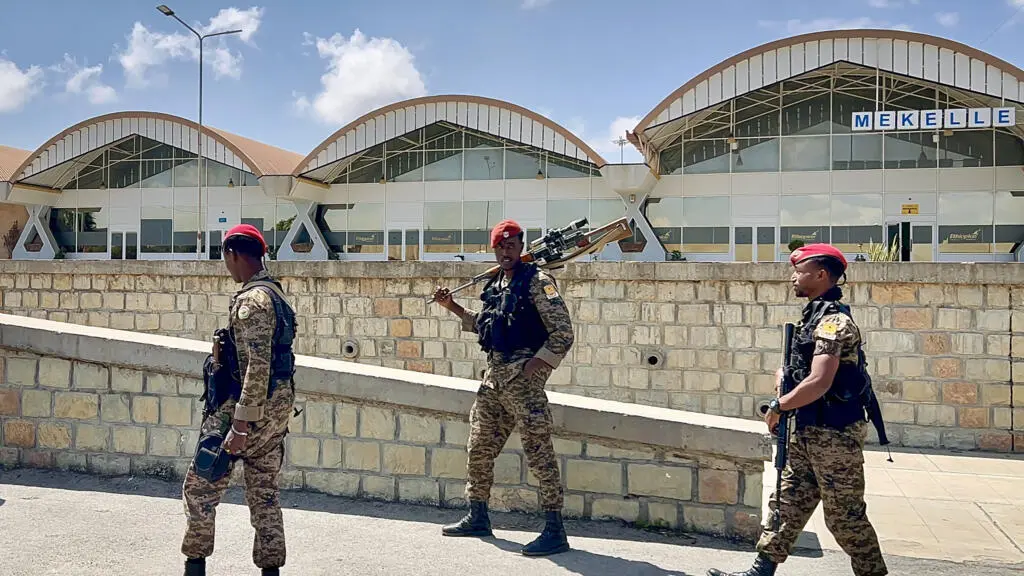
Tigray’s Strategic Withdrawal and Its Impact
Eritrea and Ethiopia exchanged accusations of initiating a „war of aggression” on Friday, a day after the two nations severed diplomatic ties. The exchange comes amid reports that up to 8,000 Eritrean troops are operating in Tigray, supporting the rebel forces that began retreating last month. The dispute escalated as both sides blamed each other for escalating tensions in the region, which has seen sporadic fighting since the 2020 conflict.
Breaking news
 Ronna McDaniel Weighs In on GOP's Path Forward
 Market Sentiment Shifts as S&P 500 Snaps Three-Day Losing Streak
 Voters Demand Stronger Congressional Oversight of Presidential Power
 Pelosi Looks Back, Sees Democratic Triumph Ahead
The Ethiopian government claims that Eritrean forces have crossed into its territory and are actively aiding the Tigray People's Liberation Front (TPLF) in a campaign to destabilize the region. Eritrea, in turn, accuses Ethiopia of inciting the conflict by deploying its own troops into Tigray and manipulating the political situation. The diplomatic break, announced earlier this week, left both countries without formal channels for dialogue, heightening the risk of miscalculations. Analysts point to the fragile security environment and the presence of foreign troops as key factors that could trigger a broader clash.
How Foreign Troops Alter the Balance of Power?
Tigray rebels, who had been fighting the Ethiopian government since 2020, began a strategic withdrawal from key towns last month. The move is seen as a response to increased pressure from Ethiopian forces and the presence of Eritrean soldiers. While the rebels claim they are regrouping, the withdrawal has left a power vacuum in several districts, raising concerns about potential looting and instability. Local officials report that the exodus has disrupted supply chains and left civilians vulnerable to displacement. The situation remains fluid, with reports of sporadic skirmishes as the rebels retreat to more defensible positions.
The withdrawal also signals a shift in the conflict’s dynamics. With fewer rebel fighters in the frontline, Ethiopian forces may consolidate control over the region, but the continued presence of Eritrean troops complicates the security calculus. Humanitarian agencies warn that any escalation could jeopardize ongoing aid deliveries and exacerbate the humanitarian crisis that has plagued Tigray for years.
The involvement of Eritrean soldiers has been a point of contention. Ethiopian officials estimate that around 8,000 Eritrean troops are stationed in Tigray, a figure that Eritrea disputes. The presence of these forces is viewed by many as a direct challenge to Ethiopia’s sovereignty and a potential catalyst for renewed hostilities. The international community has called for a ceasefire and the withdrawal of foreign troops from the region. Meanwhile, regional powers are monitoring the situation closely, as any escalation could spill over into neighboring countries and destabilize the Horn of Africa.
What Are the Implications for Regional Stability?
Both governments have issued statements condemning the other’s actions. Ethiopian officials warned that any continued aggression would lead to a broader conflict, while Eritrean leaders accused Ethiopia of provoking the situation. The lack of diplomatic engagement has left both sides with limited options to de-escalate tensions, raising fears of a renewed war that could involve multiple actors in the region.
The accusations and the withdrawal of Tigray rebels create a precarious environment for regional stability. If Ethiopia and Eritrea were to engage in direct military confrontation, the conflict could spread beyond Tigray, affecting neighboring Ethiopia, Sudan, and Djibouti. The potential for a humanitarian disaster is significant, given the already dire conditions in the area. International actors, including the United Nations and the African Union, have urged both sides to resume diplomatic talks and to adhere to ceasefire agreements. The outcome of this standoff will likely shape the future of the Horn of Africa, determining whether the region can move toward a lasting peace or descend into further violence.
How many Eritrean troops are reportedly in Tigray? Ethiopian officials claim there are about 8,000 Eritrean soldiers operating in the region, though Eritrea disputes the exact number.
Frequently Asked Questions
Why did Tigray rebels begin retreating? The rebels withdrew in response to increased pressure from Ethiopian forces and the presence of Eritrean troops, aiming to regroup and avoid further losses.
What could happen if Ethiopia and Eritrea engage in direct conflict? A direct clash could destabilize the Horn of Africa, trigger a humanitarian crisis, and potentially involve neighboring countries, undermining regional peace efforts.