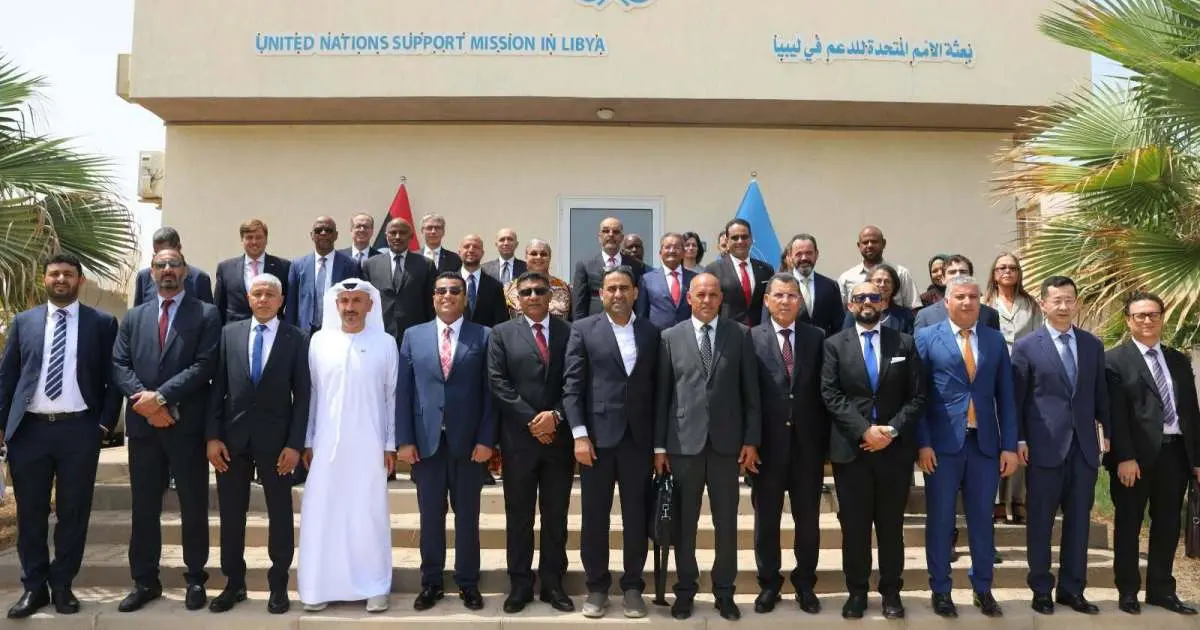
Building Trust Through Shared Governance
After 15 years of civil war, a new UN-backed 4+4 agreement seeks to unite Libya’s rival factions and pave the way for national elections within two years. The initiative brings together four representatives from the eastern-based government and four from the western-based authorities in Tripoli, aiming to bridge deep political divides. Hosted under UN mediation, the talks focus on security arrangements, oil revenue sharing, and electoral laws as prerequisites for a unified vote. The framework emerged after prolonged stalemate, with both sides agreeing to negotiate directly under international supervision to end parallel institutions and armed group influence.
Breaking news
 Deadly Glacier and Rock Collapse in Nepal Linked to Climate Warming
 US Congress Passes Sweeping Sanctions Against Russia
 Speaker Johnson Ends House Session Early to Halt Impeachment Effort
 The High-Stakes Fight for Senate Majority Control
The 4+4 structure reflects a deliberate effort to ensure balanced representation, with each side nominating four delegates to discuss confidence-building measures. Key topics include the unification of military commands under a single defense ministry and the redistribution of oil wealth through a transparent national budget. UN officials emphasize that progress hinges on both camps committing to disarmament of militias and dismantling of checkpoints that fragment territorial control. Previous attempts at power-sharing failed due to lack of enforcement mechanisms, but this round includes verification protocols monitored by the UN Support Mission in Libya (UNSMIL). Delegates report cautious optimism, noting that face-to-face dialogue has reduced rhetoric of existential threat between the camps.
Can Elections Heal a Divided Nation?
Holding credible elections remains the ultimate test of the agreement’s viability, with voter registration and candidate eligibility posing major hurdles. Over 2.8 million Libyans are estimated to be eligible to vote, yet many lack national IDs due to displacement or administrative collapse in conflict zones. The High National Elections Commission insists voter rolls must be updated using civil registry data and biometric verification to prevent fraud. International donors have pledged technical support for polling stations and ballot security, but local acceptance depends on perceived fairness. Critics warn that without guarantees against post-election violence or unilateral declarations of power, the vote could reignite tensions rather than resolve them.
What does the 4+4 agreement actually involve? It establishes a negotiation framework with four delegates from Libya’s eastern administration and four from the western government in Tripoli, facilitated by the UN to address security, oil revenue, and electoral reforms as steps toward national elections.
Frequently Asked Questions
Why have past unity efforts failed in Libya? Previous agreements collapsed due to mistrust, lack of enforcement, and continued militia control over territories and resources, preventing implementation of power-sharing or security reforms.
How will voter eligibility be verified for upcoming elections? The High National Elections Commission plans to use updated civil registry data and biometric verification to compile accurate voter rolls, addressing issues of displacement and fragmented administration that have hampered past efforts.