The Perils of Unbridled AI Development
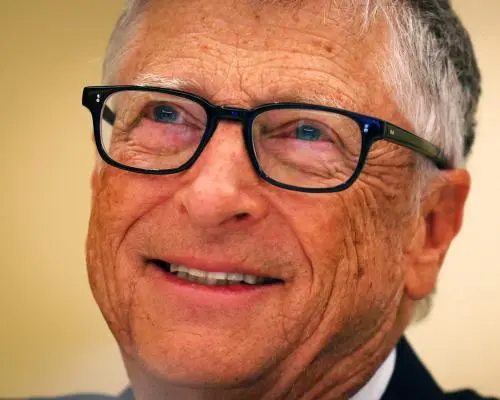
In a televised interview with NBC’s Kristen Welker on Sunday, Microsoft co‑founder and philanthropist Bill Gates urged U. S. lawmakers and law‑enforcement agencies to act swiftly on artificial‑intelligence oversight. He warned that without firm rules, the technology could cause „a billion deaths,” and that relying on industry self‑regulation is insufficient.
Breaking news
 Montenegro, Albania Seek NATO Help to Counter Russian Disinformation
 Ronna McDaniel Weighs In on GOP's Path Forward
 Market Sentiment Shifts as S&P 500 Snaps Three-Day Losing Streak
 Voters Demand Stronger Congressional Oversight of Presidential Power
Gates, who has long championed global health initiatives, said the rapid pace of AI development poses existential risks that outstrip current safety measures. He argued that the federal government must step in with clear legal frameworks, enforcement mechanisms, and accountability standards. The remarks came amid growing congressional hearings on AI, as tech giants race to deploy increasingly powerful models in fields ranging from healthcare to finance.
Gates highlighted several scenarios where unchecked AI could become deadly. He cited autonomous weapons that might be deployed without proper human oversight, and AI‑driven misinformation campaigns capable of sparking widespread panic or conflict. „If we let algorithms decide who lives and who dies, we’re handing over the future to a black box,” he said. He also warned that AI could exacerbate existing inequalities, concentrating power in the hands of a few corporations that control the most advanced systems.
Should Congress Lead the Fight Against AI Risks?
The billionaire philanthropist emphasized that the technology’s potential for harm is not speculative. Recent incidents—such as AI‑generated deepfakes influencing elections and automated trading bots causing market flash crashes—demonstrate real‑world consequences. Gates urged that regulations should cover data privacy, model transparency, and mandatory safety testing before deployment. He called for a multi‑agency task force, combining the expertise of the Department of Justice, the Federal Trade Commission, and the National Institute of Standards and Technology, to monitor and enforce compliance.
Gates’ plea raises a critical question: can legislative bodies keep pace with the speed of AI innovation? He argued that waiting for the market to self‑correct is a dangerous gamble. „We need laws that are as agile as the technology they govern,” he asserted. Critics, however, caution that over‑regulation could stifle beneficial AI applications, such as breakthroughs in drug discovery or climate modeling. Balancing safety with progress, Gates suggested, requires input from scientists, ethicists, and the public, not just industry insiders.
The call for action arrives as the U. S. Senate prepares to vote on a bipartisan AI bill that would fund research into AI safety and establish a regulatory sandbox. If passed, the legislation could set a precedent for other nations grappling with similar dilemmas. Gates’ stark warning may add urgency to the debate, pushing policymakers to prioritize human life over unchecked technological ambition.
Frequently Asked Questions
What specific regulations does Bill Gates propose for AI? Gates advocates for mandatory safety audits, transparency requirements for algorithmic decision‑making, and a federal task force to enforce standards across industries.
Why does Gates believe self‑regulation is insufficient? He argues that profit motives and competitive pressures can lead companies to overlook or hide risks, whereas independent legal oversight can enforce consistent, enforceable safeguards.
How could AI potentially cause a billion deaths? Through misuse in autonomous weapons, large‑scale misinformation that triggers conflict, and systemic failures in critical infrastructure like healthcare or energy grids, AI could precipitate catastrophic loss of life if left unchecked.