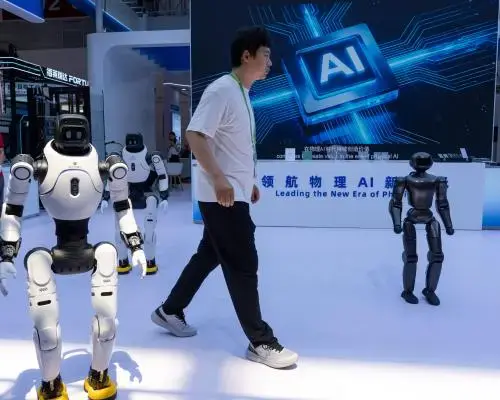
China Calls Out ' Fearmongering' Over AI Restrictions
Beijing dismissed a weekend essay by Anthropic CEO Dario Amodei that urged the United States to slow China’s artificial‑intelligence progress. The Chinese state responded with a sharp rebuke, labeling the remarks as „fearmongering” and reaffirming its confidence in domestic AI development. Amodei’s piece, published online, called for a global slowdown of AI capabilities, citing concerns over misuse and security. The Chinese government argued that such restrictions would harm innovation and international cooperation. Meanwhile, the head of the People’s Liberation Army’s intelligence unit issued a warning that AI could erode the Communist Party’s control over society.
Breaking news
 Deadly Glacier and Rock Collapse in Nepal Linked to Climate Warming
 US Congress Passes Sweeping Sanctions Against Russia
 Speaker Johnson Ends House Session Early to Halt Impeachment Effort
 The High-Stakes Fight for Senate Majority Control
The Chinese Ministry of Industry and Information Technology issued a statement condemning the essay as an attempt to stoke public anxiety. Officials said the global AI market is expected to reach $500 billion by 2025, and that China’s share will grow to over 30%. They highlighted domestic achievements, such as breakthroughs in natural‑language processing and autonomous driving, and urged the United States to engage in constructive dialogue rather than impose bans.
General Li Qiang, commander of the PLA’s intelligence arm, warned that AI systems could facilitate mass surveillance, misinformation, and autonomous weapons that might bypass party oversight. He stressed that the Party’s ideological control must adapt to new technologies. The warning came amid reports that China is investing heavily in quantum computing and AI ethics research, aiming to maintain a strategic edge.
Spy Chief Warns AI Could Undermine Party Authority
The dual messages illustrate China’s strategy: reject external pressure while reinforcing internal vigilance. Analysts note that the Party’s emphasis on „socialist core values” is being tested by AI’s capacity to amplify dissent and spread unverified content. The government’s response also signals its willingness to defend its AI ambitions against perceived Western interference.
The outcome of this clash remains uncertain. The United States has yet to adopt a formal policy to limit China’s AI growth, and global tech firms continue to collaborate across borders. However, the Chinese leadership’s warning may prompt tighter domestic controls, potentially affecting the pace of AI innovation and international cooperation.
Frequently Asked Questions
Q1: What prompted the Chinese government to respond so strongly? A1: The response was triggered by Dario Amodei’s essay, which called for a global slowdown of AI development, a stance the Chinese state viewed as an attempt to hinder its technological progress.
Q2: How does the spy chief’s warning affect China’s AI strategy? A2: It signals a shift toward stricter internal regulation and surveillance to prevent AI from undermining party authority, potentially leading to tighter controls on data and algorithmic transparency.
Q3: Will the United States impose restrictions on China’s AI industry? A3: There is no current plan for formal restrictions, but the U. S. may pursue targeted measures against specific Chinese AI firms if concerns about security or misuse intensify.