Iranian Missile Attacks Prompt U. S. Counterstrike
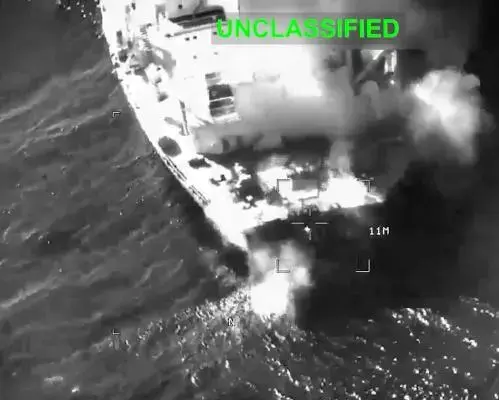
The United States military announced on Saturday that it had targeted and destroyed three Iranian oil tankers in response to missile strikes launched against American warships in the Persian Gulf. The attacks occurred after a U. S. aircraft carrier and a destroyer successfully evaded multiple missile attacks fired from Iranian forces. The incident marks a sharp escalation in tensions between the United States and Iran, with U. S. officials warning that they would destroy Iran’s limited and exposed oil fleet if necessary.
Breaking news
 Deadly Glacier and Rock Collapse in Nepal Linked to Climate Warming
 US Congress Passes Sweeping Sanctions Against Russia
 Speaker Johnson Ends House Session Early to Halt Impeachment Effort
 The High-Stakes Fight for Senate Majority Control
The U. S. Central Command confirmed that the strikes took place in the Gulf of Oman, where the Iranian navy had reportedly launched short-range missiles at the carrier and destroyer. The U. S. ships were able to avoid the attacks through evasive maneuvers and countermeasures. In retaliation, U. S. aircraft launched precision strikes against the Iranian tankers, which were reportedly carrying oil and other strategic cargo. The operation was carried out by a coalition of U. S. aircraft and naval assets, with the goal of preventing the Iranian fleet from expanding its maritime capabilities.
What Are the Implications for Regional Stability?
The missile attacks on U. S. warships were described by Iranian officials as „unprovoked” and aimed at deterring U. S. naval presence in the region. U. S. officials, however, framed the response as a defensive measure to protect their forces and to deter further Iranian aggression. The U. S. Central Command stated that the strikes were conducted with precision and that no U. S. personnel were harmed. The decision to target the tankers was taken after assessing that the Iranian fleet posed a growing threat to international shipping lanes and U. S. interests in the Gulf.
The U. S. Navy’s ability to evade the missile attacks was attributed to advanced radar and electronic warfare systems, which allowed the carrier and destroyer to detect incoming threats and deploy countermeasures. The U. S. forces also coordinated with allied naval units to secure the area and prevent the Iranian forces from exploiting the situation. The incident underscores the heightened risk of naval engagements in the Persian Gulf, a region already fraught with geopolitical tensions.
The U. S. strikes on Iranian tankers have raised concerns about a potential spiral of violence in the Middle East. Analysts warn that Iran could retaliate by targeting U. S. or allied shipping, leading to a broader conflict. The U. S. has reiterated its commitment to protecting maritime routes that are vital for global trade, while also signaling that it will not tolerate attacks on its naval assets. The incident may prompt Iran to intensify its missile development and maritime operations, further destabilizing the region.
Frequently Asked Questions
The U. S. has also warned that it would „destroy Iran’s limited and exposed oil fleet” if the situation escalated. This statement signals a willingness to use force to protect its interests and to deter Iran from using its oil fleet as a strategic weapon. The broader international community, including the United Nations and regional partners, has called for restraint and diplomatic solutions to prevent a wider conflict.
Q: Were any U. S. personnel injured during the missile attacks? A: No, U. S. officials confirmed that all personnel aboard the carrier and destroyer remained unharmed after the ships evaded the missiles.