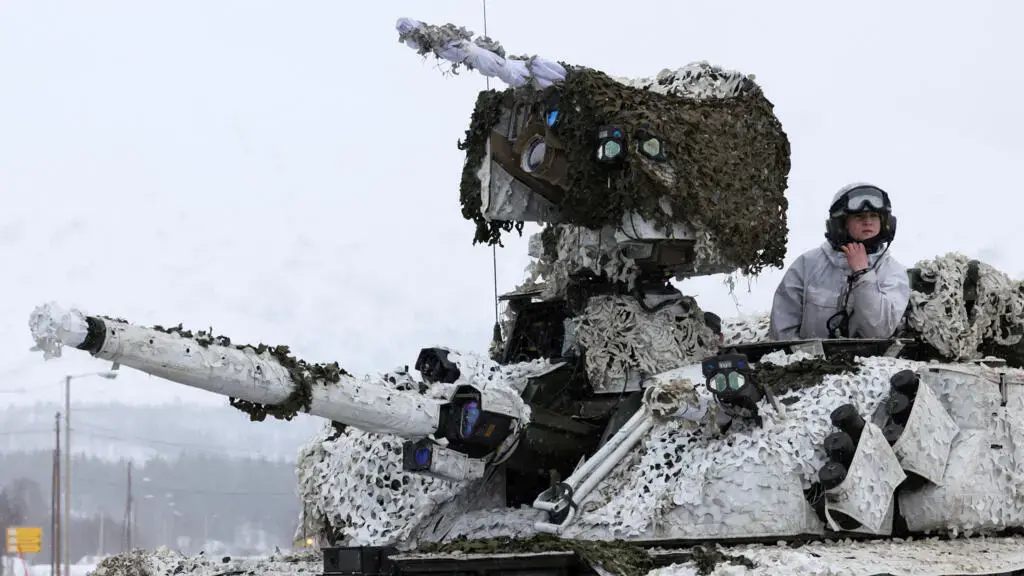
Russia views the region as vital to its national security and economic interests
Twelve European nations gathered in Helsinki on Monday to call for a stronger European Union presence in the Arctic, citing growing concerns over Russian military activity in the region. The meeting, hosted by Finland, brought together defense and foreign ministers from NATO and EU member states to discuss strategic vulnerabilities in the far north. Officials warned that Russia has significantly increased its military footprint in the Arctic over the past decade, reopening Cold War-era bases and deploying advanced weaponry near NATO borders. They argued that the EU must enhance its surveillance capabilities, invest in icebreaker fleets, and coordinate joint patrols to counter what they described as a clear and present threat to regional stability. Why the Arctic matters now more than ever The Arctic is becoming a focal point of geopolitical tension as melting ice opens new shipping routes and access to untapped natural resources.
Breaking news
 Deadly Glacier and Rock Collapse in Nepal Linked to Climate Warming
 US Congress Passes Sweeping Sanctions Against Russia
 Speaker Johnson Ends House Session Early to Halt Impeachment Effort
 The High-Stakes Fight for Senate Majority Control
Russia views the region as vital to its national security and economic interests, while Western allies fear Moscow could use its northern flank to project power into the Atlantic and Nordic seas. EU leaders stressed that a fragmented response risks leaving the bloc exposed. How can the EU strengthen its Arctic posture? Experts suggest the EU should expand its Copernicus satellite monitoring program to cover Arctic waters more frequently and fund research into dual-use civilian-military infrastructure. Proposals also include creating a dedicated Arctic security fund and improving coordination between EU agencies like Frontex and the European Defence Agency. Finland’s defense minister emphasized that unity among member states is essential for any effective deterrent. What happens if the EU fails to act? Analysts warn that delayed action could allow Russia to consolidate control over key Arctic chokepoints, undermining NATO’s northern flank and complicating future crisis response.
Without a coordinated EU strategy, individual countries may pursue unilateral measures, weakening collective security. The outcome of this push will shape Europe’s ability to defend its interests in an increasingly contested region. Frequently Asked Questions Which countries participated in the Helsinki meeting? The twelve nations included Finland, Sweden, Norway, Denmark, Estonia, Latvia, Lithuania, Poland, Germany, France, the Netherlands, and Belgium. What specific capabilities do leaders want the EU to add? They called for improved satellite surveillance, more icebreakers, and joint military patrols to monitor Russian activity. Is the EU currently involved in Arctic security? The EU has limited direct military role in the Arctic but supports research, environmental monitoring, and cooperation through existing programs and partnerships.