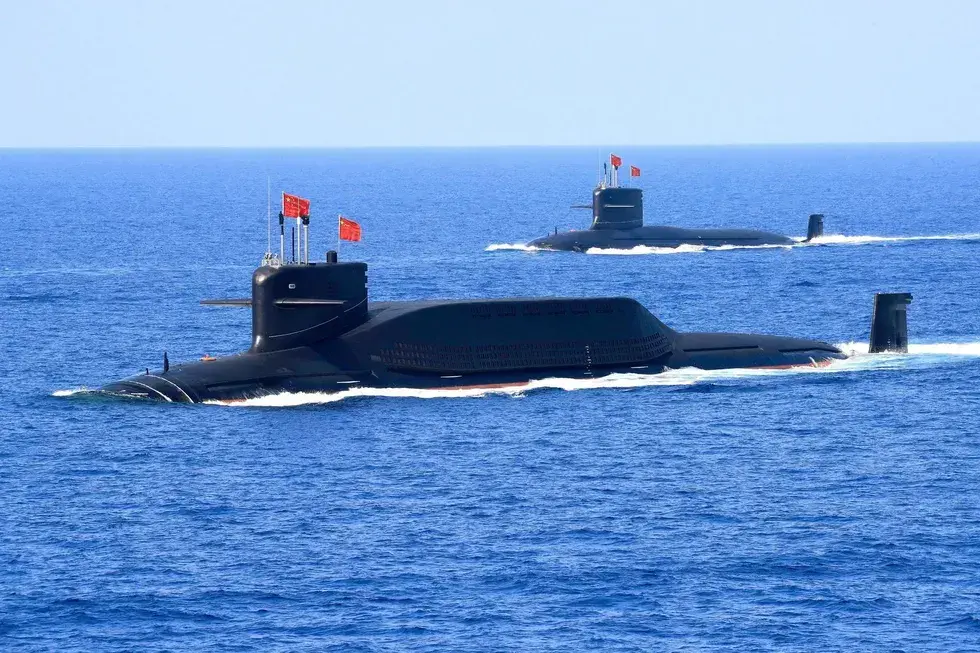
Strategic implications for China’s nuclear posture
On Monday, the People’s Liberation Army launched a long‑range submarine‑launched ballistic missile toward the South Pacific. The test took place from a Jin‑class nuclear submarine in the East China Sea and was monitored by regional observers. It marks the third known SLBM trial by Beijing in recent years.
Breaking news
 Deadly Glacier and Rock Collapse in Nepal Linked to Climate Warming
 US Congress Passes Sweeping Sanctions Against Russia
 Speaker Johnson Ends House Session Early to Halt Impeachment Effort
 The High-Stakes Fight for Senate Majority Control
The missile, believed to be a JL‑2 variant, traveled several thousand kilometres before splashing down in international waters. Chinese officials called the exercise „routine training,” but analysts note the rarity of such launches. The test follows earlier underwater missile trials in 2014 and 2021, suggesting Beijing is refining its second‑strike capability. Experts say the move signals progress toward a complete nuclear triad—land, air, and sea‑based deterrents.
China’s ability to launch ballistic missiles from submarines enhances its survivability in a conflict. Submarine platforms can hide beneath the ocean, making them harder to target. The latest test demonstrates improvements in missile range and accuracy, according to defense observers. „China is closing the gap between its declared doctrine and actual capability,” said a senior analyst at the International Institute for Strategic Studies. The JL‑2’s estimated range of 7,200 km would allow Chinese submarines to strike targets across the Indo‑Pacific without surfacing.
What does this mean for regional security?
The test also reflects Beijing’s broader push to modernize its armed forces. Recent years have seen investments in stealthier submarines, advanced launch systems, and new missile designs. Military planners view a credible sea‑based deterrent as essential for maintaining strategic stability, especially as the United States expands its own submarine fleet in the region.
Neighboring countries expressed concern after the launch. Japan’s defense ministry issued a statement urging transparency, while Australia called for dialogue to reduce the risk of miscalculation. The United States, a key ally of many Pacific nations, reaffirmed its commitment to uphold freedom of navigation. Diplomats warn that increased SLBM activity could heighten tensions, especially amid ongoing disputes over maritime boundaries and Taiwan.
If China continues to perfect its submarine‑launched arsenal, the balance of power in the Indo‑Pacific may shift. A reliable sea‑based nuclear force could embolden Beijing’s diplomatic posture, potentially affecting negotiations on trade, climate, and regional security. Observers suggest that future tests will be closely watched, and that diplomatic channels must remain open to prevent escalation.
Frequently Asked Questions
How many SLBM tests has China performed? China has publicly acknowledged three submarine‑launched ballistic missile trials: in 2014, 2021, and the recent 2024 exercise.
What is the range of the JL‑2 missile? The JL‑2 is estimated to travel roughly 7,200 kilometres, enabling strikes across much of the Indo‑Pacific from hidden submarine positions.
Will this test affect U. S. naval operations? The United States monitors Chinese submarine activity closely. While the test does not alter existing naval deployments, it may prompt adjustments in surveillance and deterrence strategies.