The Hydro-Energy Crisis and Trade Bottlenecks
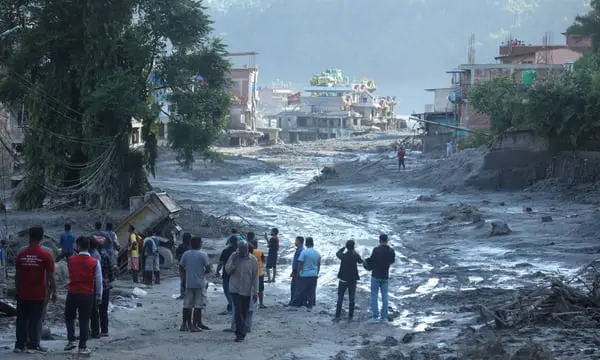
It is fair to ask why frontline nations must shoulder the catastrophic consequences of disasters they did not cause. Who should fund the reconstruction of a country whose geography was radically altered overnight? Nepal has long adapted to difficult terrain and mountain forces. Yet, the events of August 26, 2026, exceeded all precedents. Apocalyptic images circulated globally, showing entire landscapes disintegrating.
Breaking news
 Montenegro, Albania Seek NATO Help to Counter Russian Disinformation
 Ronna McDaniel Weighs In on GOP's Path Forward
 Market Sentiment Shifts as S&P 500 Snaps Three-Day Losing Streak
 Voters Demand Stronger Congressional Oversight of Presidential Power
Seven weeks have passed since a massive rock collapse in the Langtang Lirung massif of northern Nepal. This rock mass fell into a glacial lake, triggering a devastating debris torrent across the Rasuwa-Trishuli corridor. Thick mud still covers the area. The human toll is tragic. Nearly 1,500 people lost their lives, thousands remain missing, and survivors are rebuilding from scratch. Damages extend far beyond human lives, destroyed bridges, missing roads, and buried homes.
The hydropower sector suffered a major blow. In a single afternoon, this phenomenon knocked out over 400 megawatts of clean energy. This halted operational projects and construction alike. Such a setback hurts a nation aiming for 30,000 megawatts of renewable energy within a decade. Much of this electricity was destined to support the green transition of neighboring countries. The destruction of roughly 10% of Nepal's total installed capacity disrupted the national energy balance. It also blocked the main trade artery to China, which is vital for importing electric vehicles.
Escalating Disasters and Systemic Vulnerabilities
Despite global expectations, Nepal had become a leader in green mobility. Passenger electric vehicle adoption surpassed 75%. These efforts are now paralyzed. Beyond the numbers, suffering touches the mountain spirit. The affected corridor was a sacred route for pilgrims traveling to the ancient Kailash-Mansarovar sanctuary. Hindus and Buddhists revere this site, and global explorers love it. Many missing or deceased victims were pilgrims and tourists. Ecotourism destruction and the isolation of cross-border travelers have shaken historical and spiritual ties across South Asia.
The crisis escalated through September and October, defying forecasts. In September, extreme post-monsoon rains caused simultaneous landslides across multiple districts. These rains repeatedly snapped power lines and fractured economic corridors despite repair efforts. The illusion of predictability vanished entirely in October. On October 11, a landslide breached a natural dam on the Budhigandaki River in central Nepal, west of Kathmandu. The debris struck a 341 MW run-of-river construction site. Although the main structure partially survived, the incident raises critical questions about systemic safety, early warning systems, and adaptation costs.
The Cost of Inaction and the Road Ahead
Unless authorities address these vulnerabilities, cascading risks will cross national borders. This will deprive the entire region of energy opportunities needed for a collective green transition. Nepal must critically reflect on its own development strategy. Yet, the core problem remains: no frontline nation can manage systemic global failure alone. Prime Minister Balendra Shah highlighted this harsh truth before the UN General Assembly. He warned that physical recovery could absorb up to 10% of the national GDP.
For a country contributing less than 0.1% to global greenhouse gas emissions, this situation is an unfair financial penalty. An unequal global architecture imposes it. Why should an exposed nation independently bear the financial and physical risks of cross-border infrastructure? The survival of the entire subcontinent depends on it. Regional states must align their strategies and act together. Is it fair for Nepal to carry this burden alone, or is this the ultimate test of regional solidarity and global responsibility?
Ahead of the UN Climate Change Conference in Antalya, Nepal will serve as a case study. The question is whether the world will treat us as a mere statistic or as a living warning about stalled green transitions. Current climate finance systems remain indifferent to rapidly evolving Himalayan crises. A country that followed the correct path by investing in citizen-funded hydropower and accelerating electric vehicle adoption now faces severe setbacks.