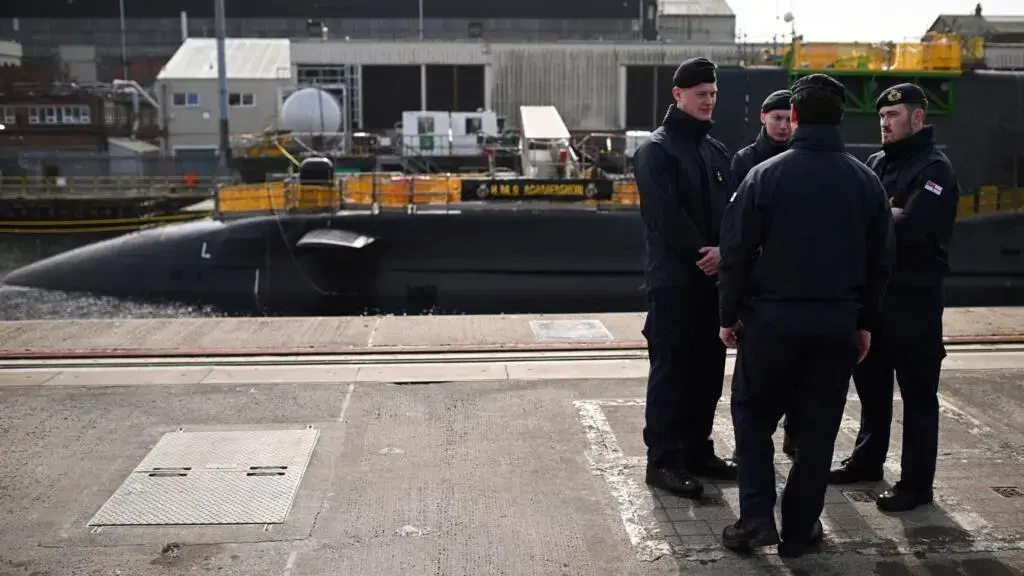
Autonomous Weapons: From Concept to Sea Trials
The United Kingdom and the United States conducted a joint test on 22 September 2026, firing a torpedo from an unmanned underwater vehicle off the coast of England. The trial, part of the AUKUS partnership, marked the first time a weapon was launched without a crew on board, demonstrating a new level of autonomous naval capability.
Breaking news
 Lula’s Win Puts Global South Diplomacy to the Test
 Max Miller Loses Congressional Seat Amid Domestic Abuse Allegations
 Democrats Win Senate Control as Voters Reject Trump Agenda
 Democrat Brian Poindexter Defeats Incumbent Max Miller in Ohio’s Seventh District
The test involved a remotely operated submarine equipped with a standard heavyweight torpedo. Engineers from both nations monitored the launch from a command ship and a shore‑based control center. The successful strike confirmed that the vehicle could locate, track and engage a target without human intervention, a key milestone for future combat‑ready drones. Officials say the exercise supports AUKUS goals to modernise fleets and reduce risk to personnel in hostile waters.
The unmanned vessel, developed under a joint research program, integrates advanced sonar, AI‑driven decision‑making and secure communications. During the trial, the drone identified a simulated target, calculated a firing solution and released the torpedo, which detonated on impact. „We have shown that a fully autonomous platform can execute a complex weapons sequence safely,” said a senior Royal Navy spokesperson. The United States Navy’s program office added that the test validates the reliability of the vehicle’s navigation and fire‑control software under real‑world conditions.
What Are the Strategic Implications of Uncrewed Torpedo Launches?
The project builds on years of incremental testing, including unmanned surface ships and smaller underwater drones. Funding from the AUKUS alliance has accelerated development, aiming to field operational units within the next decade. Analysts note that autonomous torpedo launchers could change naval tactics, allowing fleets to project power while keeping crews out of harm’s way.
Deploying weaponized drones raises questions about rules of engagement and command authority. Military leaders stress that human oversight remains essential; the autonomous system only executes pre‑approved missions. The technology could also deter adversaries by complicating detection and response, as unmanned subs are harder to track than traditional vessels. However, critics warn that the speed of autonomous decision‑making might increase the risk of unintended escalation in a conflict.
The successful test signals a shift toward more integrated, networked maritime forces. Both navies plan to expand trials, incorporating multiple drones operating together and testing against moving targets. If the technology matures, it could lead to new classes of stealthy, low‑cost platforms that supplement larger warships.
Frequently Asked Questions
How does the unmanned submarine navigate without a crew? It uses a combination of inertial navigation, GPS when near the surface, and sonar mapping to maintain its course and avoid obstacles.
Can the autonomous system fire without human approval? No. Operators must upload mission parameters and authorize the launch; the AI only carries out the prescribed actions.
What timeline is expected for operational deployment? Both countries aim to have combat‑ready uncrewed torpedo platforms in service by the early 2030s, following further testing and integration.