Potential Deployment Scenarios
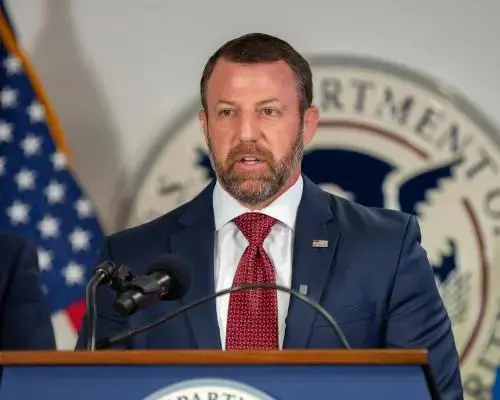
US Homeland Security Secretary Markwayne Mullin announced Tuesday that ICE officers might be sent to polling locations nationwide if specific threats arise. He clarified that officers would not serve as general poll monitors, but would intervene only when credible danger is identified, ensuring public safety.
Breaking news
 Deadly Glacier and Rock Collapse in Nepal Linked to Climate Warming
 US Congress Passes Sweeping Sanctions Against Russia
 Speaker Johnson Ends House Session Early to Halt Impeachment Effort
 The High-Stakes Fight for Senate Majority Control
Mullin made the remarks during a press briefing in New York, stressing that ICE’s mission focuses on concrete security threats. The comment follows heightened debate over election security and immigration enforcement.
Could ICE officers actually be sent to polling stations?
According to Mullin, ICE’s presence would be limited to situations where a verifiable threat emerges. He emphasized, „ICE isn’t there to patrol the polling places. We’re there to enforce specific threats.” The agency would coordinate with local law enforcement to determine necessary actions.
Are ICE agents legally allowed to work at polling stations?
Legal experts note that deploying federal agents to voting sites raises constitutional questions about voter intimidation and the separation of powers. Critics argue the move could politicize immigration enforcement, while supporters claim it bolsters election security. The White House has not yet confirmed any operational plan.
If ICE were deployed, it could heighten tensions at polling places and prompt legal challenges. The situation may influence voter perception and shape campaign rhetoric leading up to the next election cycle.
How would ICE’s presence affect voter turnout?
Federal law allows agencies to help local authorities, but using ICE for routine poll monitoring is likely illegal. Any deployment would require clear evidence of a specific security threat.
What alternatives exist for election security?
A visible federal presence might deter some voters fearing intimidation, while others could feel reassured by added security. The overall impact depends on how the deployment is communicated and perceived by the public.
Election officials can rely on state police, National Guard units, and trained civilian poll workers. These options generally avoid the politicized perception associated with ICE.