Legal Ruling Reshapes Local Dynamics
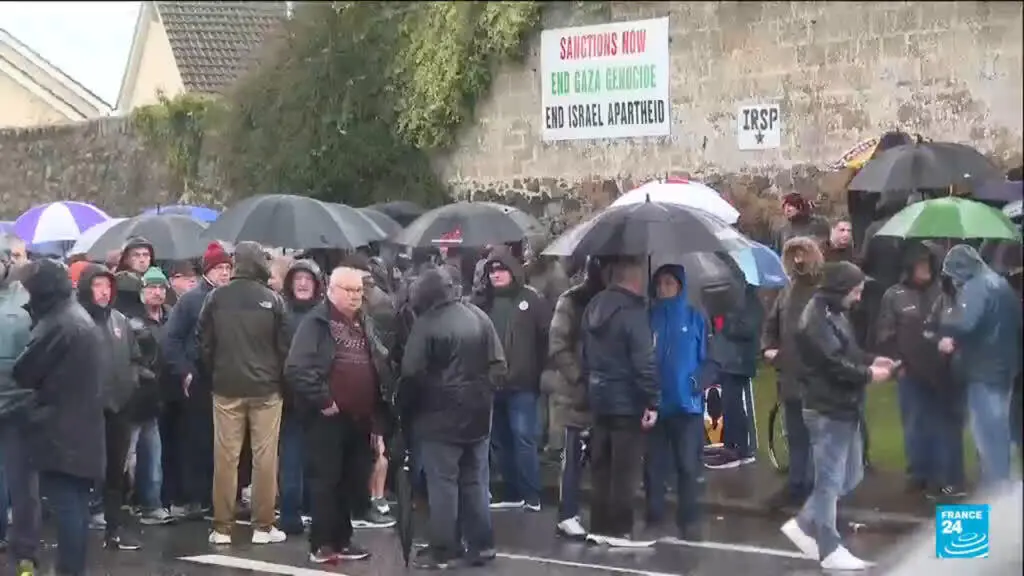
Tensions in Northern Ireland have escalated sharply following a ruling by the Belfast Supreme Court. The court approved a parade route that allows Protestant marchers to pass through a predominantly Catholic neighborhood. This is the first time such a procession has taken place in this specific area in nearly thirty years. The decision has ignited fierce debate among local communities.
Breaking news
 Montenegro, Albania Seek NATO Help to Counter Russian Disinformation
 Ronna McDaniel Weighs In on GOP's Path Forward
 Market Sentiment Shifts as S&P 500 Snaps Three-Day Losing Streak
 Voters Demand Stronger Congressional Oversight of Presidential Power
The legal victory stems from a long-standing dispute over parades in the region. The Supreme Court in Belfast reviewed the case and granted permission for the march to proceed. This move breaks a decades-long pattern where such routes were often avoided or heavily negotiated. The approval signals a shift in how local authorities manage cultural and religious processions. It places the event at the center of ongoing political friction in the province.
The court’s decision was not made in isolation. It reflects broader legal challenges regarding public order and religious expression. Marching organizations argued that the route was historically significant. Opposing groups claimed the path disrupted the peace of their residential streets. The judiciary had to balance these competing interests carefully. The final judgment favored the marchers' right to demonstrate. This outcome has emboldened similar groups elsewhere in the region. They now cite this precedent in their own planning applications.
Will This Precedent Spark New Conflicts?
Community leaders on both sides reacted strongly to the news. Catholic residents expressed concern about potential clashes. They fear that the march could reignite old grievances. Protestant organizers viewed the ruling as a fair application of the law. They emphasized that the march would remain peaceful. Police forces prepared extensive security plans for the day. Barricades were set up at key junctions to control crowds. The atmosphere remained tense but orderly during the event. No major incidents were reported, though minor scuffles occurred at the edges.
The immediate aftermath shows a divided community. Some see the march as a return to normalcy. Others view it as a provocative step forward. Political parties in Belfast are debating the implications. They discuss whether future parades should follow this new template. The ruling sets a clear legal benchmark for similar cases. It reduces the power of local committees to block routes. This change could lead to more frequent confrontations. However, it also provides a clearer framework for negotiation.
Frequently Asked Questions
Looking ahead, the region faces continued adjustment. The successful completion of this march offers a glimmer of hope. It proves that large-scale events can happen without total breakdown. Yet, underlying tensions remain deep-rooted. Future marches will likely face similar scrutiny. The legal precedent established here will guide decisions for years. Communities must find ways to coexist despite differing traditions. The next few months will reveal if this moment marks a turning point. Or if it simply opens a new chapter of friction.
Why did the Supreme Court approve the parade route? The court ruled that the marchers had a legal right to use the route. It balanced religious expression against local residential concerns.
How many years had passed since the last such march? It has been nearly thirty years since a Protestant march took place in this specific Catholic area.