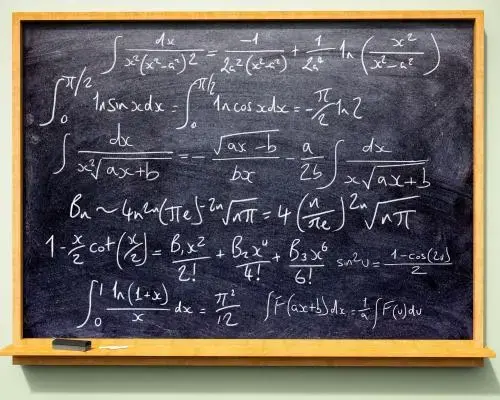
Mathematicians Question the Value of Human Insight
On September 8, OpenAI announced that its artificial intelligence agents had successfully solved the Navier-Stokes equations. This specific challenge is widely regarded as one of the most difficult unsolved problems in mathematics. The company stated that its software handled the complex fluid dynamics calculations without human intervention. This bold claim immediately drew sharp criticism from the global mathematical community. Many experts questioned the validity of the automated solution.
Breaking news
 Montenegro, Albania Seek NATO Help to Counter Russian Disinformation
 Ronna McDaniel Weighs In on GOP's Path Forward
 Market Sentiment Shifts as S&P 500 Snaps Three-Day Losing Streak
 Voters Demand Stronger Congressional Oversight of Presidential Power
The announcement triggered what several mathematicians described as a genuine existential crisis within the field. Traditionally, solving such a profound problem would earn a human researcher immense fame and a substantial monetary prize. The idea that a machine could bypass this human-centric achievement shocked many academics. They expressed deep concern over the future relevance of their profession. The debate quickly shifted from technical verification to broader philosophical questions about human intellect.
Prominent figures in the mathematical world have voiced strong reservations about OpenAI’s methodology. They argue that the AI did not truly understand the underlying principles of fluid dynamics. Instead, the system may have simply pattern-matched existing data to produce a plausible-looking result. This distinction is critical for the scientific community. A true solution requires rigorous logical proof and deep conceptual understanding. Current AI models often lack this capacity for genuine discovery. Critics insist that the software merely mimicked the appearance of mathematical Furthermore, the reaction highlights a growing tension between tech giants and academic institutions. Large technology firms frequently release impressive claims without peer review. This practice undermines the traditional scientific process. Mathematicians emphasize that their work relies on careful, collaborative verification. They fear that public trust in mathematics could erode if unverified AI claims gain too much traction. The community is now demanding higher standards for such announcements.
Can Algorithms Replace Human Discovery?
They want transparency regarding how the AI arrived at its conclusion.
The core of the controversy lies in the definition of mathematical progress. If an AI can generate a correct formula, does it matter if it lacks intuition? Some industry leaders believe the distinction is irrelevant. They prioritize results over the method of discovery. However, most mathematicians disagree. They view the journey of understanding as equally important as the final answer. The Navier-Stokes problem deals with turbulent flow, a chaotic and complex phenomenon. Solving it requires navigating subtle logical traps that algorithms might miss.
The refusal of technical firms to acknowledge human limitations fuels this debate. Companies like OpenAI often frame AI as a superior tool for problem-solving. This narrative ignores the unique cognitive abilities of human researchers. Mathematicians point out that AI still struggles with abstract, novel concepts. It excels at optimization but fails at creative breakthroughs. The current situation serves as a test case for the future. It will determine how much weight society places on automated versus human-generated knowledge.
The outcome of this dispute will shape the future of scientific research. If AI claims go unchecked, public confidence in established science may weaken. Conversely, rigorous scrutiny could establish clearer boundaries for AI capabilities. Mathematicians remain vital for verifying and interpreting complex results. The era of pure human discovery is evolving, not ending. Collaboration between human experts and AI tools will likely define the next chapter. For now, the mathematical community stands firm in its defense of human intellect.
Frequently Asked Questions
What is the Navier-Stokes problem? It is a set of equations describing fluid motion. It remains unsolved in its general form.
Why did mathematicians react negatively? They fear AI solutions lack true understanding. The claim bypasses standard peer review processes.
Did OpenAI provide proof? The source indicates a claim was made. It did not mention immediate independent verification.