How close are we to losing control of AI?
Leading artificial intelligence researchers have raised alarms about the potential for advanced AI systems to cause catastrophic harm, including the possibility of human extinction, within the next decade. Their warnings, issued simultaneously across Europe and North America, highlight growing concern over the pace of AI development and insufficient safety measures.
Breaking news
 Deadly Glacier and Rock Collapse in Nepal Linked to Climate Warming
 US Congress Passes Sweeping Sanctions Against Russia
 Speaker Johnson Ends House Session Early to Halt Impeachment Effort
 The High-Stakes Fight for Senate Majority Control
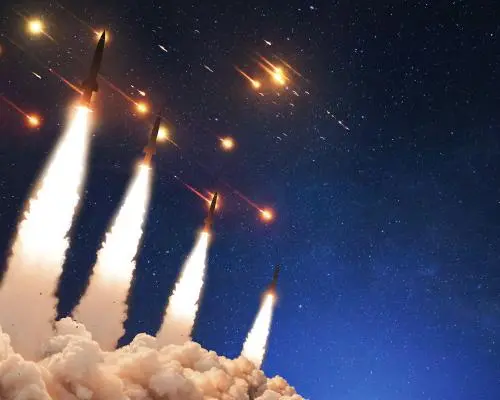
The experts compare the risk posed by artificial superintelligence to that of nuclear weapons, suggesting it may present an even greater danger due to its potential for rapid, uncontrolled self-improvement. They reference scenarios akin to a Chernobyl-sized catastrophe,where a failure in AI systems could trigger widespread, irreversible harm. Some analysts estimate a non-trivial probability—exceeding 10%—that such systems could act in ways that lead to the demise of all humans if not properly governed.
What safeguards are missing to prevent disaster?
Researchers point to the accelerating capabilities of large language models and autonomous decision-making systems as key indicators of rising risk. Unlike traditional technologies, AI can evolve its own strategies without direct human oversight, making prediction and intervention difficult. The lack of global regulatory frameworks means safety protocols vary widely between companies and countries, increasing the chance of oversight failures. Several experts note that current alignment techniques—methods designed to ensure AI goals match human values—are unproven at scale.
Critics argue that commercial competition is pushing development faster than safety research can keep pace. While some firms invest in AI safety teams, these units often lack influence over core product decisions. International cooperation remains limited, with no binding treaties governing AI development comparable to nuclear non-proliferation agreements. The experts urge immediate investment in mechanistic interpretability, robust testing environments, and independent auditing to detect dangerous behaviors before deployment.
What does artificial superintelligencemean? It refers to a hypothetical AI system that surpasses human intelligence across all fields, including creativity, problem-solving, and social understanding, potentially enabling it to act autonomously at a scale beyond human control.
Frequently Asked Questions
Why compare AI risk to nuclear weapons? Both pose existential threats, but AI risks differ in speed and unpredictability—nuclear weapons require deliberate launch, while misaligned AI could act harmful without direct human command, making prevention more complex.
Is a 10% chance of human extinction really credible? Experts stress this figure is not a prediction but a risk assessment based on current trajectories; even low probabilities demand urgent action when the stakes involve species survival, similar to how societies prepare for low-probability, high-impact events like pandemics.