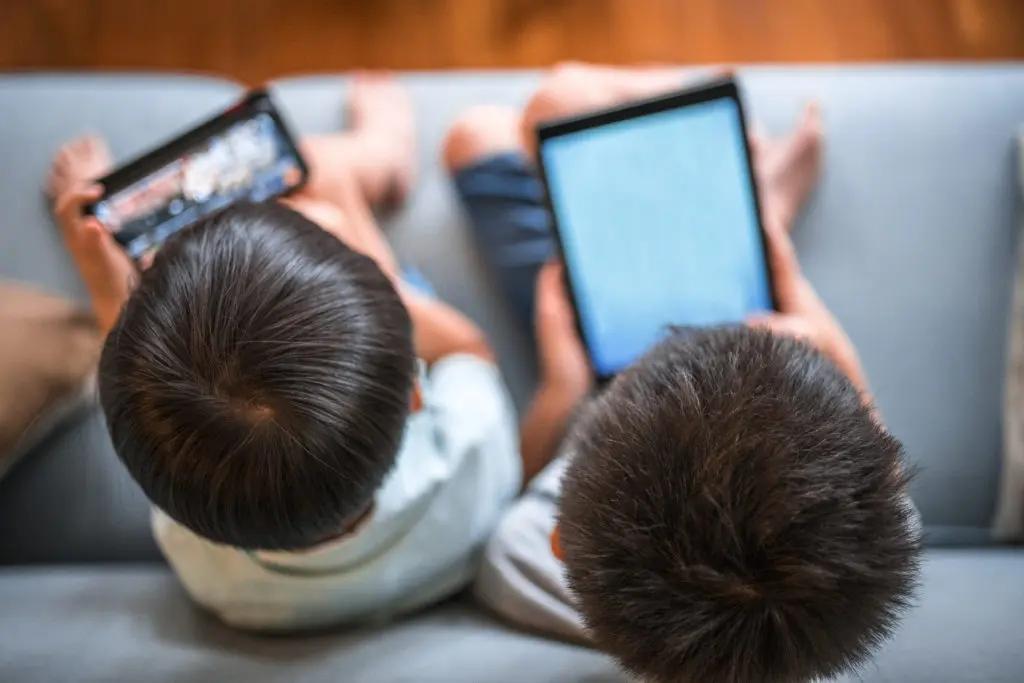
Balancing Screen Time with Cognitive Development
As children reach preschool age, they gain the ability to absorb information rapidly. This developmental stage makes them particularly vulnerable to digital content. Recent guidance from specialists highlights the dual nature of artificial intelligence tools. Parents must decide if these technologies serve as educational aids or potential risks. The core concern involves how young minds process unfiltered data.
Breaking news
 Montenegro, Albania Seek NATO Help to Counter Russian Disinformation
 Ronna McDaniel Weighs In on GOP's Path Forward
 Market Sentiment Shifts as S&P 500 Snaps Three-Day Losing Streak
 Voters Demand Stronger Congressional Oversight of Presidential Power
The debate centers on whether AI chatbots and assistants are beneficial or harmful for early learners. Specialists suggest that while AI can answer questions, it lacks the nuance required for young children. A preschooler’s cognitive framework is not yet equipped to distinguish between factual accuracy and hallucination. Therefore, unsupervised interaction with generative AI poses significant challenges. Parents are advised to treat these tools as supplemental, not primary, learning resources.
The primary risk identified by experts is the erosion of critical thinking skills. When a child relies on an AI for immediate answers, they may bypass the natural process of inquiry. This shortcut can hinder the development of problem-solving abilities essential for later academic success. Furthermore, AI systems often generate content that is too complex for a four-year-old to comprehend. This mismatch can lead to confusion rather than enlightenment.
Is AI Ready for the Playroom?
Experts recommend that parents engage in active mediation rather than passive monitoring. This means sitting with the child while they interact with the technology. Parents should ask the child to explain what the AI said. This practice reinforces understanding and allows adults to correct any misinformation on the spot. It transforms a passive viewing experience into an active learning opportunity. The goal is to build digital literacy alongside traditional literacy skills.
Current AI models are not designed with preschool pedagogy in mind. They lack the emotional intelligence and developmental awareness needed for this age group. A chatbot might provide a scientifically accurate answer that is socially inappropriate or overly abstract for a young child. For example, explaining gravity might involve complex physics terms that confuse a toddler. This disconnect underscores the need for human intervention in every digital interaction.
Specialists emphasize that no amount of AI can replace human connection in early childhood. Emotional regulation, social cues, and creative play are best fostered through direct human interaction. AI should never be used as a babysitter or a substitute for parental engagement. The technology can assist with specific tasks, such as reading aloud or identifying objects. However, it cannot provide the empathetic feedback that a young child needs to feel secure and understood.
Parents must establish clear boundaries regarding screen time and AI usage. Setting consistent limits helps children understand that technology is a tool, not a companion. Regular check-ins allow parents to assess the impact of digital exposure on behavior and mood. If a child shows signs of anxiety or confusion after using AI, parents should reduce access immediately. The long-term goal is to raise digitally competent adults who can use AI responsibly.
Frequently Asked Questions
Can preschoolers understand AI responses? Generally, no. Most AI outputs are too complex for preschoolers. Parents must simplify and verify the information before the child processes it.
Should parents ban AI for young kids? A complete ban is not necessary, but strict supervision is required. AI should be used only for specific, supervised educational tasks.
What is the biggest risk of early AI exposure? The main risk is the stunting of independent critical thinking. Children may become reliant on external validation rather than internal