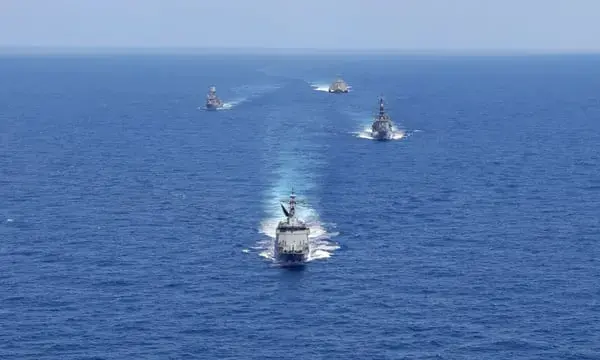
Strengthening Alliances in the Indo-Pacific
On April 7, 2024, Australia, Japan, the Philippines, and the United States participated in a Maritime Cooperative Activity (MCA) to enhance regional security. This joint exercise reflects the increasing focus on maritime security amid China's growing influence in the Indo-Pacific region.
Breaking news
 Greenpeace Investigates Zaporizhzhia Nuclear Plant Power Lines
 Researcher warns strict age limits needed for children on social media
 Hezbollah defends its arsenal amid Lebanese political deadlock
 Can an AI Chatbot Reduce Maternal Deaths in Kenya?
The MCA aimed to strengthen alliances and improve coordination among these nations in response to China's assertive maritime claims. Experts believe that these exercises are essential for maintaining freedom of navigation and ensuring a balance of power in the region. Dr. James R. Holmes, a prominent strategist, emphasizes the importance of these partnerships as a counter to potential threats posed by China's expansionist policies.
The recent MCA demonstrates a commitment to collective security among the participating nations. With China expanding its military capabilities and asserting control over disputed territories, regional allies recognize the need for cooperation. The exercise included naval maneuvers, communication drills, and strategic planning sessions.
Is the U. S. Prepared for Maritime Challenges?
Dr. Holmes highlights that such activities are crucial for building trust and interoperability among allied forces. He notes that enhancing maritime security not only protects national interests but also promotes stability in the broader Indo-Pacific region. The collaboration between these countries is seen as a direct response to China's growing naval presence and its implications for global trade routes.
As China continues to expand its maritime reach, questions arise about the U. S. readiness to address emerging challenges. Dr. Holmes argues that while the U. S. has a robust naval presence, it must adapt to the evolving security landscape. This includes investing in new technologies and strengthening partnerships with regional allies.
The stakes are high, as a failure to effectively counter China's maritime ambitions could lead to increased tensions and instability. Experts warn that the U. S. must remain vigilant and proactive in its approach to maritime security to safeguard its interests and those of its allies.
Frequently Asked Questions
In conclusion, the recent Maritime Cooperative Activity underscores the urgency of collaborative efforts among nations facing the challenges posed by China's rise. The ongoing commitment to joint exercises and strategic partnerships will be vital for maintaining security and stability in the Indo-Pacific region.
What is the purpose of the Maritime Cooperative Activity? The MCA aims to enhance regional security through joint exercises among allied nations, focusing on improving coordination and readiness against potential maritime threats.
How does China's growth impact U. S. maritime security? China's expanding military capabilities and assertive maritime claims pose challenges to U. S. interests and regional stability, necessitating stronger alliances and proactive measures.