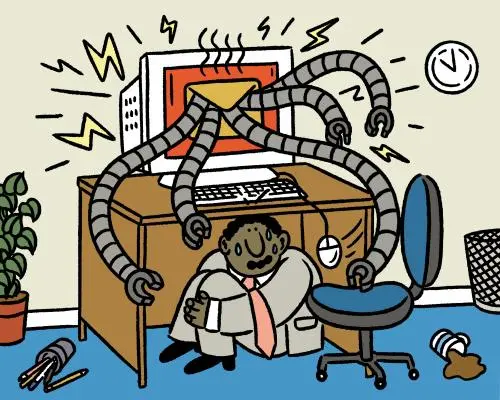
The Synthetic Paperwork Crisis
Parliamentary offices, local authorities, legal services, and schools across the United Kingdom are facing an unprecedented deluge of automated messages. What began as a minor inconvenience in early 2024 has transformed into a daily avalanche of artificial intelligence-generated correspondence. Public servants now struggle to separate genuine citizen concerns from synthetic noise.
Breaking news
 Train crash kills seven, injures dozens near Egypt's Cairo city
 Egypt announces major Mediterranean gas find
 U.S. Forces Disable Ship After It Attempts to Break Hormuz Blockade
 Stephen Miller and DOJ Weigh Jail for Leaking Journalists
Parliamentary caseworkers report that roughly half of all incoming digital mail now originates from chatbots. Constituents increasingly rely on generative tools to draft lengthy complaints and policy demands. This technological shift creates severe bottlenecks, leaving human staff overwhelmed and delaying urgent responses to real people who genuinely need assistance.
The automation wave fundamentally alters how citizens interact with their elected representatives and public institutions. While artificial intelligence tools aim to make communication easier, they often produce repetitive, overly verbose messages that lack personal context.
How Are Institutions Adapting to the Digital Onslaught?
Caseworkers like Hollie Wickens describe the current situation as an onslaught that threatens to paralyze public administration. Processing these machine-made grievances consumes valuable time, diverting resources away from complex casework and community outreach.
Public sector offices are currently searching for effective ways to filter incoming messages without ignoring legitimate concerns. Staff members must carefully read each submission to ensure automated drafts do not hide genuine emergencies or critical local issues.
Frequently Asked Questions
The unchecked proliferation of bot-driven correspondence threatens to undermine the vital connection between citizens and government officials. Without new filtering technologies or policy adjustments, public administration systems risk grinding to a complete halt under the heavy digital weight.
What caused the surge in automated messages to UK public offices? The widespread availability of generative artificial intelligence tools allows citizens to easily draft and dispatch lengthy complaints and inquiries.
Which public sectors are affected by this digital influx? Parliamentary offices, local authorities, legal services, and schools are all dealing with massive increases in chatbot-generated correspondence.