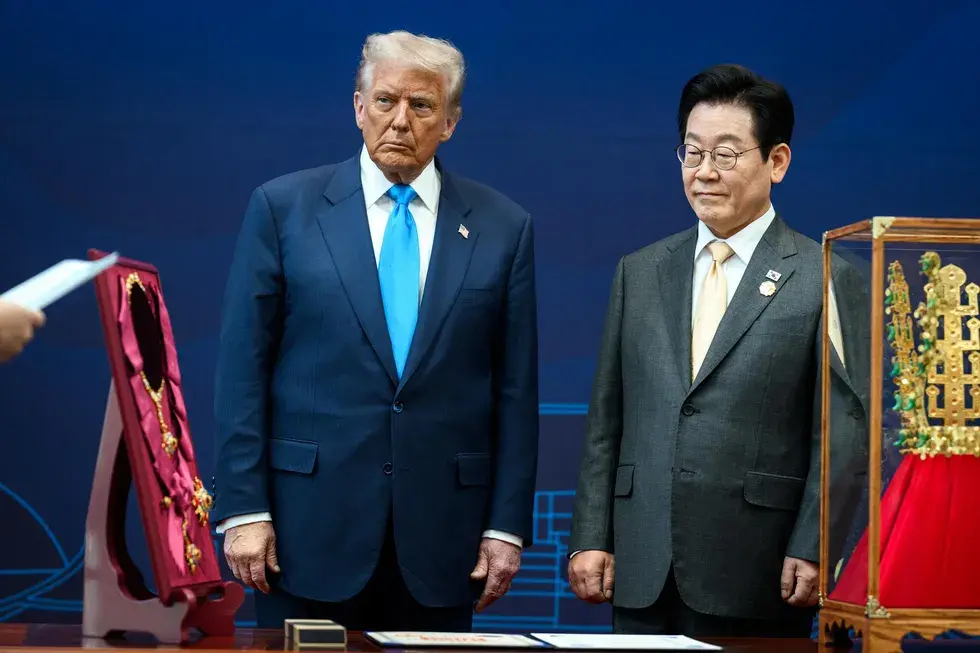
South Korea’s Strategic Calculus
South Korea announced it will not send military forces to the Strait of Hormuz, despite U. S. calls for allies to support a swift reopening of the vital waterway. The decision comes amid heightened tensions in the Middle East and a renewed U. S. push for regional partners to step up.
Breaking news
 Ronna McDaniel Weighs In on GOP's Path Forward
 Market Sentiment Shifts as S&P 500 Snaps Three-Day Losing Streak
 Voters Demand Stronger Congressional Oversight of Presidential Power
 Pelosi Looks Back, Sees Democratic Triumph Ahead
Washington has urged European and Asian allies to provide additional naval support and intelligence to secure the strait. The U. S. government believes that a broader coalition could pressure Iran into negotiations. Yet most partners, including South Korea, have resisted the request, citing domestic concerns and strategic priorities.
South Korean officials cited several factors for their stance. First, the country prioritizes domestic security and the defense of its own borders. Second, it maintains strong economic ties with Iran, which could be jeopardized by overt military involvement. Third, the nation’s defense policy emphasizes deterrence rather than direct engagement in foreign conflicts.
A senior defense spokesperson said, „We are committed to regional stability, but our resources are focused on protecting our own territory.” The statement also noted that South Korea’s military budget is already stretched thin by modernization programs. Analysts suggest that the decision reflects a broader trend of Asian countries preferring diplomatic solutions over military deployments.
Will the Strait Reopen Without Korean Support?
The absence of South Korean troops may slow efforts to secure the waterway, but it does not halt U. S. initiatives. The U. S. Navy has already increased its presence in the region, deploying additional destroyers and surveillance aircraft. European allies have pledged to enhance intelligence sharing and provide logistics support.
However, the lack of a unified coalition could embolden Iran to maintain its blockade of shipping lanes. Shipping companies have warned of rising insurance costs and delays. The international community remains divided over how best to address the crisis without escalating conflict.
South Korea’s decision also raises questions about the future of U. S. alliances. If other partners follow suit, Washington may need to re‑evaluate its strategy for maintaining freedom of navigation. Some experts argue that a more balanced approach, combining diplomatic pressure with limited military presence, could yield better results.
Frequently Asked Questions
The situation remains fluid. While the U. S. continues to pursue diplomatic channels, the strategic calculus of individual allies will shape the pace at which the Strait of Hormuz returns to normal operations. The international community watches closely, hoping for a resolution that preserves global trade and regional peace.
Why is South Korea refusing to send troops? South Korea prioritizes its own defense and economic interests. It also wants to avoid direct conflict that could strain its relations with Iran.
What does this mean for U. S. allies? It signals that not all allies are willing to commit militarily. The U. S. may need to rely more on diplomatic efforts and existing naval forces.
When could the Strait of Hormuz reopen? If diplomatic negotiations succeed quickly, the strait could reopen within weeks. Otherwise, it may remain partially restricted until a broader coalition forms.