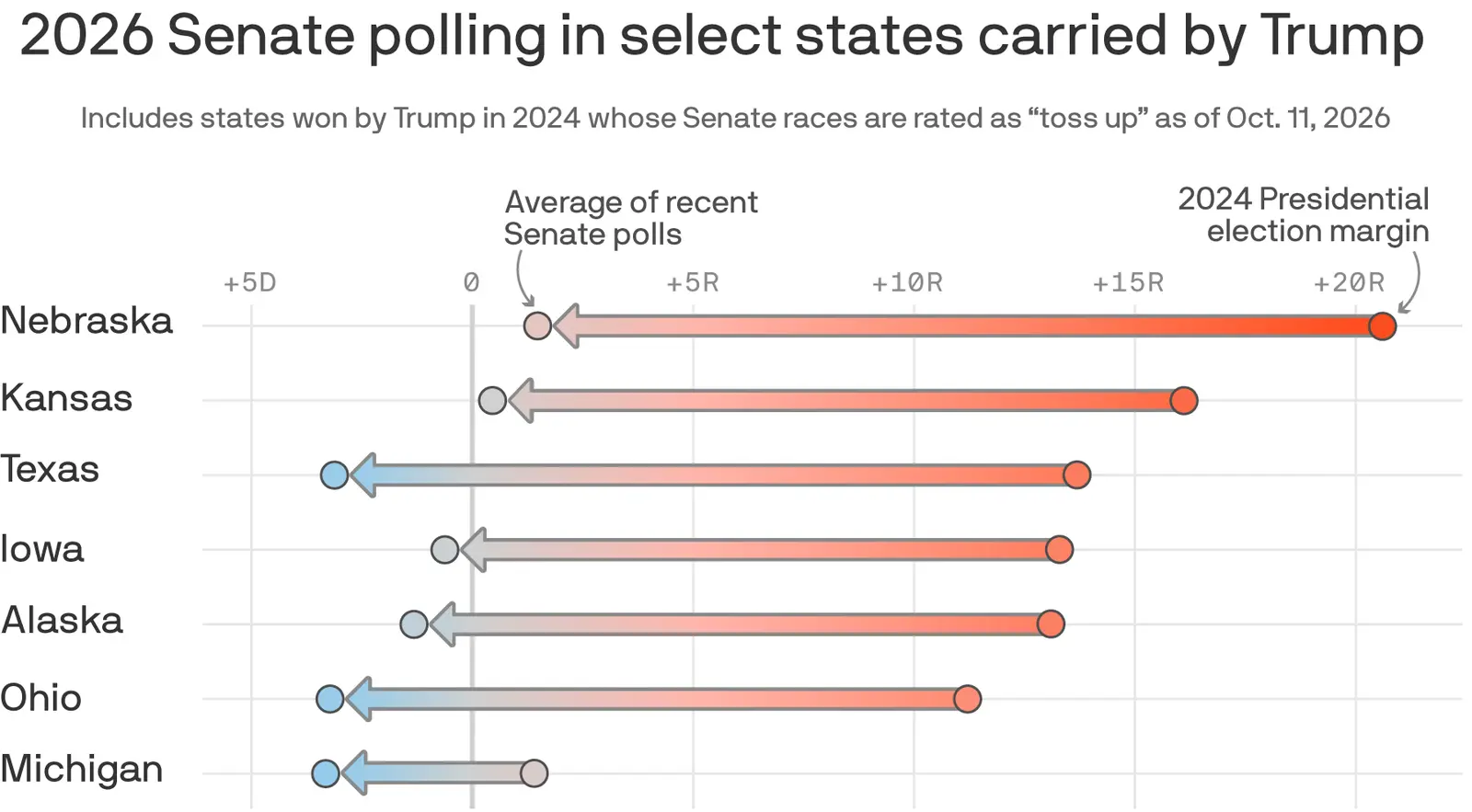
Red-State Challenges Disrupt Established Norms
Democrats are mounting aggressive campaigns in traditionally reliable Republican strongholds this election cycle. Unexpectedly tight Senate contests in states like Nebraska are forcing a reevaluation of the national political map. These developments suggest that the traditional definition of swing states may be expanding significantly ahead of the 2028 presidential election cycle.
Breaking news
 Montenegro, Albania Seek NATO Help to Counter Russian Disinformation
 Ronna McDaniel Weighs In on GOP's Path Forward
 Market Sentiment Shifts as S&P 500 Snaps Three-Day Losing Streak
 Voters Demand Stronger Congressional Oversight of Presidential Power
The current political climate has pushed several red-leaning states into the competitive column. Analysts note that Republican dominance is no longer guaranteed in regions previously considered safe. By forcing opponents to spend resources in areas once ignored, Democrats are successfully stretching the national campaign infrastructure. This tactical shift has created new vulnerabilities for incumbents who previously faced little opposition.
The Nebraska Senate race serves as a primary example of this emerging trend. An independent candidate is currently challenging the Republican establishment, complicating the path to victory. This race highlights a broader disconnect between party leadership and local voter sentiment in rural areas. When margins narrow in deep-red territory, it signals a potential long-term realignment of voter priorities.
Could These Surprising Contests Reshape Future Cycles?
Data from the American Presidency Project indicates that voter turnout patterns are shifting in rural and suburban districts. Democrats are leveraging these changes to gain ground in states where they were previously non-competitive. While the Republican base remains strong, the erosion of their traditional margins is providing an opening for opposition candidates.
The ability of Democrats to remain competitive in red states forces both parties to reconsider their long-term strategies. If these states remain in play, the 2028 map will likely feature a much larger collection of battlegrounds. This would fundamentally alter how presidential candidates allocate their time and financial resources. Campaigns can no longer afford to focus exclusively on a handful of well-known swing states.
Frequently Asked Questions
The outcome of these current races will determine the intensity of future election cycles. If the trend of narrowing margins continues, the political map will become increasingly volatile. Both parties must now prepare for a landscape where no state is truly safe. This evolution promises to redefine the national political discourse for years to come.
Why are traditionally red states becoming competitive? Voter demographics and local issues are shifting, leading to a decline in the reliable margins Republicans once enjoyed. This allows opposition candidates to gain traction in areas that were previously considered safe.
How does this impact future presidential elections? A larger pool of competitive states forces campaigns to spread their resources thinner across the country. It prevents candidates from focusing solely on traditional swing states, potentially changing the entire strategy for the 2028 cycle.


