The Battle for Airwaves
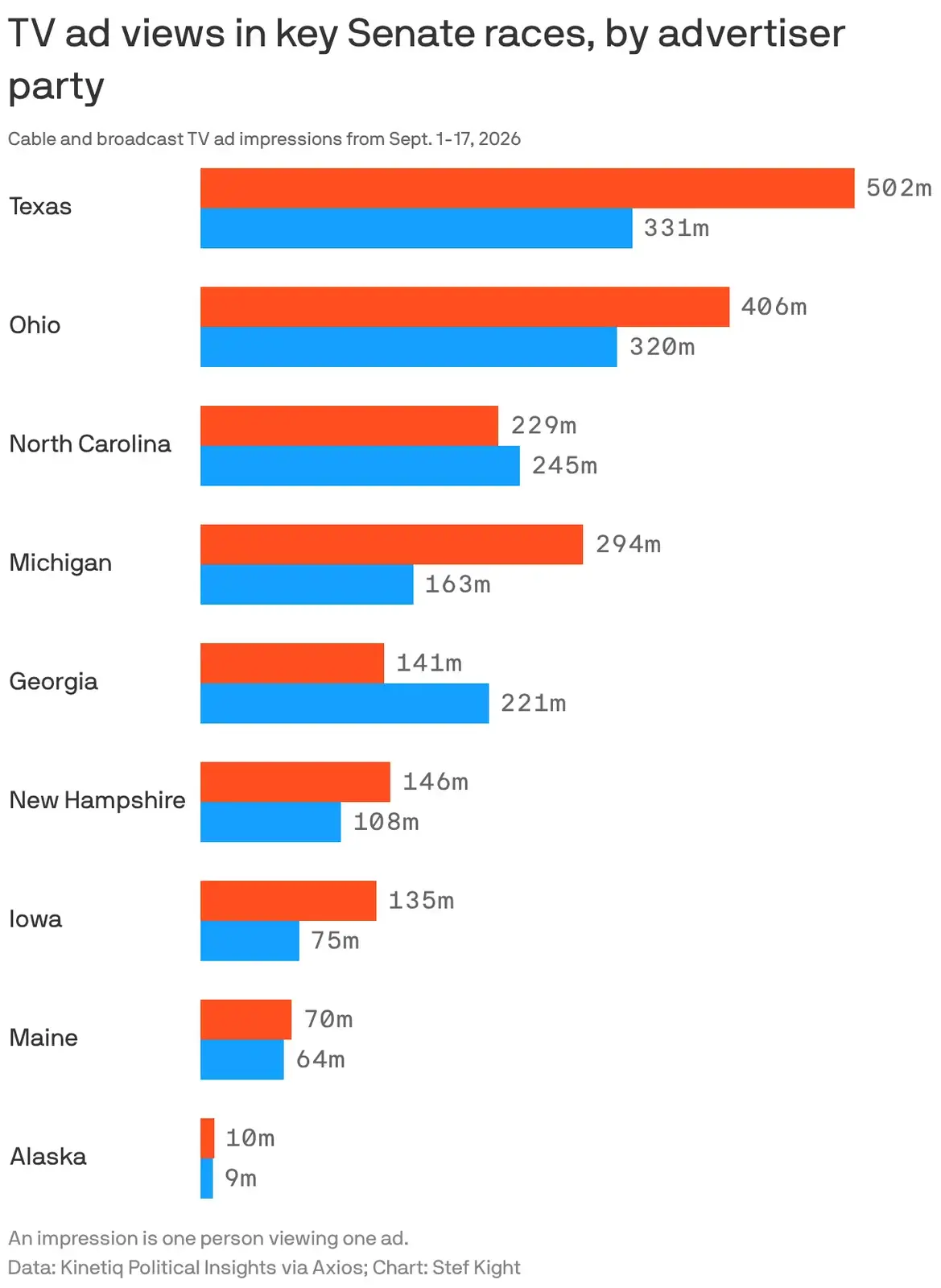
Republican political organizations are rapidly outpacing Democratic rivals in television and digital advertising spending across key Senate battlegrounds. This surge in campaign funding marks a strategic shift as the party aims to capture undecided voters in the final weeks of the election cycle. Both camps are now fighting for dominance in the high-stakes struggle for voter attention.
Breaking news
 Montenegro, Albania Seek NATO Help to Counter Russian Disinformation
 Ronna McDaniel Weighs In on GOP's Path Forward
 Market Sentiment Shifts as S&P 500 Snaps Three-Day Losing Streak
 Voters Demand Stronger Congressional Oversight of Presidential Power
The GOP’s aggressive investment strategy targets swing states where Senate control remains highly contested. By saturating local media markets, Republican committees hope to define their opponents early and solidify support among suburban voters. This financial pivot reflects a broader effort to leverage superior fundraising totals to influence the national narrative before ballots are cast.
Can Democrats Close the Advertising Gap?
The influx of capital allows Republican candidates to maintain a constant presence on television screens. This strategy is designed to counteract Democratic messaging that has previously dominated the airwaves in these regions. Data indicates that the spending gap is widening, forcing Democratic groups to reallocate resources to remain competitive in critical media markets.
Campaign managers are prioritizing high-impact spots in states like Pennsylvania, Arizona, and Montana. The goal is to maximize visibility among independent voters who often decide the outcome of tight races. As the cost of advertising continues to rise, the ability to sustain these campaigns has become a primary indicator of institutional strength.
Democratic strategists are now scrambling to secure additional funding to neutralize the Republican advantage. Many are relying on grassroots donations to bridge the financial divide, though experts suggest the current momentum favors the GOP. The effectiveness of these expensive media campaigns remains the central question for party leadership heading into election day.
Frequently Asked Questions
What is driving the shift in Senate campaign spending? Republicans are prioritizing aggressive media buys to control the narrative in key swing states. This strategy aims to sway undecided voters by saturating local television and digital platforms.
Why is this spending surge significant for the Senate? Control of the Senate is currently balanced on a knife-edge. Increased advertising budgets allow parties to reach more voters, potentially shifting the momentum in states where the race is too close to call.


