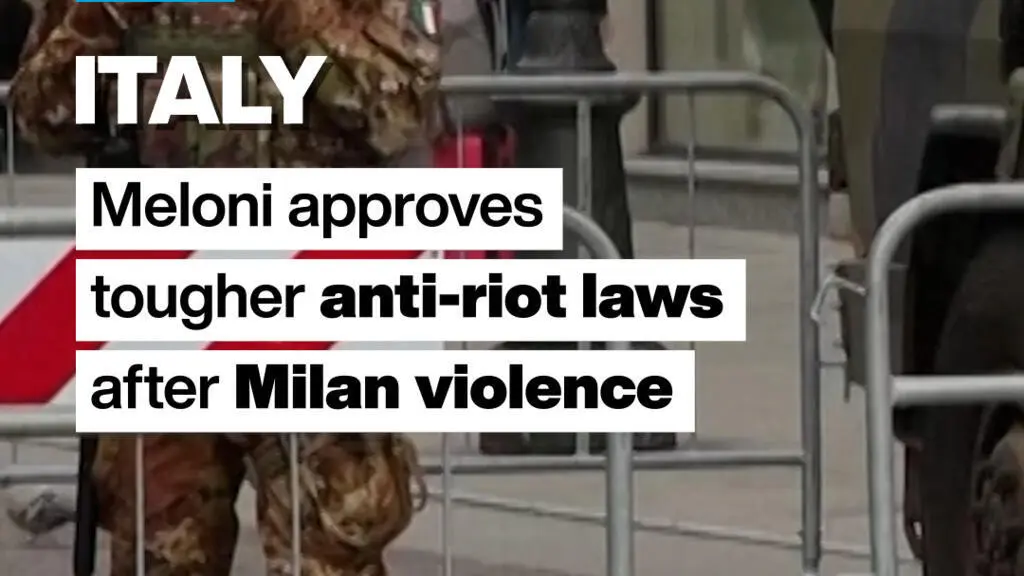
New Criminal Offense Targets Violent Protesters
Giorgia Meloni’s government approved a package of security measures on Tuesday. The new legislation targets unrest following violent protests in Milan. A specific crime for violent participation in riots was added to the penal code. This move aims to tighten the legal framework against public disorder.
Breaking news
 Montenegro, Albania Seek NATO Help to Counter Russian Disinformation
 Ronna McDaniel Weighs In on GOP's Path Forward
 Market Sentiment Shifts as S&P 500 Snaps Three-Day Losing Streak
 Voters Demand Stronger Congressional Oversight of Presidential Power
The Italian parliament voted to pass the bill quickly. Lawmakers responded to recent street violence that disrupted major cities. The core of the proposal introduces a distinct offense for rioting. This allows police to arrest participants more easily during disturbances. The government argues that current laws are too slow for modern protest dynamics. Critics worry the new rules might limit the right to demonstrate peacefully.
The legislative change creates a new category of crime. It specifically addresses individuals who join violent riots. Under the previous system, prosecutors had to prove specific acts of damage or injury. Now, mere participation in a violent gathering can lead to charges. The law sets clear boundaries for what constitutes a riot. Police can detain suspects for up to six days before trial. This extended detention period gives investigators more time to build cases.
Will the New Rules Change Future Protests?
Meloni stated that the state must protect citizens from chaos. She emphasized that order is essential for a functioning democracy. The prime minister noted that recent events in Milan highlighted gaps in enforcement. Her administration believes the new tools will deter future outbreaks of violence. Supporters claim the measure balances safety with civil liberties. They argue that violent protesters are not exercising a peaceful right.
Opponents from the left describe the bill as a reaction to fear. They point out that the definition of a riot remains broad. Some legal experts warn about potential misuse during large demonstrations. The opposition party called for a slower review process. However, the center-right majority pushed the text through both chambers. The speed of approval suggests high political urgency.
The impact on street activism remains a key question. Unions and student groups are already adjusting their strategies. Many plan smaller, more organized marches to avoid triggering the new law. Police forces have received updated training on the new protocols. They now have clearer guidelines for when to intervene. The goal is to reduce ambiguity on the ground.
Frequently Asked Questions
Data from the last five years shows an increase in protest-related incidents. The government uses these statistics to justify the crackdown. They cite rising costs for city infrastructure and public transport. Repairing damage after demonstrations has become a budgetary concern. The new law also includes provisions for faster court hearings. Cases involving the new riot charge will be prioritized.
What specific crime was added to the Italian penal code? The legislation creates a new offense for violent participation in riots. Individuals caught in these specific violent gatherings face immediate criminal liability. This simplifies the prosecution process compared to older laws.
How long can police detain suspects under the new rules? Police may hold arrested individuals for up to six days before a judge reviews the case. This extension provides investigators with additional time to gather evidence. It marks a significant shift from previous detention limits.


