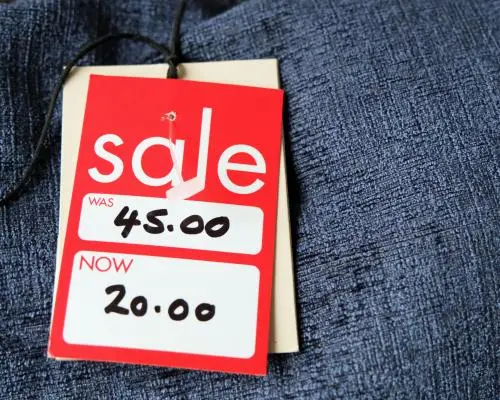
The Mechanics Behind Misleading Discounts
In Romania, the government is preparing new rules to curb deceptive pricing practices that mislead shoppers into believing they are getting a bargain. The move comes as consumer groups report a surge in „always‑on” discounts, from endless clearance sales to inflated original prices that never existed. Officials say the legislation will target stores that repeatedly display misleading price cuts, whether online or on the high street.
Breaking news
 Deadly Glacier and Rock Collapse in Nepal Linked to Climate Warming
 US Congress Passes Sweeping Sanctions Against Russia
 Speaker Johnson Ends House Session Early to Halt Impeachment Effort
 The High-Stakes Fight for Senate Majority Control
Retailers have long used psychological tricks to create the illusion of savings. By marking a product with a crossed‑out „original” price that is higher than any price ever charged, they convince buyers that the current price is a deal. Some shops keep „closing‑down” sales open for years, blurring the line between genuine liquidation and marketing hype. The government’s plan, announced by Prime Minister Nicolae Ciucă, aims to define a clear threshold for what qualifies as a legitimate discount and to enforce penalties for violations. Consumer watchdogs welcome the initiative, arguing that transparent pricing is essential for a fair market.
Experts explain that false discounts rely on three main tactics. First, retailers inflate the „original” price, often based on a one‑time promotional tag that never reflects regular sales data. Second, they extend „sale” periods indefinitely, making it impossible for shoppers to verify whether a price drop is temporary. Third, online platforms use algorithmic pricing that can change within minutes, yet the displayed „discount” remains static, giving the impression of a lasting bargain.
Are All Sales Legitimate, or Is This a New Wave of Deception?
„Customers are conditioned to look for the red slash and assume they’re saving money,” says Elena Popescu, a consumer‑rights attorney. „When the original price is fictitious, the discount is meaningless, and it erodes trust in the entire retail sector.” Recent studies by the National Consumer Protection Agency show that up to 42 % of shoppers have purchased items they later discovered were never sold at the advertised „original” price.
The upcoming legislation will require retailers to keep records of price histories for at least six months and to display the actual lowest price paid for a product during that period. Failure to comply could result in fines up to 5 % of annual revenue or temporary closure of the offending outlet.
Retail associations argue that the rules could burden small businesses that rely on flexible pricing to manage inventory. However, consumer groups counter that the benefits of transparency outweigh the administrative costs. „A clear standard protects both the buyer and honest sellers who don’t need to resort to gimmicks,” notes economist Mihai Ionescu.
If the law passes, shoppers can expect clearer price tags and more reliable discount information, while retailers will need to adjust marketing strategies to focus on genuine value rather than illusionary markdowns. The government plans to roll out the regulations in early 2025, with a public awareness campaign to educate consumers on how to verify real discounts.
Frequently Asked Questions
What defines a false discount? A false discount occurs when the „original” price shown has never been the actual selling price, or when the discount period is artificially prolonged to create a false sense of urgency.
How will the new rules be enforced? Authorities will audit price records, require retailers to display the lowest price paid in the past six months, and impose fines or temporary closures for non‑compliance.
Will small shops be affected? All retailers, regardless of size, must keep accurate price histories, but the law includes provisions for proportional penalties to avoid crushing small businesses.