How Message Discipline Affects Voter Perception
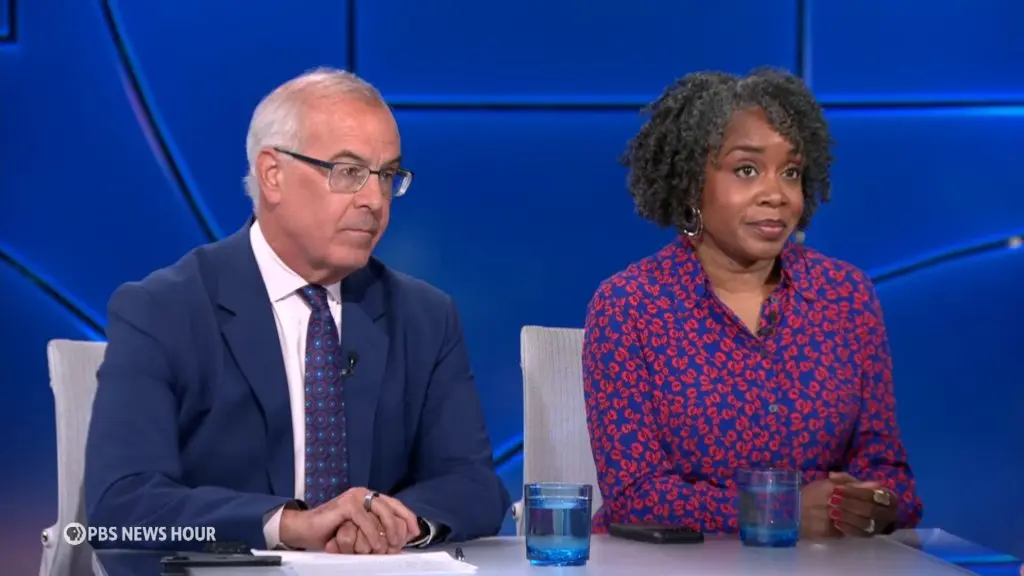
David Brooks of The Atlantic and Kimberly Atkins Stohr of The Boston Globe joined Geoff Bennett on PBS NewsHour to discuss the Republican Party's strategic challenges in the upcoming 2026 midterm elections. Speaking on October 2, 2026, the commentators highlighted growing concerns within the GOP about voter enthusiasm, candidate quality, and message consistency as key factors that could undermine their chances in competitive districts nationwide.
Breaking news
 Montenegro, Albania Seek NATO Help to Counter Russian Disinformation
 Ronna McDaniel Weighs In on GOP's Path Forward
 Market Sentiment Shifts as S&P 500 Snaps Three-Day Losing Streak
 Voters Demand Stronger Congressional Oversight of Presidential Power
Brooks pointed to internal divisions over the party's direction, noting that disagreements between traditional conservatives and more populist factions are creating confusion among voters. He cited recent polling showing declining trust in Republican leadership on economic issues, particularly among suburban voters who feel alienated by rhetoric perceived as extreme. Atkins Stohr added that candidate recruitment has struggled in several key states, with some high-profile contenders withdrawing due to lack of party support or personal controversies, leaving gaps in critical races.
Both analysts emphasized that inconsistent messaging is hurting the GOP's ability to build a coherent narrative. Brooks argued that mixed signals on issues like abortion and immigration are forcing candidates to constantly clarify their positions, which dilutes their impact. Atkins Stohr noted that Democratic campaigns are effectively exploiting these inconsistencies, using targeted ads to highlight contradictions in Republican platforms. She referenced focus group data from swing districts where voters expressed frustration over what they described as shifting explanationsfrom GOP candidates on core policy questions.
What Role Does Candidate Quality Play in Competitive Races?
Atkins Stohr stressed that the GOP is facing a talent deficit in several battleground areas, where experienced politicians are opting not to run due to the toxic nature of current political discourse. Brooks agreed, adding that the party's reliance on celebrity-backed or ideologically driven candidates in some districts has backfired, leading to avoidable missteps that energize opposition turnout. He warned that without stronger vetting and support for moderate-to-conservative candidates, Republicans risk losing seats they previously held by narrow margins.
The consequences of these vulnerabilities could be significant, with both commentators suggesting that Democrats may gain ground in the House and potentially challenge Republican control in the Senate. However, they cautioned that external factors like economic shifts or unexpected events could alter the trajectory before November. Ultimately, the GOP's ability to address internal divisions and present a unified, credible alternative will determine whether it can maintain its current advantage in the midterms.
Frequently Asked Questions
What specific issues are causing division within the Republican Party? Disagreements over economic policy, social issues like abortion, and the party's alignment with populist versus traditional conservative values are creating internal conflict that affects voter perception and candidate cohesion.
How are Democratic campaigns responding to Republican inconsistencies? Democrats are using targeted advertising and messaging to highlight contradictions in Republican platforms, particularly on issues where GOP candidates have shifted positions, aiming to undermine credibility in swing districts.
Why is candidate recruitment a concern for the GOP in 2026? Many experienced politicians are avoiding runs due to the hostile political climate, while some celebrity-backed candidates have made avoidable mistakes, weakening the party's competitiveness in key races.


