Indigenous Guardians Lead the Charge
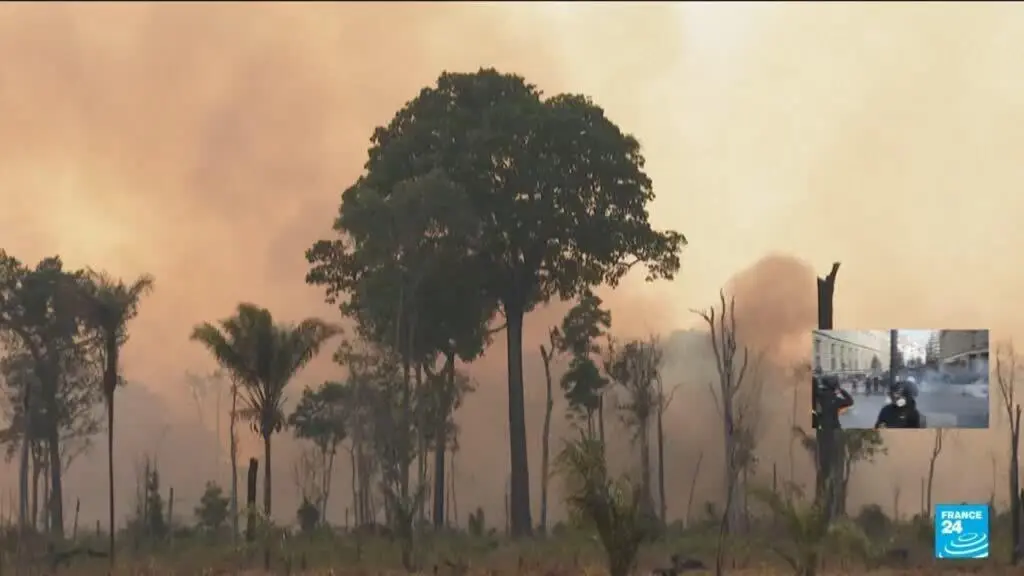
The Brazilian government announced that deforestation in the Amazon reached its smallest level in 40 years during the past year. The decline was recorded across the states of Pará, Mato Grosso and Amazonas, where satellite monitoring showed a 30 % reduction compared with the previous year. President Luiz Inácio Lula da Silva hailed the result as a testament to his administration’s stricter environmental policies and renewed enforcement actions.
Breaking news
 Montenegro, Albania Seek NATO Help to Counter Russian Disinformation
 Ronna McDaniel Weighs In on GOP's Path Forward
 Market Sentiment Shifts as S&P 500 Snaps Three-Day Losing Streak
 Voters Demand Stronger Congressional Oversight of Presidential Power
The fall in forest loss follows a series of measures introduced since Lula returned to office in 2023. Authorities increased fines for illegal logging, deployed more rangers to remote areas, and expanded the use of real‑time satellite imagery to spot incursions. Partnerships with Indigenous communities have also been strengthened, granting them greater authority to patrol traditional lands. Analysts attribute the trend to a combination of tighter regulations, heightened political will, and a slowdown in agricultural expansion driven by global market shifts.
Indigenous groups have become pivotal in protecting the rainforest. In the Xingu basin, the Xingu Indigenous Association reported that community patrols intercepted more than 150 illegal logging operations last year. „Our people have lived here for generations; the forest is our home and our responsibility,” said chief Marauá. The government’s recent decree granting Indigenous territories legal recognition has empowered these guardians, allowing them to request immediate police support when violations are detected. Satellite data from Brazil’s National Institute for Space Research (INPE) corroborated the on‑the‑ground reports, showing a sharp decline in cleared areas within Indigenous lands.
Can Brazil Sustain the Downward Trend?
While the numbers are encouraging, experts caution that the achievement may be fragile. Deforestation often spikes during commodity price surges, and the Amazon remains a target for cattle ranching and soy cultivation. Climate scientists warn that even modest forest loss can exacerbate regional droughts and threaten biodiversity. „We must translate this short‑term success into long‑term resilience,” said Dr. Ana Silva, a climate policy researcher at the Federal University of Rio de Janeiro. She emphasized the need for continued funding for monitoring technologies and for policies that balance economic development with conservation.
The latest figures suggest Brazil is on a promising path, yet the battle for the Amazon is far from over. Ongoing vigilance, community involvement, and international cooperation will be essential to keep the forest standing for future generations.
Frequently Asked Questions
What caused the recent drop in Amazon deforestation? A mix of stricter enforcement, higher fines, expanded satellite monitoring, and stronger Indigenous land rights reduced illegal logging and land clearing.
How reliable are the new deforestation statistics? The data come from Brazil’s INPE satellite system, which provides near‑real‑time coverage and has been cross‑checked by independent environmental NGOs.
Will the decline continue if commodity prices rise? Experts say higher demand for soy and beef could reverse the trend, so sustained policy pressure and market incentives for sustainable practices are crucial.


