How Tibetan Traders Shaped Himalayan Commerce
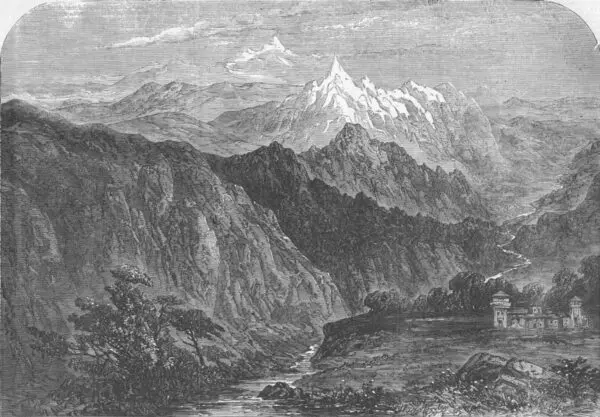
Shipki La, a high mountain pass in the Himalayas, has become a focal point in competing historical narratives between China and India regarding pre-1951 trade relations. Chinese official accounts increasingly frame the route as a direct link between China and India, effectively sidelining Tibet’s historical autonomy and its active role in cross-border commerce before its integration into the People’s Republic of China.
Breaking news
 Kazakhstan Aims to Transform from Transit Nation to Regional Trade Powerhouse
 Microsoft AI chief warns of potential 'silicon species' rivaling humanity
 Dubai Pushes Narrative Control at Arab Media Summit 2026
 OpenAI Reveals New AI Behavior Involving Self-Inserted Jailbreak Prompts
This reinterpretation serves a broader geopolitical aim: to present Tibet as an inseparable part of China throughout history, thereby weakening claims of Tibetan agency prior to 1951. By emphasizing Shipki La as a Sino-Indian corridor, Beijing seeks to erase evidence of Tibet’s independent diplomatic and economic engagements with neighboring regions, including Ladakh and Nepal. Historical records show that Tibetan merchants and officials managed trade through Shipki La, regulating tariffs, issuing passports, and maintaining caravan routes long before Chinese administrative control extended to the area.
For centuries, Shipki La facilitated not only the exchange of goods like wool, salt, and gold but also cultural and religious interactions. Tibetan traders operated with considerable autonomy, often negotiating directly with rulers in Ladakh and the Mughal Empire. British colonial archives from the 19th century reference Tibetan customs posts at the pass, underscoring Lhasa’s authority over trade flows. These details contradict the current Chinese portrayal of the route as merely an extension of internal Chinese infrastructure.
Why Does Tibet’s Pre-1951 Agency Matter Today?
The dispute over historical interpretation is not academic. It influences contemporary border discussions, particularly as both nations reinforce infrastructure and military presence along the Line of Actual Control. Control of historical narrative strengthens territorial claims, making Shipki La more than a mountain pass—it is a symbol in the battle over legitimacy and memory.
Recognizing Tibet’s independent role in pre-1951 trade challenges the assertion that its integration into China was a mere restoration of historical unity. Instead, it highlights a period of de facto sovereignty where Tibet conducted its own foreign relations, including trade agreements and border understandings. Scholars argue that ignoring this era distorts the region’s complex past and fuels present-day tensions by promoting a singular, state-centric version of history.
As both China and India continue to invest in border roads and outposts near Shipki La, the pass remains a flashpoint—not just for trade or military strategy, but for how history is written and who gets to tell it. The outcome of this silent struggle over memory could shape regional perceptions for generations.
Frequently Asked Questions
What is Shipki La and where is it located? Shipki La is a mountain pass at an elevation of over 5,000 meters, situated on the border between Tibet (China) and the Indian state of Himachal Pradesh. It has historically served as a key trade route connecting the Indian subcontinent with the Tibetan Plateau.
Why does China emphasize Shipki La as a China-India link? Chinese narratives frame Shipki La as a historical connection between China and India to minimize Tibet’s independent historical role. This supports the claim that Tibet has always been part of China, thereby undermining evidence of its pre-1951 autonomy in trade and diplomacy.
How did Tibet exercise agency at Shipki La before 1951? Before 1951, Tibetan authorities managed trade through Shipki La by setting tariffs, issuing travel documents, and overseeing caravan movements. Tibetan merchants engaged directly with counterparts in Ladakh and other regions, reflecting Lhasa’s administrative control over the pass and its surrounding areas.