Rapid Response: How the New Tool Would Work
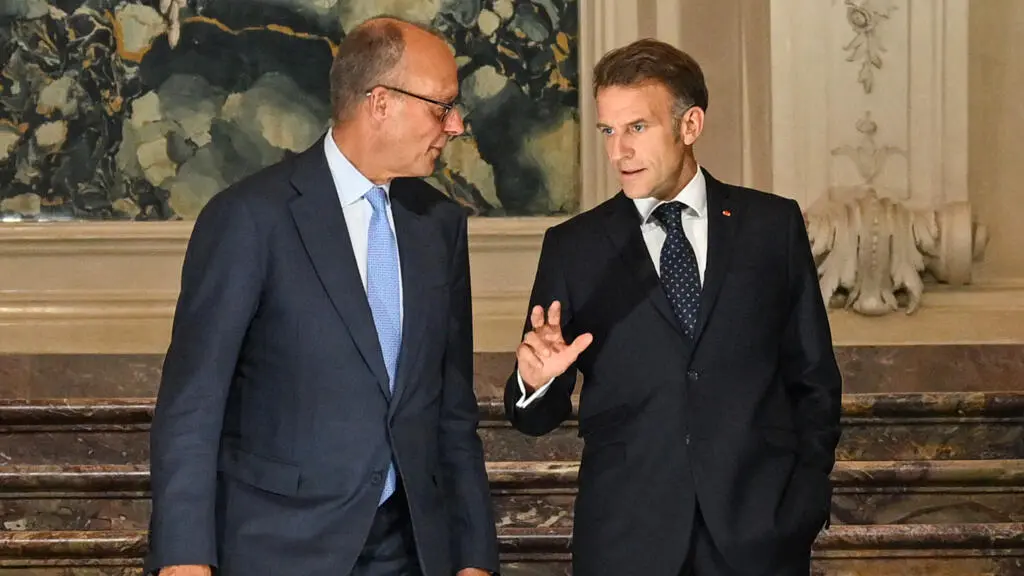
In Brussels, French President Emmanuel Macron and German Chancellor Friedrich Merz announced a proposal for a new legal instrument that would let the European Union act swiftly against trade measures that threaten the bloc’s economy, such as dumping or protectionist tariffs. The initiative was unveiled during a joint press conference on Monday, with both leaders stressing the need for faster response mechanisms in an increasingly volatile global trade environment. The EU’s current framework for addressing unfair trade practices involves lengthy investigations and negotiations, often taking months or even years to reach a decision. Macron and Merz argue that this delay can cause significant economic damage before a remedy is imposed. The proposed tool would allow the European Commission to impose provisional counter‑measures while a formal investigation is underway, thereby protecting EU industries and consumers from immediate harm.
Breaking news
 Ronna McDaniel Weighs In on GOP's Path Forward
 Market Sentiment Shifts as S&P 500 Snaps Three-Day Losing Streak
 Voters Demand Stronger Congressional Oversight of Presidential Power
 Pelosi Looks Back, Sees Democratic Triumph Ahead
The core of the proposal is a „fast‑track” procedure that would enable the Commission to act within days of receiving credible evidence of a trade threat. Once a member state or the Commission itself identifies a potentially harmful measure—such as a sudden import ban or a sudden price drop due to dumping—the Commission could request a temporary safeguard measure. This measure would be provisional, subject to a formal review after a set period, but would provide immediate relief to affected sectors. The mechanism would also include a clear legal basis, ensuring that any action taken is transparent and defensible in European courts.
Is the EU Ready to Adopt a Quick‑Action Measure?
Merz explained that the tool would not replace existing procedures but complement them. „We are not looking for a shortcut that bypasses due process,” he said. „Instead, we want a bridge that protects our economies while the full investigation proceeds.” Macron echoed this sentiment, emphasizing the importance of maintaining the EU’s credibility as a fair trading partner while safeguarding its internal market.
The proposal has sparked debate among EU institutions and member states. While France and Germany are the main proponents, other countries have expressed cautious interest. Some officials worry that rapid measures could lead to retaliation or escalation in trade disputes, potentially undermining the EU’s long‑term trade relationships. Others argue that the current system is too slow to keep pace with the speed of global supply chains and the frequency of new trade conflicts.
What Could This Mean for EU Industries?
The European Commission has not yet formally considered the proposal, but it has indicated that it will review the idea in the coming months. If adopted, the new tool would require amendments to the EU’s Trade Policy Instrument and the creation of a dedicated rapid‑response unit within the Commission’s Directorate‑General for Trade.
Frequently Asked Questions
If the fast‑track mechanism is implemented, EU manufacturers and exporters could benefit from quicker protection against unfair practices. For instance, a sudden influx of cheap steel from a non‑EU country could be countered more promptly, preventing market distortion and job losses. Small and medium‑sized enterprises, which often lack the resources to engage in prolonged legal battles, would also stand to gain from a more responsive system.
However, critics warn that the tool could be misused, leading to protectionist policies that harm legitimate trade partners. They call for strict safeguards and oversight to ensure that any provisional measures are justified and proportionate. The balance between swift action and fair trade will be a key challenge for policymakers.