Can the EU Revisit the Offer Later?
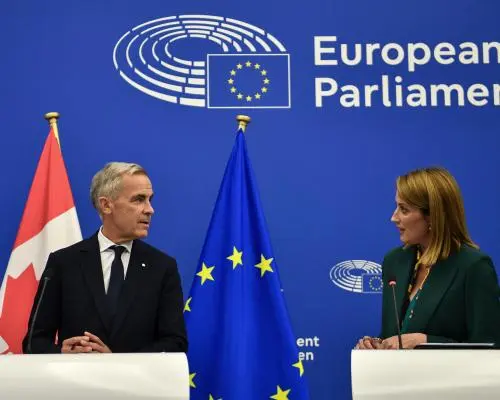
The European Union has pulled back from a formal invitation to Canada to begin negotiations on associate membership. This decision came after internal disputes among member states surfaced just before the EU-Canada summit in Montreal. The summit runs Thursday and Friday.
Breaking news
 Montenegro, Albania Seek NATO Help to Counter Russian Disinformation
 Ronna McDaniel Weighs In on GOP's Path Forward
 Market Sentiment Shifts as S&P 500 Snaps Three-Day Losing Streak
 Voters Demand Stronger Congressional Oversight of Presidential Power
A Watered-Down Joint Statement
A draft joint statement, to be issued at the summit's conclusion, reflects a diluted version of the original proposal. Instead of a full associate membership track, the text now offers only a pathway toward an ever closer association. This shift signals that the EU could not secure a unified position among its 27 member states.
Why the Offer Changed
Disagreements centered on the scope and implications of associate membership. Some member states feared it would set a precedent for other countries seeking similar status. Others worried about the administrative burden. The result is a compromise that keeps the door open without committing to a formal negotiation mandate.
What This Means for Canada
Frequently Asked Questions
For Canada, the change means no immediate start to formal talks. The summit will still produce a joint statement, but it will be softer than originally planned. Canadian officials had expected a clearer signal of intent. The watered-down language may frustrate those who saw associate membership as a key diplomatic win.
The EU has not closed the door permanently. The softened statement preserves the possibility of revisiting the proposal once member states align. However, without a formal mandate, any future negotiations would require a new political decision.
Why did the EU change its position so close to the summit? Internal disagreements among member states emerged just before the summit, forcing a compromise that avoids committing to a formal negotiation track.
What does the new joint statement actually say? It offers a pathway toward an ever closer associationrather than a full associate membership negotiation mandate.
Will Canada still attend the summit? Yes. The summit proceeds as scheduled in Montreal, with the joint statement issued at the end of the two-day event.