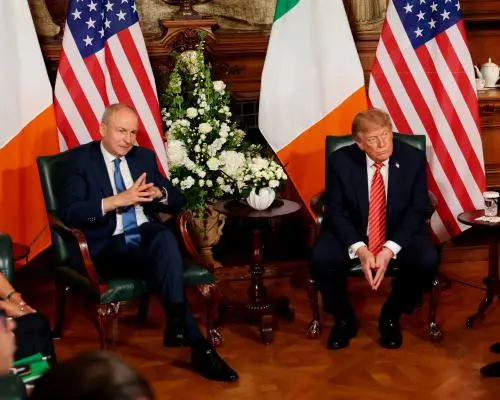
Trump’s Dublin Agenda: Politics, Business and Golf
Washington, D. C. – Former U. S. President Donald Trump arrived in Dublin on Tuesday for a three‑day trip that combined political meetings, business roundtables and a round of golf. While shaking hands with Irish lawmakers, he told reporters he would like to see a united Ireland and suggested the timing could be right for progress. The visit also saw Trump field questions about the Middle East conflict and the dispute over the Falkland Islands.
Breaking news
 Deadly Glacier and Rock Collapse in Nepal Linked to Climate Warming
 US Congress Passes Sweeping Sanctions Against Russia
 Speaker Johnson Ends House Session Early to Halt Impeachment Effort
 The High-Stakes Fight for Senate Majority Control
Trump’s remarks on Irish reunification came during a press briefing at the Merrion Hotel, where he said, „I think it would be great if Ireland were united. It could happen as well now as any other time.” He added that a single Irish market would benefit trade with the United Kingdom and the United States. The comment sparked a flurry of reactions from Irish politicians, who emphasized that any change must follow a democratic vote under the Good Friday Agreement.
The former president’s schedule was packed. He met with senior members of the Fine Gael and Fianna Fáil parties, discussing trade opportunities and the impact of Brexit on the island. Business leaders from the tech and pharmaceutical sectors joined a closed‑door session on attracting U. S. investment to Ireland’s growing economy. In the afternoon, Trump played nine holes at the historic Portmarnock Golf Club, a venue that has hosted numerous political figures. Observers noted his relaxed demeanor on the green, contrasting with the more formal tone of his political remarks.
Will Trump’s Comments Influence the Irish Reunification Debate?
Trump’s suggestion that a united Ireland could happen „now” raised eyebrows among analysts. The Good Friday Agreement requires a majority vote in both Northern Ireland and the Republic before any constitutional change. While Trump’s endorsement may boost visibility for reunification advocates, it does not alter the legal framework. Irish officials stressed that any move toward unity must be driven by the people, not external voices. Nonetheless, the former president’s high‑profile platform could sway public opinion, especially among voters who admire his stance on sovereignty and trade.
Beyond Ireland, Trump fielded questions about the ongoing Middle East crisis, assuring reporters that „it’s going to work out fine and dandy.” He also addressed the Falkland Islands dispute, questioning whether Britain would commit resources to defend the remote territory and hinting that the United States could play a mediating role. These off‑the‑cuff comments were typical of Trump’s unpredictable diplomatic style and drew mixed reactions from foreign policy experts.
The Dublin visit concludes with Trump departing for a short stop in London before returning to the United States. His remarks on Irish unity may linger in political discourse, but any concrete steps will still depend on the outcomes of future referendums. The episode underscores how former leaders can still shape debates on sovereignty, even when outside formal office.
Frequently Asked Questions
What did Trump say about a united Ireland? He expressed support for Irish reunification, saying it could happen now and would benefit trade, but he offered no concrete plan.
Can Trump’s comments change the legal process for reunification? No. The Good Friday Agreement requires a democratic vote in both jurisdictions; external opinions do not alter that requirement.
How did Irish officials react to his statements? They acknowledged his right to comment but emphasized that any change must follow the agreed‑upon democratic procedures.