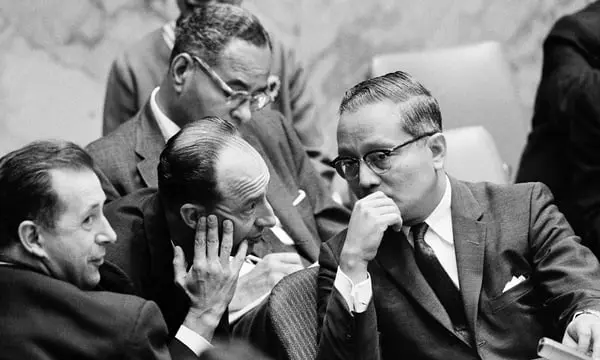
The UN’s Role in a Rapidly Evolving War
In early October 1967, the United Nations assembled in New York to address the escalating tensions between Arab states and Israel. Secretary‑General U Thant, accompanied by deputy chief of staff Jose Rolz‑Bennett, met with diplomats and military advisors to discuss potential resolutions. The meeting took place amid the rapid advance of Israeli forces in the West Bank, Gaza, and the Golan Heights, events that would soon culminate in a brief but decisive war.
Breaking news
 Ronna McDaniel Weighs In on GOP's Path Forward
 Market Sentiment Shifts as S&P 500 Snaps Three-Day Losing Streak
 Voters Demand Stronger Congressional Oversight of Presidential Power
 Pelosi Looks Back, Sees Democratic Triumph Ahead
The UN had been a central platform for diplomatic engagement since its founding. In 1967, the organization faced its most significant challenge yet, as the Arab-Israeli conflict intensified. U Thant, known for his calm mediation style, sought to prevent further bloodshed by proposing cease‑fire negotiations and humanitarian relief. The UN Security Council, however, struggled to reach consensus, with member states divided over the legitimacy of each side’s claims. The crisis highlighted the limitations of international diplomacy when national interests clash with global peace efforts.
How Did the UN’s Actions Shape Post‑War Dynamics?
During the war, the UN’s influence was constrained by the speed of military operations. Israeli forces captured key territories within days, while Arab armies faced logistical setbacks. U Thant’s strategy involved convening emergency sessions, issuing statements, and coordinating with the United Nations Relief and Works Agency to address civilian displacement. Despite these efforts, the UN could not halt the hostilities, and the war concluded with an armistice that left Israel in control of significant new borders. The organization’s inability to enforce a lasting peace underscored the need for stronger conflict‑resolution mechanisms.
The UN’s interventions had lasting implications for regional politics. The 1967 armistice lines, often referred to as the „Green Line,” became reference points for future negotiations. U Thant’s appeal for continued dialogue laid the groundwork for later peace initiatives, such as the 1973 Arab Peace Initiative and the 1993 Oslo Accords. Moreover, the UN’s humanitarian work during the conflict set precedents for future missions in war zones, influencing protocols for civilian protection and refugee assistance.
What Lessons Remain for Today’s Conflicts?
The war also shifted the UN’s reputation. While some praised the organization’s rapid response, others criticized its perceived bias and lack of enforcement power. The experience prompted reforms in the Security Council’s decision‑making processes and led to increased support for the UN’s peacekeeping forces, which would later operate in regions like the former Yugoslavia and Somalia.
Frequently Asked Questions
The 1967 conflict remains a case study in the challenges of multilateral diplomacy. It demonstrates how international bodies can mobilize resources quickly yet may lack the authority to compel compliance. The UN’s experience underscores the importance of clear mandates, robust funding, and political will among member states. Today, these lessons inform the organization’s approach to crises in Syria, Ukraine, and the Sahel, where swift action and sustained engagement are equally critical.
In the decades since, the UN has continued to evolve, adopting new tools like peacebuilding commissions and specialized agencies for humanitarian aid. Yet the fundamental tension between national sovereignty and collective security persists. The legacy of U Thant’s tenure reminds us that even the most well‑intentioned international actors must balance diplomatic finesse with decisive action to prevent conflict escalation.