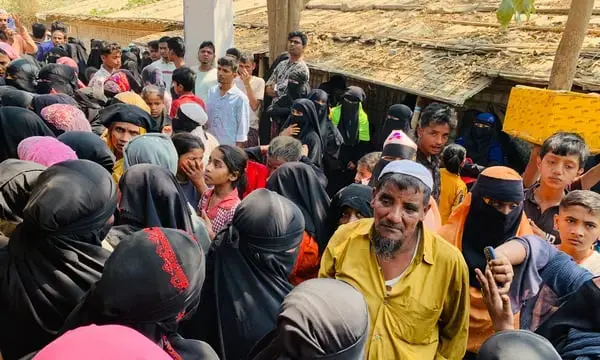
A Complex Repatriation Challenge
Hundreds of thousands of Rohingya refugees remain stranded in Bangladesh, nine years after fleeing violence in Myanmar. The crisis began in 2017, when a military crackdown forced over 700,000 Rohingya to escape to neighboring Bangladesh. Conditions in the refugee camps are dire.
Breaking news
 Deadly Glacier and Rock Collapse in Nepal Linked to Climate Warming
 US Congress Passes Sweeping Sanctions Against Russia
 Speaker Johnson Ends House Session Early to Halt Impeachment Effort
 The High-Stakes Fight for Senate Majority Control
The Rohingya have faced decades of persecution in Myanmar, where they are denied citizenship and basic rights. The 2017 violence was sparked by Rohingya militant attacks on security forces, prompting a brutal military response. The international community has condemned the Myanmar military's actions, describing them as ethnic cleansing.
Can the Rohingya Find a Safe Haven?
Repatriation efforts have been hindered by a lack of trust and unresolved issues. Bangladesh and Myanmar have signed several agreements aimed at facilitating the return of Rohingya refugees, but progress has been slow. The Rohingya have expressed concerns about their safety and the conditions under which they would be returned.
Myanmar's government has insisted that repatriation is a matter of national security, while Bangladesh has sought international support to alleviate the burden on its resources. The international community has provided significant humanitarian aid, but a long-term solution remains elusive.
The Rohingya crisis has significant regional and global implications. The prolonged displacement of Rohingya refugees has created social, economic, and security challenges for Bangladesh and the broader region. A resolution to the crisis will require a comprehensive approach that addresses the root causes of the Rohingya's displacement.
Frequently Asked Questions
The consequences of inaction will be severe, with the potential for further instability and humanitarian suffering. The international community must continue to pressure Myanmar to address the Rohingya's grievances and work towards a sustainable solution.
What is the current situation for Rohingya refugees in Bangladesh? The refugees face dire conditions in overcrowded camps, with limited access to basic services. Why has repatriation been delayed? Repatriation efforts have been hindered by a lack of trust and unresolved issues, including concerns about the Rohingya's safety and citizenship rights. What is the international community's role in resolving the crisis? The international community has provided significant humanitarian aid and must continue to pressure Myanmar to address the Rohingya's grievances.