Legal Precedent and Public Access
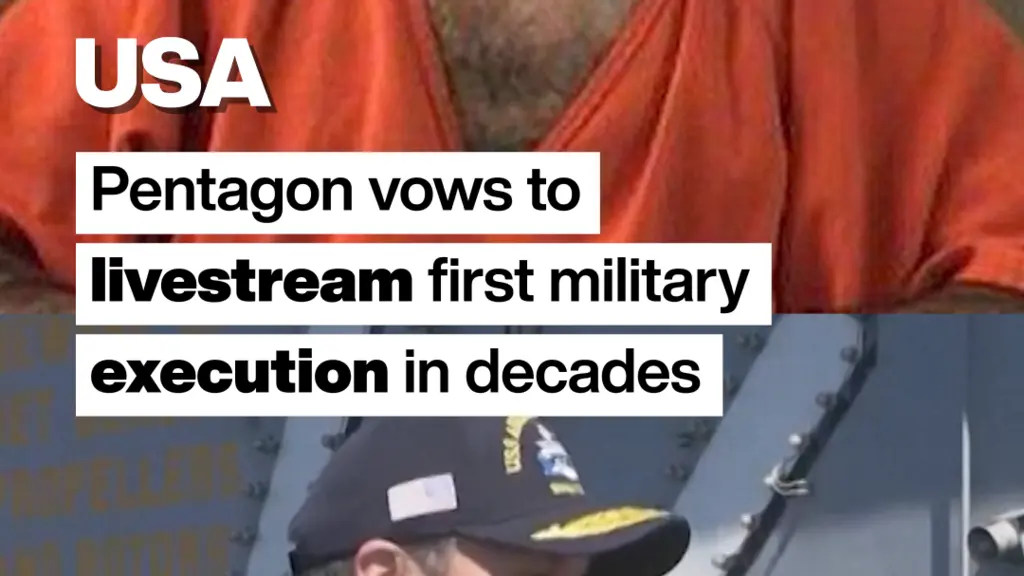
The Pentagon announced Thursday that it will broadcast live the first U. S. military execution in more than six decades, marking a dramatic departure from long-standing protocol. The decision comes amid ongoing legal proceedings involving a service member sentenced to death under military law. Officials confirmed the livestream will be made available through official Defense Department channels, though specific timing and technical details remain under review.
Breaking news
 Ronna McDaniel Weighs In on GOP's Path Forward
 Market Sentiment Shifts as S&P 500 Snaps Three-Day Losing Streak
 Voters Demand Stronger Congressional Oversight of Presidential Power
 Pelosi Looks Back, Sees Democratic Triumph Ahead
The move revives a practice not seen since the 1950s, when executions were carried out by the Army and other branches. Military law experts say the announcement reflects both institutional transparency efforts and mounting public interest in high-profile court-martial cases. Legal scholars note that livestreaming such proceedings is unprecedented, raising questions about privacy, security, and the psychological impact on viewers. Defense officials emphasized that the broadcast will follow strict guidelines to protect the dignity of all involved.
What Are the Implications for Future Cases?
The last known military execution took place in 1951, when Private William Binford was put to death by a firing squad at Fort Leavenworth. Since then, the death penalty has rarely been sought in military courts, and never publicly televised. The Pentagon’s decision to livestream the upcoming execution represents a significant shift in policy, one that legal analysts say could set a new standard for transparency. „This is uncharted territory,” said retired Colonel James Whitmore, a military law expert. „There are no existing frameworks for broadcasting an execution, let alone doing so live.”
The livestream decision may influence how future military death sentences are handled, particularly as public scrutiny of military justice intensifies. Civil rights groups have already expressed concern over the potential trauma of viewing such content, while others argue that openness ensures accountability. The Department of Defense has not yet specified whether the broadcast will include commentary or expert analysis, nor has it clarified if international audiences will have access. Legal observers expect the move to spark renewed debate over capital punishment in the armed forces and whether other branches might follow suit.
Will the execution be available to the general public? Yes, the Pentagon confirmed the livestream will be accessible via official Defense Department platforms, though registration or age verification may be required.
Frequently Asked Questions
Are there any restrictions on who can view it? Officials indicated that content warnings and regional restrictions may apply, especially for international viewers, to comply with local laws and sensitivities.
Has the military ever livestreamed an execution before? No, this would be the first time in U. S. history that a military execution is broadcast live, breaking with decades of closed proceedings.