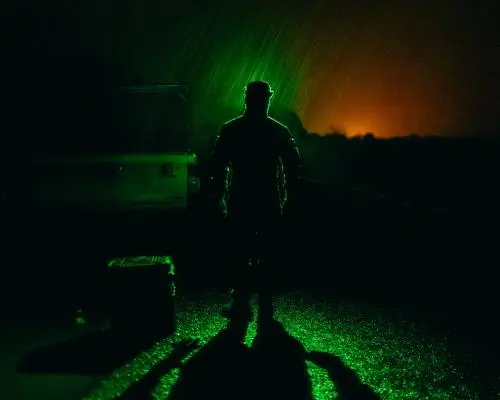
Miniature Aircraft, Maximum Impact
Ukrainian drone operators launch precision attacks under cover of darkness, deploying miniature FP-2 aircraft loaded with over 100kg of explosives. These six-meter-wingspan aircraft represent a new phase in a conflict that began with tanks and evolved into artillery warfare, now dominated by unmanned aerial systems fighting for control of the skies.
Breaking news
 Trump Rejects AI Safety Measures Amid China Competition
 Behavioral Health and the Justice System: Accreditation and Continuity-of-Care Standards for Justice-Involved Individuals
 Britney Spears Dazzles in Bold Lingerie Shoot
 South Korea Weighs Strong Response After DMZ Landmine Blast
The drones, prepared by ground crews using green and red navigation lights, line up for coordinated strikes when enemy threats pass. This shift toward drone warfare reflects both nations' adaptation to new military technologies, with each side developing countermeasures and offensive capabilities to gain advantage.
How Do These Drones Change Battlefield Dynamics?
The FP-2 craft exemplify how both armies have embraced compact, cost-effective drone technology. Weighing more than 100kg with a six-meter wingspan, these aircraft pack significant destructive power relative to their size. Ukrainian forces have refined their launch procedures, coordinating multiple aircraft in succession to overwhelm enemy defenses. Russian forces respond by deploying electronic warfare systems and anti-drone measures, creating a technological arms race in the air.
The introduction of these miniature attack aircraft has fundamentally altered how both sides conduct operations. Traditional defensive perimeters prove inadequate against swarms of small, maneuverable drones that can strike from unexpected angles. Commanders must now integrate anti-aircraft systems, electronic jamming, and rapid response teams to counter these threats effectively.
Ukrainian forces benefit from Western-supplied technology and training, allowing them to field sophisticated drone operations with precise timing and coordination. Russian forces leverage their larger industrial base and experience with autonomous systems, enabling mass production of various drone models. Both sides invest heavily in developing countermeasures, creating a dynamic where air superiority increasingly determines ground operations.
What Advantages Do Each Side Possess in This Drone Conflict?
As this conflict continues, control of the aerial domain will likely determine success on the ground below. Both nations pour resources into improving their drone fleets and defense systems, recognizing that air supremacy enables more effective ground maneuvers. The war's outcome may well depend on which side can master these new aerial technologies first.
How effective are these miniature drones against traditional defenses?
Future Outlook: The Sky Becomes the Battlefield
Their small size and low radar signature make them difficult to detect and intercept, though electronic warfare and specialized anti-aircraft systems can still neutralize them.
What is the FP-2 drone's maximum range and payload capacity?
The aircraft carries over 100kg of explosives and operates within ranges suitable for tactical battlefield strikes, though specific maximum distances remain classified.
Frequently Asked Questions
How are both sides adapting their strategies to counter these drone threats?
Military planners integrate electronic jamming, radar systems, and rapid response protocols while developing their own swarm tactics and counter-drone weapons.