Why Drone Warfare Is Becoming Russia’s Preferred Tool
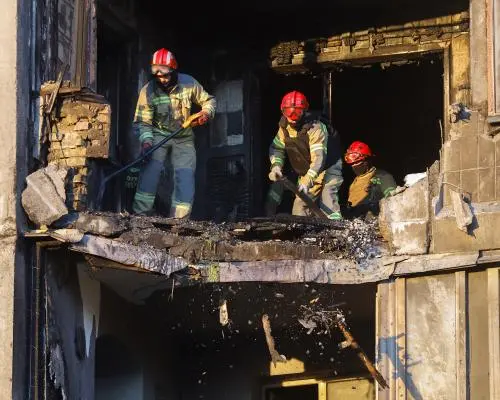
President Volodymyr Zelenskyy warned on Sunday that Russia shows no sign of easing its war on Ukraine, despite recent pledges to the United States. Russian drones struck Kyiv and several other cities, igniting a market outside the capital and causing civilian casualties. The Ukrainian leader used his X account to condemn the attacks as terror against ordinary Ukrainians and to demand stronger international support.
Breaking news
 Trump Rejects AI Safety Measures Amid China Competition
 Behavioral Health and the Justice System: Accreditation and Continuity-of-Care Standards for Justice-Involved Individuals
 Britney Spears Dazzles in Bold Lingerie Shoot
 South Korea Weighs Strong Response After DMZ Landmine Blast
The latest wave of unmanned assaults follows weeks of intensified fighting on the front lines, where Ukrainian forces have launched counter‑offensives that reclaimed territory in the east. Moscow’s drone campaign appears designed to distract Kyiv and undermine morale as Kyiv’s troops press forward. Analysts say the strikes aim to hit economic hubs and civilian infrastructure, hoping to force the government into a political concession. Zelenskyy’s statement highlighted the human cost: „Our markets burn, families flee, and yet the aggression does not stop.” He also called on Western allies to supply more air‑defense systems to protect cities from further incursions.
Since the war began, Russia has increasingly relied on cheap, commercially available drones to supplement its conventional arsenal. These devices can be launched from a distance, evade some radar systems, and cause fires or explosions with minimal warning. In Kyiv, a drone‑laden payload set a bustling market ablaze, injuring dozens and prompting a citywide alert.
Can International Aid Counter the Drone Threat?
Ukrainian officials report that each drone strike forces the redeployment of limited air‑defense resources, stretching the already thin shield protecting critical sites. The tactic also serves a psychological purpose, reminding citizens that no area is safe from attack. „It is a strategy of constant pressure,” said a senior defense analyst at the Kyiv Institute for Security Studies. „By targeting everyday places, Russia tries to erode public confidence in the government’s ability to protect its people.”
Zelenskyy’s plea for additional anti‑drone technology underscores a growing concern among NATO partners. The United States and several European nations have pledged to deliver more Patriot and NASAMS systems, yet delivery timelines remain uncertain. Ukraine’s own industry has begun retrofitting older Soviet‑era missiles to intercept low‑altitude drones, but experts warn that without a coordinated supply chain, gaps will persist.
If the flow of modern air‑defense equipment accelerates, Kyiv could better shield its urban centers and reduce civilian casualties. Conversely, delays may embolden Moscow to expand its drone campaigns, potentially prompting a shift in Ukrainian tactics toward deeper strikes into Russian‑occupied territories.
The ongoing drone assaults signal that the conflict’s intensity is unlikely to wane in the near term. Zelenskyy’s remarks suggest a hardening stance in Kyiv, with expectations that Western allies will respond to the heightened threat. The war’s trajectory now hinges on how quickly Ukraine can fortify its skies and whether diplomatic pressure can curb Russia’s willingness to use terror tactics against civilians.
Frequently Asked Questions
What types of drones is Russia using in Ukraine? Russia employs a mix of commercial quad‑copters, modified Iranian Shahed models, and larger loitering munitions, all capable of delivering explosives or incendiary payloads.
How effective are Ukraine’s current air‑defense systems against drones? Existing systems can intercept larger drones but struggle with small, low‑altitude craft, leaving many civilian areas vulnerable.
What steps is the international community taking to help? Western nations are negotiating shipments of advanced missile interceptors and radar upgrades, while some are training Ukrainian crews on new equipment to improve response times.