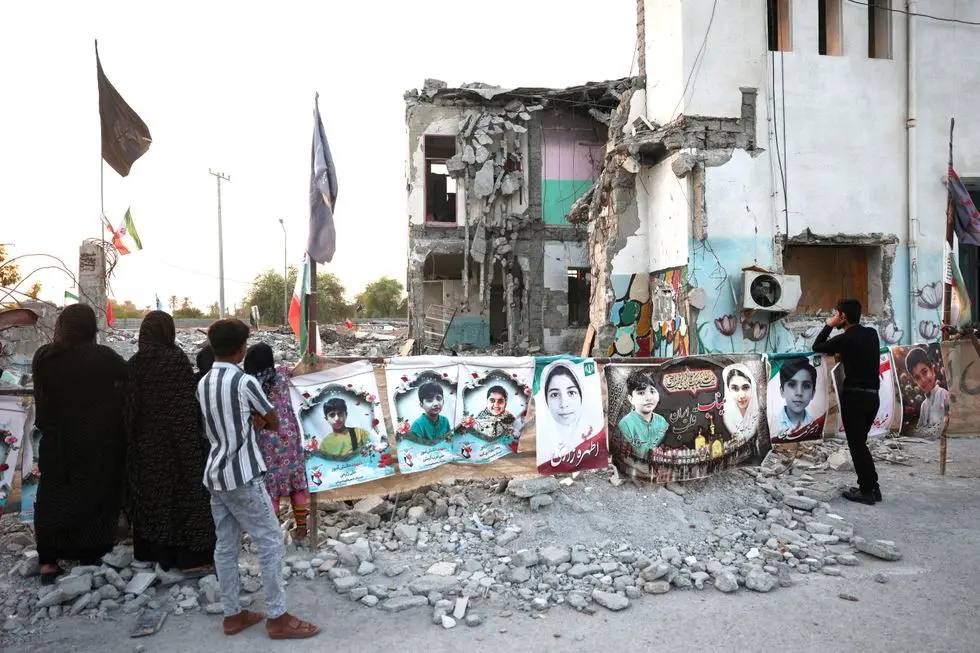
Systemic Failures and Official Denials
The phrase precision strikessounds increasingly like bitter irony given the conflict's bloody toll. When this military campaign concludes, it will be remembered primarily for its devastating opening. On the same day aerial raids killed Ayatollah Ali Khamenei in Tehran, a U. S. missile turned a primary school in Minab into ruins. It killed 123 children and wounded or killed dozens more. About 250 miles away, U. S. missiles struck a residential area in Lamerd. This killed 21 civilians, including five minors. Although the White House and Department of Defense have not publicly claimed responsibility, internal analysis suggests the Minab school was hit by a U. S. missile. An independent international fact-finding mission found reasonable grounds to believe the U. S. waged war through indiscriminate attacks. These strikes killed or injured civilians and damaged civilian targets.
Breaking news
 Montenegro, Albania Seek NATO Help to Counter Russian Disinformation
 Ronna McDaniel Weighs In on GOP's Path Forward
 Market Sentiment Shifts as S&P 500 Snaps Three-Day Losing Streak
 Voters Demand Stronger Congressional Oversight of Presidential Power
Mistaken attacks and official denials have become standard in the global war on terror. This conflict uses precision weaponsoperated remotely by military personnel. They often rely on flawed intelligence. In Iran, the Trump administration also used dual-usetargeting and double-tapair strikes. These tactics further endangered civilians and destroyed essential infrastructure. While final official totals are pending, the Activists' News Agency documented 1,701 civilian deaths by April. These deaths resulted from airstrikes and direct damage to hospitals, schools, universities, desalination plants, power stations, airports, places of worship, UNESCO sites, and densely populated residential areas.
To understand why innocents continue to die under American bombardments, we spoke with Azmat Khan of The New York Times. His Pulitzer Prize-winning work exposed lethal patterns of failure. He highlighted a system characterized by opacity and impunity in U. S. air wars. Our conversation was edited for brevity and clarity.
Martin Di Caro: During the most intense phase of U. S. bombing in Iran, did you see the same problems identified in previous investigations?
Azmat Khan: Yes, I saw the same issues repeating. One major issue was misidentifying civilians. Distinguishing between civilians and combatants should be fundamental to targeting. On day one, the U. S. hit a girls' school in Iran. Initial reports suggested forces used weak or outdated information. They failed to verify open-source evidence or detect civilian presence. These are constant observations. The army was unaware of these gaps. For example, their own data showed misidentification caused about 4% of civilian casualties. My analysis found it caused roughly one-third. On September 1, the U. S. hit a wedding party. The intended target might have been nearby. I saw this repeatedly, often due to confirmation bias. Targeters assumed everything was a target. Even routine actions looked like ISIS tactics. In prior reports, I found insufficient drone footage for surveillance. They worked at such a high pace.
The Iran war exceeded previous campaigns in pace, scale, and intensity. Thus, endemic targeting problems persisted but at a faster rate with less accountability.
Interview with Azmat Khan
Di Caro: What about the over-reliance on artificial intelligence?
Khan: Using AI in any targeting means using a flawed dataset, even with human verification. The result is a system of impunity lacking accountability. If you are not on the ground investigating targeted locations yourself, you miss errors. You must invest resources, time, and effort to understand what went wrong. Without that, you never catch these mistakes.
Di Caro: Regarding transparency and accountability, what do you think of Secretary Hegseth’s decision to eliminate the Pentagon’s Civilian Damage Mitigation office?
Khan: It certainly contributes to the problem. That office helped assess civilian casualties because the rest of the Pentagon was understaffed. Even after being reduced to a minimum, the office continued helping. Before the Iran war, during the 2025 Yemen bombings, the U. S. stopped publishing strike tracking data. This data is normally released publicly. Consequently, there is less transparency. There are also fewer qualified and trained people assessing civilian damage.
Di Caro: Let us discuss new weapons. For example, on the same day girls in the Minab school were killed, PrSM missiles killed 21 civilians in Lamerd, Iran, according to a report you co-signed in The N
