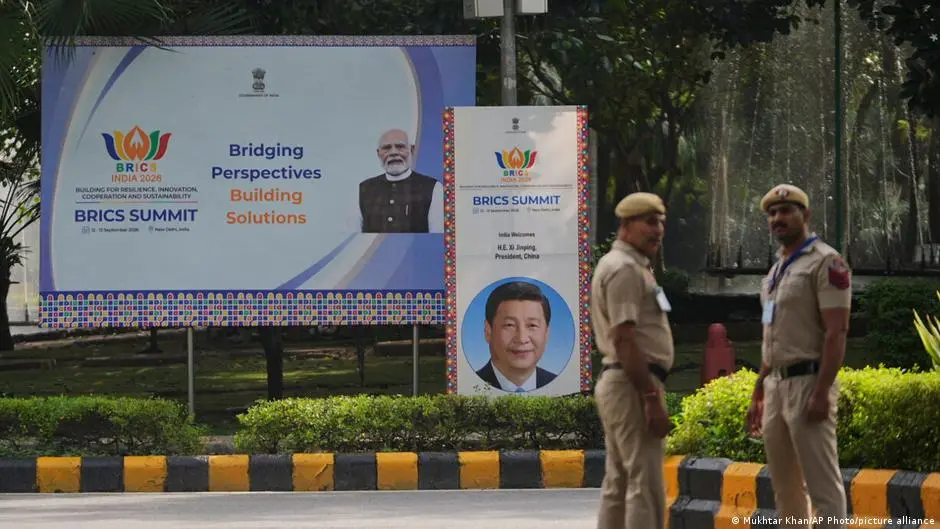
What Specific Agreements Might Emerge From the Xi Modi Talks?
Chinese President Xi Jinping arrived in New Delhi today for his first visit to India since the 2020 military clash along their disputed border, marking a significant diplomatic moment at the BRICS Summit 2026. The meeting with Indian Prime Minister Narendra Modi is scheduled for this afternoon at Hyderabad House, where leaders will discuss bilateral relations and multilateral cooperation within the BRICS framework. This encounter comes amid ongoing efforts to ease tensions following the Galwan Valley incident that resulted in casualties on both sides.
Breaking news
 Deadly Glacier and Rock Collapse in Nepal Linked to Climate Warming
 US Congress Passes Sweeping Sanctions Against Russia
 Speaker Johnson Ends House Session Early to Halt Impeachment Effort
 The High-Stakes Fight for Senate Majority Control
The summit, hosted by India, brings together leaders from Brazil, Russia, India, China, and South Africa to address global economic challenges, reform international institutions, and strengthen cooperation among emerging economies. Xi's visit signals Beijing's willingness to engage constructively with New Delhi despite lingering border disputes, with both sides emphasizing the importance of dialogue over confrontation. Analysts note that the meeting could pave the way for renewed confidence-building measures along the Line of Actual Control, while also addressing shared concerns about global supply chains and climate change.
How Does This Meeting Influence the Broader BRICS Agenda?
Discussions are expected to focus on restoring mutual trust through military-to-military communication channels and exploring joint initiatives in technology and sustainable development. Officials from both countries have indicated that while no major breakthroughs are anticipated on the border issue, the leaders may agree to resume high-level exchanges and consider confidence-building protocols. Trade imbalances and market access remain key topics, with India seeking greater opportunities for its pharmaceutical and IT sectors in China, while Beijing looks to expand investments in Indian manufacturing and infrastructure.
The BRICS Summit aims to advance proposals for a new payment system to reduce reliance on the US dollar and strengthen the Contingent Reserve Arrangement for financial stability among member states. India's presidency has prioritized reforming multilateral institutions, including the United Nations Security Council, where both China and India support expanded representation for developing nations. The successful engagement between Xi and Modi could enhance cohesion within the bloc, reinforcing its role as a platform for South-South cooperation and a counterweight to Western-dominated global governance structures.
Why is Xi's visit to India considered significant after the 2020 clash? It marks the first high-level Chinese presidential visit to India since the deadly Galwan Valley confrontation, signaling a diplomatic reset and willingness to manage differences through dialogue despite unresolved border tensions.
Frequently Asked Questions
What role does India play in shaping the 2026 BRICS Summit agenda? As the host nation, India has pushed for UN reform, financial cooperation mechanisms, and inclusive growth initiatives, leveraging its presidency to amplify the voices of Global South nations within the BRICS framework.
What are the potential risks to improved Sino-Indian relations following this meeting? Persistent mistrust over border incursions, differing strategic alignments, and domestic political pressures in both countries could limit progress, making sustained diplomatic engagement essential to prevent escalation.