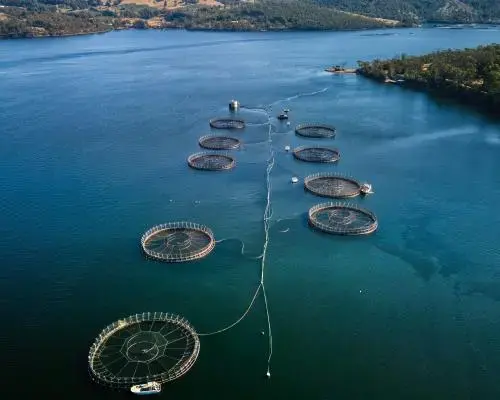
The Scale of the Explosive Campaign
In a startling revelation, Tasmania’s Department of Natural Resources and Environment disclosed that salmon producers have deployed nearly 1,800 underwater explosive devices in the first half of 2026 alone, bringing the total to more than 150,000 since 2016. The explosives were intended to deter wild seals from entering marine salmon pens, a practice that has drawn sharp criticism from environmental groups and the public.
Breaking news
 Ronna McDaniel Weighs In on GOP's Path Forward
 Market Sentiment Shifts as S&P 500 Snaps Three-Day Losing Streak
 Voters Demand Stronger Congressional Oversight of Presidential Power
 Pelosi Looks Back, Sees Democratic Triumph Ahead
The data shows that companies operating in the state’s coastal waters have relied on these devices as a primary defense against seal predation, arguing that the animals cause significant loss of fish stock and damage to net pens. Officials say the explosives are detonated remotely, creating shockwaves that temporarily scare the mammals away. Critics, however, contend that the method is inhumane, potentially harming other marine life and disrupting ecosystems. The government’s release of the figures follows a series of investigations into the industry’s wildlife management tactics.
Records indicate that the use of underwater charges began in earnest in 2016, when seal numbers around salmon farms surged. Over the ensuing decade, the cumulative count of devices exceeded 150,000, averaging roughly 15,000 per year. In 2026, the deployment rate spiked, with almost 1,800 charges used in just six months. Industry representatives claim the approach is a last resort, employed only after other deterrents such as acoustic devices and net modifications failed. They point to a reported 30 % reduction in seal incursions at farms that adopted the explosive protocol, arguing that the economic stakes for salmon growers justify the measure.
Are Explosives a Sustainable Solution for Seal Management?
Environmental watchdogs dispute these claims, noting that the shockwaves can affect non‑target species, including fish, crustaceans, and even the seals themselves, which may suffer injuries or disorientation. A marine biologist from the University of Tasmania warned that repeated blasts could alter the behavior of local marine mammals, potentially driving them into new areas and creating unforeseen ecological ripple effects.
The controversy raises a fundamental question: can a practice that relies on violent deterrence ever be considered sustainable? Government officials have pledged to review the data and explore alternative, non‑lethal methods. Meanwhile, the salmon industry faces mounting pressure from consumer groups demanding more humane and environmentally friendly practices. Some farms have already begun trialing predator‑exclusion nets and trained seal‑deterrent dogs, reporting promising results without resorting to explosives.
The future of Tasmania’s salmon sector may hinge on its ability to balance economic viability with ecological responsibility. If regulatory reforms tighten restrictions on explosive use, companies will need to invest in innovative deterrence technologies. Conversely, continued reliance on blasts could invite stricter penalties and damage the region’s reputation in global seafood markets.
Frequently Asked Questions
Why were underwater explosives chosen over other deterrents? Producers argued that seals quickly learned to ignore acoustic alarms and that physical barriers were often breached, making explosives the most immediately effective option.
What impact do the blasts have on marine ecosystems? Shockwaves can injure or disorient a range of marine organisms, potentially disrupting feeding patterns and breeding grounds for fish, crustaceans, and mammals beyond the target seals.
Will the government ban the use of explosives in salmon farms? A formal ban has not been announced, but the department has said it will assess the data and consider stricter controls or alternative mitigation strategies.