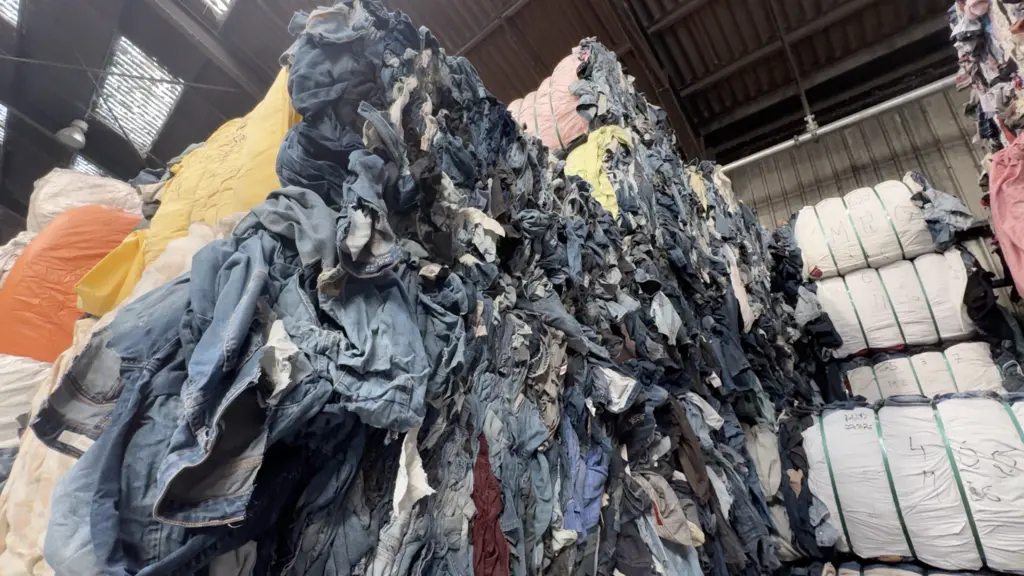
The method also diverts significant amounts of cotton waste from landfills
Many households keep a single pair of worn-out jeans tucked away in drawers or closets, often forgotten and destined for the trash. A French company has found a way to give these discarded garments a second life as thermal insulation for homes. By repurposing denim fibers, they aim to reduce energy consumption during extreme heat events while tackling textile waste. This approach turns a common household item into a practical tool for climate resilience. The process involves collecting used jeans, shredding them into fibers, and treating the material to make it fire-resistant and mold-proof. These recycled denim panels are then installed in walls or attics, where they absorb and slow the transfer of heat. Unlike synthetic insulators, denim is breathable and regulates indoor temperatures naturally. Tests show that homes using this insulation stay up to 5°C cooler during heatwaves, reducing reliance on air conditioning.
Breaking news
 Montenegro, Albania Seek NATO Help to Counter Russian Disinformation
 Ronna McDaniel Weighs In on GOP's Path Forward
 Market Sentiment Shifts as S&P 500 Snaps Three-Day Losing Streak
 Voters Demand Stronger Congressional Oversight of Presidential Power
The method also diverts significant amounts of cotton waste from landfills, where denim can take decades to decompose. How Does Denim Compare to Traditional Insulation Materials? Denim insulation performs similarly to fiberglass in thermal resistance but offers better sound absorption and avoids the skin irritation associated with glass fibers. It is made from post-consumer waste, giving it a lower carbon footprint than newly manufactured materials. While slightly more expensive upfront, its durability and energy-saving potential offset costs over time. Homeowners in southern France have reported noticeable drops in indoor temperatures after installation, especially in older buildings with poor insulation. What Challenges Exist in Scaling This Solution? One major hurdle is the inconsistent supply of usable denim, as not all donated jeans meet quality standards for recycling. Collection networks must be expanded to gather sufficient volumes without increasing transportation emissions.
Additionally, building codes in some regions have not yet approved recycled
Additionally, building codes in some regions have not yet approved recycled textiles for structural insulation, requiring further testing and certification. Despite these barriers, pilot programs in Marseille and Lyon have shown promise, prompting interest from municipal housing agencies. Frequently Asked Questions How much denim is needed to insulate a typical home? Insulating a 100-square-meter house requires approximately 400 to 600 pairs of jeans, depending on wall thickness and climate conditions. The material is layered to achieve the desired thermal performance. Is denim insulation safe for people with allergies? Yes, the recycled fibers are hypoallergenic and treated to resist dust mites and mold, making them suitable for sensitive individuals. Unlike some natural insulators, it does not attract pests or degrade quickly in humid conditions. Can this method work in colder climates too? Absolutely. While highlighted for heat protection, denim insulation also retains warmth in winter, offering year-round energy efficiency.
Its thermal properties function bidirectionally, reducing both heat gain and loss.