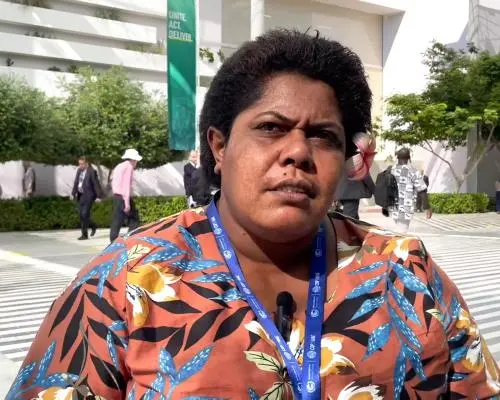
Vanishing Reefs, Vanishing Traditions
Lavenia Naivalu, a 44-year-old climate activist from Fiji's remote Yasawa Islands, has witnessed firsthand the devastating effects of climate change on her homeland's marine ecosystem. Speaking from her wooden veranda, she recalls when healthy coral reefs allowed her grandfather to walk to shore and return with abundant fish. Today, those same reefs struggle to sustain the communities that depend on them.
Breaking news
 Montenegro, Albania Seek NATO Help to Counter Russian Disinformation
 Ronna McDaniel Weighs In on GOP's Path Forward
 Market Sentiment Shifts as S&P 500 Snaps Three-Day Losing Streak
 Voters Demand Stronger Congressional Oversight of Presidential Power
Naivalu's personal connection to the crisis runs deep. Her grandfather was among the last generation of men who could reliably spearfish in waters teeming with marine life. Now, decades later, the reefs that once provided sustenance and livelihood face unprecedented threats from rising ocean temperatures and acidification.
The transformation has been swift and severe. Coral bleaching events, intensified by global warming, have decimated fish populations that local families have relied on for generations. What was once a thriving underwater ecosystem now serves as a stark reminder of climate change's immediate impact on Pacific Island communities.
Can Pacific Voices Influence Global Action?
„The reefs that the older generation of men spearfished in, no longer provide what they once did,”Naivalu explains, her voice carrying both grief and urgency. She emphasizes that this isn't just an environmental issue—it represents the erosion of cultural identity and traditional knowledge passed down through countless generations.
As United Nations climate discussions approach in the Pacific region, Naivalu joins other activists pushing for stronger international commitments. Small island developing states, despite contributing minimally to global emissions, face disproportionate consequences from climate change. Rising sea levels threaten freshwater supplies, while ocean warming devastates fisheries that support local economies.
Regional leaders hope to leverage these talks to secure enhanced funding for adaptation measures and more ambitious emissions reduction targets from major polluting nations.
The stakes couldn't be higher for Pacific Island communities. Without significant global action, Naivalu warns that entire ways of life may disappear within decades. The reefs, fisheries, and coastal traditions that define these islands face irreversible damage unless the international community responds with unprecedented urgency and commitment.
Frequently Asked Questions
What specific changes has Lavenia Naivalu observed in Fiji's marine ecosystem? Naivalu has witnessed dramatic coral reef degradation, with once-thriving fish populations declining sharply. The reefs that supported her grandfather's generation of spearfishers no longer sustain the same biodiversity or fish abundance that local communities depend upon today.
How does climate change affect Pacific Island communities differently? Pacific Island communities face unique vulnerabilities including sea-level rise threatening freshwater supplies, ocean warming devastating fisheries, and coastal erosion destroying infrastructure. These small island states contribute minimally to global emissions yet experience disproportionate climate impacts that threaten their very existence.
What outcomes are activists hoping for from the upcoming UN Pacific climate discussions? Activists like Naivalu are advocating for stronger international commitments including enhanced adaptation funding, more ambitious emissions reduction targets from major polluters, and recognition of the disproportionate burden faced by small island developing states in addressing climate change impacts.